
Energy security needs a team of workers to master technology
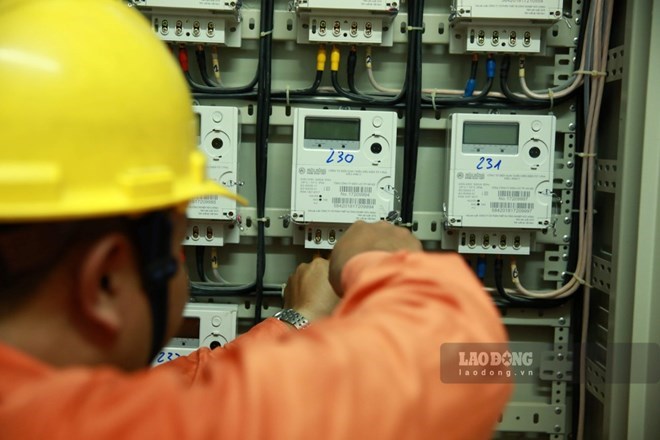
Ensuring energy security not only requires stable supply but also requires skilled workers to master technology and improve production efficiency.
Challenges to increasingly complex energy security
Energy security (ANNL) is becoming a decisive factor in the competitiveness and sustainable growth capacity of the economy.
ANNL not only directly affects human security but is also closely linked to economic security, network security and national security.
While energy requirements are increasingly high, challenges to ENERGY are becoming more and more complex.
Reality is placing requirements from "having enough energy" to meeting the requirements and being able to withstand it. ANNL in the new development phase needs to simultaneously ensure three factors: sufficient supply, stable operation and reasonable cost.
Mr. Mai Tuan Dat - Deputy General Director of Vietnam National Refining and Petrochemical Group (BSR) stated clearly that in the context of the world witnessing changes that fundamentally change the awareness as well as the methods of ensuring ANNL of each country.
Mr. Dat said that the world is facing many complex non-traditional risks such as geopolitical conflicts, supply chain disruptions, climate change, cybersecurity and the global energy transition process.
In that context, the question about ANNL is not only how many oil and gas sources Vietnam still has, what is the import capacity of crude oil, or how the world oil price is fluctuating, but also whether it has the ability to proactively convert raw materials into essential energy products for the economy or not?
Modern ANNL is not only about supply security but also about the security of processing capacity and the resilience of the entire national energy system.
Great demand for technical workers, workers with digital skills
Vietnam is facing the requirement to innovate the growth model, restructure the economy, improve labor productivity, growth quality and national competitiveness.
Resolution No. 70-NQ/TW dated August 20, 2025 of the Politburo sets out the requirement to firmly ensure national SE, associated with science and technology development, innovation, digital transformation and human resources.
The rapid development of science, technology, innovation, digital economy, green economy and new production organization methods are profoundly transforming the occupational structure, content and labor methods of the working class.
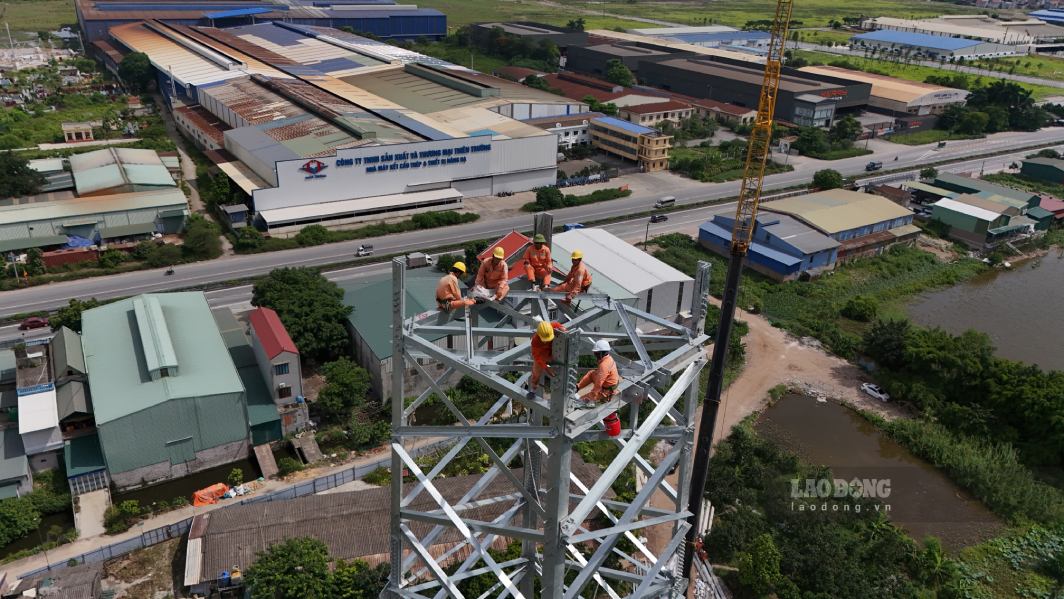
That context requires the increasing demand for technical workers, workers with digital skills, capable of operating automatic equipment, mastering technology and adapting to modern production environments.
In particular, workers themselves are the force directly ensuring ANNL and mastering technology.
From hydropower projects, the maturity of the country's endogenous capacity as well as the maturity of Vietnamese workers can be clearly seen. If at Thac Ba Hydropower Plant (started in 1964), Vietnam almost completely depended on foreign design, technology and experts, then at Hoa Binh Hydropower Plant (started in 1979), the team of Vietnamese engineers and workers gradually took over many important stages of the construction site, from construction organization to handling complex technical problems.
It was from the Da River mega-construction site that a large technical force of the country, especially energy industry workers, was trained and matured.
In particular, a series of key power source, grid and gas infrastructure projects are being promoted; 500kV transmission lines continue to play the role of "backbone" linking the system. The first liquefied natural gas (LNG) projects go into operation; renewable energy continues to expand; energy storage projects, nuclear power and offshore wind power are being prepared for the long-term period.
Thanks to these movements, Vietnam is gradually forming a more modern, flexible and sustainable energy ecosystem. More importantly, energy industry workers cannot just be equipment operators. They must gradually become technology masters, participate in process improvement, reduce losses, save energy and improve efficiency.
In the context of the energy industry constantly innovating technology, the spirit of regular learning, mastering techniques and the sense of craft transmission of experienced workers are necessary factors to improve the quality of human resources, meeting increasing production requirements.
Along with that, the Trade Union and organizations in enterprises accompany in improving skills, ensuring safety and building a sense of responsibility for the national energy system.
Read the original here