
Taking care of culture for workers is a driving force to improve labor productivity
Taking care of spiritual life not only helps workers relieve stress after work but also contributes to improving productivity and building a stable working environment.
Putting people at the center, Resolution 80-NQ/TW of the Politburo has set the goal of developing culture associated with livelihoods. Over the past time, culture has been placed in a new approach, which is to become an endogenous resource, a driving force for growth and creating new values.
With Hanoi, a place that converges particularly rich cultural resources, this requirement is being gradually concretized by mechanisms, products, creative ecosystems and specific measurement tools.
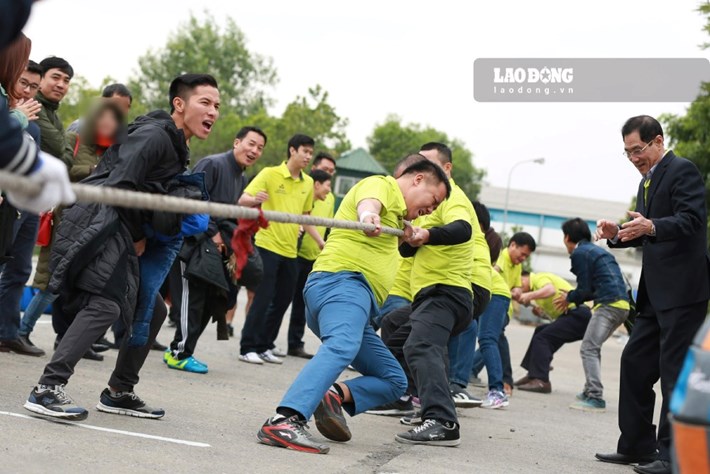
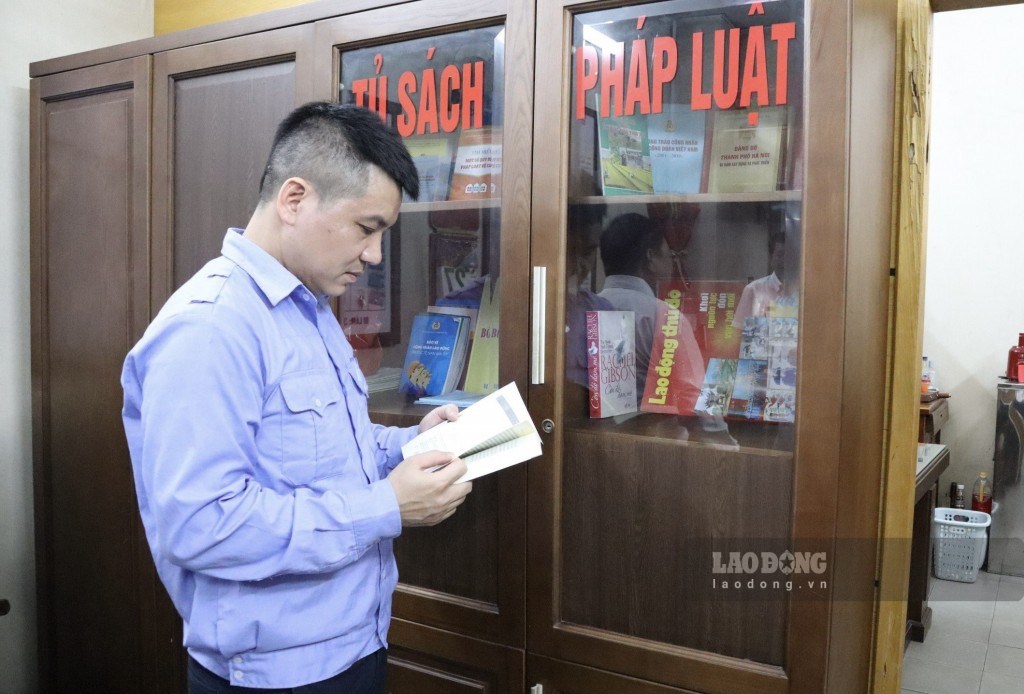
In recent years, Hanoi has implemented many practical models such as "Workers' Cultural Activity Points", "Trade Union Bookshelves", mobile art programs, workers' sports festivals or buses taking workers home for holidays and Tet.
However, in the face of practical requirements, these activities need to be innovated more strongly in a direction that is close, flexible and linked to the actual needs of each labor group.
The focus of improving the cultural and spiritual life of workers today is not in organizing activities, but in whether those activities really touch the practical needs of workers or not.
Looking at the reality in Hanoi, it can be seen that trade union levels have had many clear changes when shifting from a movement-based approach to a deep-based organization, closely following the specific characteristics of each business.
Many units have proactively built cultural and sports activity models right at the grassroots level, taking advantage of the time after work to create space for training and entertainment for workers. Activities such as football, badminton, table tennis... not only help improve physical fitness but also contribute to relieving work pressure, improving morale and increasing internal cohesion.
Reality shows that in places that maintain these activities well, the working environment is more stable, the spirit of workers is more positive, thereby directly affecting labor productivity.
Mr. Bui Xuan Chuong - Chairman of the Trade Union of Hanoi Railway Company Limited (Hanoi Metro) - said that the unit always identifies taking care of the spiritual life of employees as an important task, associated with the nature of high-intensity work and strict disciplinary requirements.
According to Mr. Bui Xuan Chuong, the Trade Union has coordinated with professional departments to organize many cultural and sports activities, creating conditions for officials and employees to relax and regenerate labor after each shift. Through this, it not only helps workers balance their psychology and reduce pressure but also contributes to building a sense of responsibility, attachment and discipline in the entire unit.
In the context that the gap between the needs and conditions for enjoying culture of workers is still present, the issue raised is not only to organize more activities, but to build a substantive and sustainable worker cultural foundation.
As the political and economic center of the country, Hanoi is attracting millions of workers from many provinces and cities to live and work. In 10 industrial parks in the area alone, there are currently about 167,000 workers working. This is not only the main production force, but also a social community with increasingly clear cultural and spiritual needs.
In other words, culture is not an "accompanying" factor, but the foundation of development. When the spiritual life of workers is properly cared for, they not only work more effectively but also tend to be attached to the business for a long time.
This is also in line with the spirit of Resolution No. 80-NQ/TW, when placing culture in a position that is both a foundation and a driving force to promote socio-economic development.
However, for culture to truly "enter life", it is necessary to look directly at the specific characteristics of the current workforce. If cultural institutions are designed flexibly, suitable for the time and living space of workers, they can completely be effective.
In that process, the Trade Union organization continues to play the central role of connecting, organizing and leading, helping cultural activities closely follow practical needs and spread widely in workers' lives.
See the original here