
Digital literacy opens up opportunities to escape poverty in Pu Nhi
Thanh Hoa - Digital literacy helps people in the Pu Nhi border area access information, improve technology skills and seek economic development opportunities.
From the days of having to climb slopes to find phone signals to knowing how to use the internet to learn production techniques, people in Pu Nhi border commune, Thanh Hoa province, are gradually changing their way of accessing information.
Lack of information, digital skills: Barriers to escape poverty in border areas
Village chief of Com Ho Van Ho (born in 1989) still remembers the days before 2022, when the village did not have phone signal. To make a call, people had to climb onto high hillsides to find signals. Every time they needed to announce common work, Mr. Ho went from house to house, sometimes taking half a day because the road was steep and slippery when it rained.
Since the mobile broadcasting station went into operation in 2022, life in the village has begun to change. People can make calls at home, use 4G internet to contact and update information. For the village head, announcing meeting schedules and mobilizing people to participate in common work is also more convenient.
“Now it's different. People can use phones right at home. I just need to send notifications on the Zalo group, people will know immediately. The work of the village head is also much more convenient,” Mr. Ho shared.
Com village has 186 households, about 900 people, mainly Mong people. Currently, the village still has 81 poor households, 41 near-poor households and 64 non-poor households. The terrain is divided, the roads are difficult, and livelihoods mainly depend on agricultural production, making the lives of many families still difficult.
In Pu Nhi, the difficulty is not only in the villages that used to lack phone signal. Even with smart devices, not every citizen knows how to use them to find knowledge, access policies or serve production.
The whole commune has more than 6,000 people, nearly 97% are ethnic minorities. The area is large, many villages are far from the center, transportation is still difficult; life is mainly based on agriculture, low income. Many young workers go to work far away, while people at home, especially the elderly, have little opportunity to access technology.
Secretary of the Party Committee of Pu Nhi commune Doan Van Truong said that what worries him is that many people do not lack the will to rise up, but do not have enough opportunities to access information. There are practical policies that people do not know to enjoy; there are new production techniques that have not reached the people; there are online scams but many people do not have enough skills to identify them.
From that reality, the commune determined that propaganda work must be close to the people, close to practical needs, instead of just conveying available content. Mr. Truong shared: "If you want people to trust you, officials must go to the village more than sitting in the meeting room.
This is also the basis for Pu Nhi to implement Digital Literacy in a more practical direction. Because if there is only infrastructure that people do not know how to use, technological utilities are still difficult to promote efficiency. The important thing is to help people know how to apply technology to specific tasks in life.
From knowing how to use technology to proactively doing business
From grassroots practice, Pu Nhi implements many solutions to bring information closer to people. Besides gradually improving telecommunications infrastructure, the locality maintains a grassroots broadcasting system, because not everyone uses smartphones, while many people go to the fields from morning to night.
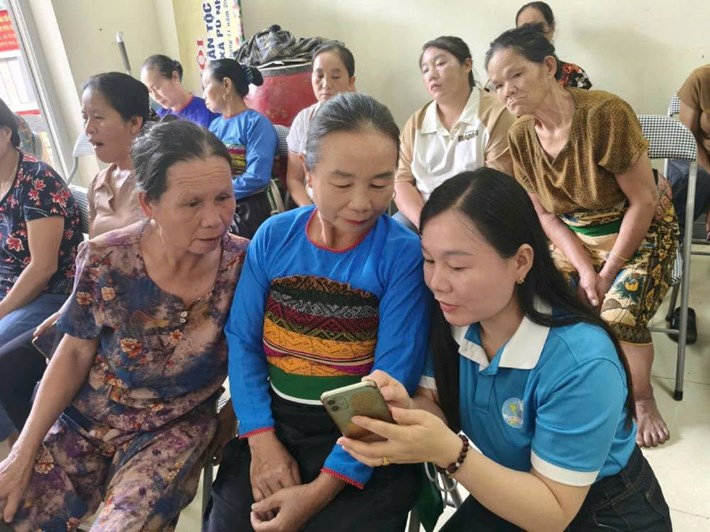
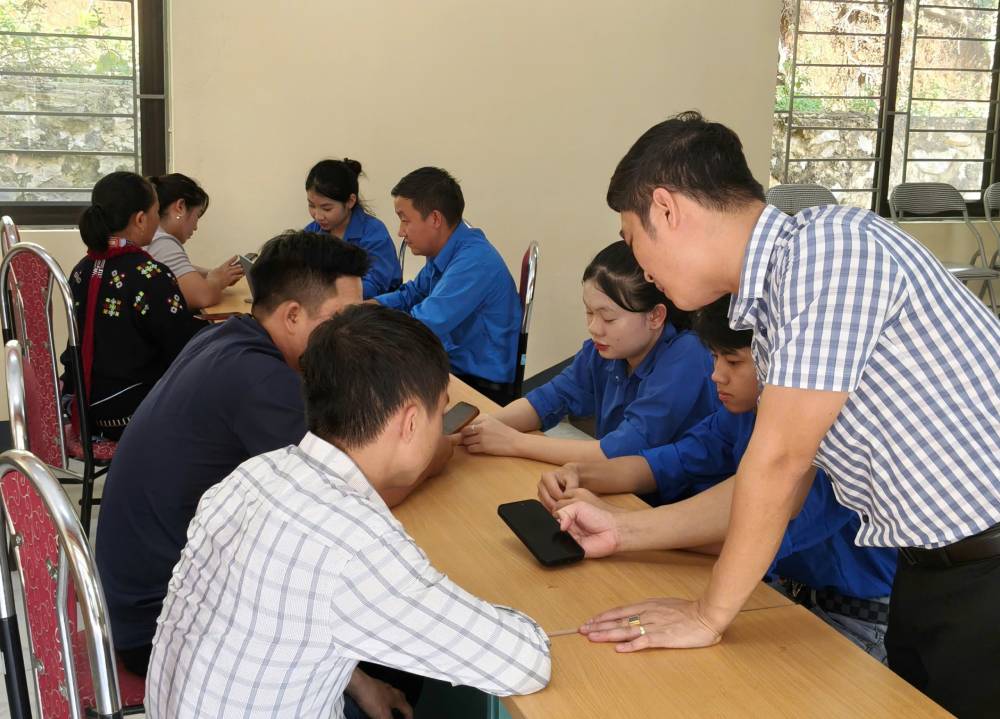
The Digital Literacy Campaign is implemented according to the motto "holding hands and teaching". Instead of conveying incomprehensible technology concepts, members guide people directly on their phones, from using VNeID, performing online public services to identifying scams through phones and social networks.
Pu Nhi has established 13 mobile digital literacy groups, mobilizing police, youth union members, teachers, grassroots officials, reputable people and community digital technology forces to go to each village and each household. The way to do it is to proactively reach out to the people, guide them according to their needs and ability to absorb knowledge, instead of waiting for people to come to learn.
During a training session at the Com village cultural house, many people brought phones to ask officials for support. Due to the lack of stable Wi-Fi connection, officials had to use personal phones to broadcast the network for people to practice. The signal was sometimes up, sometimes down; some operations had to be done over and over again.
Secretary of the Commune Party Committee Doan Van Truong recalled that at the end of the session, when there were still people who had not finished the operations, he thought people would be impatient to leave. But many people still stayed and said: "If we can't do it today, we will study again another day.
For Mr. Truong, that simple saying shows that people have a need to learn and are ready to access technology. The issue is that the government must continue to improve infrastructure conditions, while maintaining guidance so that that eagerness to learn is not interrupted.
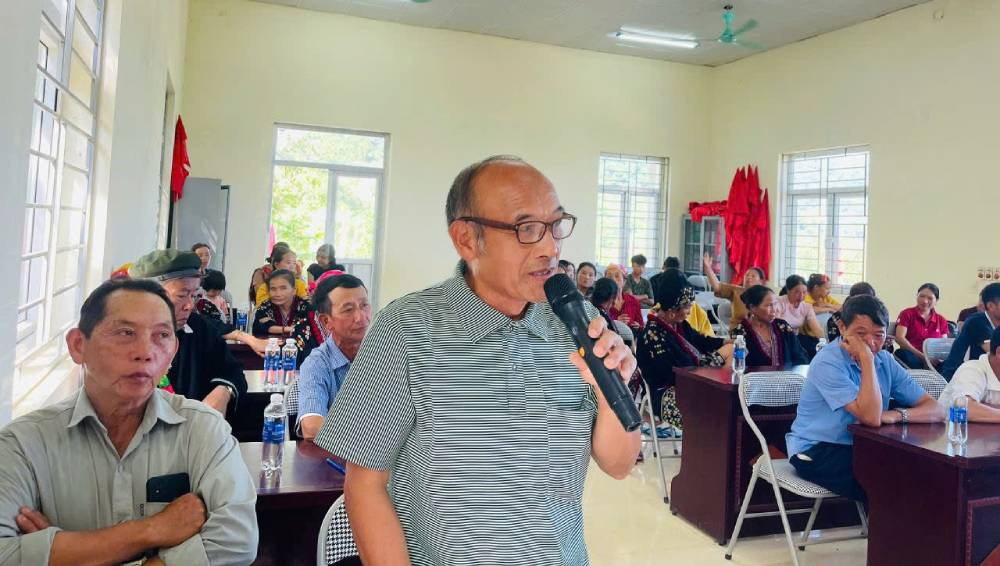
According to local data provided, the movement attracted 3,145 people to participate, directly supporting 3,098 people using digital platforms; and at the same time detected and prevented 3 cases with signs of fraud in cyberspace.
Notably, after the guidance sessions, many people in Com village no longer just bring phones to ask officials to do it for them. They have learned to open applications themselves, perform operations, look up information and use online public services; some people also provide guidance to relatives and neighbors.
From being afraid of technology to operating on their own, that change shows that people are gradually forming a habit of actively learning. The effectiveness of digital literacy is not only in the number of participants or the number of people supported, but also in the fact that people can gradually use technology themselves in life.
To prevent learning from stopping after a few sessions, the locality encourages students to become digital bridges in the family, guiding grandparents and parents to use phones and essential applications. Community digital technology teams continue to support when people encounter problems.
Along with that, loudspeakers, village meetings and Zalo groups are used flexibly to convey information about policies, life and production. Propaganda work also has the coordination of Border Guards, village heads and reputable people, helping information reach people by being close and easy to understand.
Bringing digital skills into production, opening up opportunities to increase income
For people in border areas, digital skills only truly promote their value when they help solve problems in life, especially production and family economic development.
Previously, many households in Pu Nhi mainly engaged in agriculture based on experience, with few conditions to learn about new techniques, effective production models or market information. When accessing more knowledge, exchanging with experienced people and visiting real models, people have more basis to choose a suitable business direction.
Mr. Trieu Van Cau is one of the people who is looking for ways to change livelihoods. After learning about techniques and visiting models, he switched to developing about 1ha committing to combined livestock. The conversion requires the family to calculate land conditions, care labor and investment capacity, but opens up a different production direction compared to the previous approach.
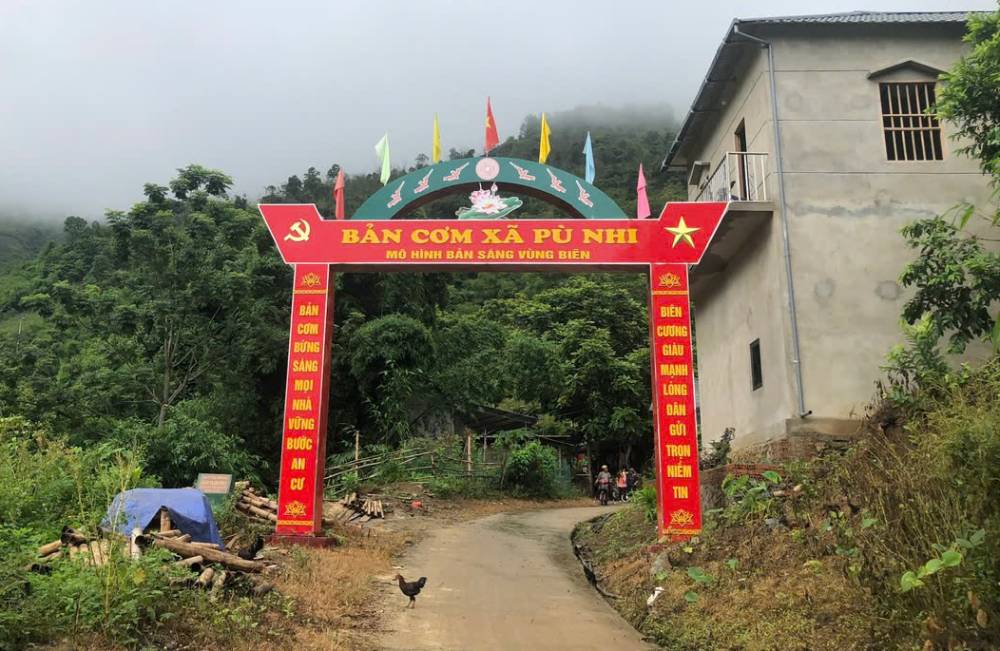
In the locality, other people are also mobilized to learn about models such as raising black pigs, growing Mong vegetables, and growing high-yield cassava. Accessing technical information helps people have more choices, but how to apply it needs to be based on each household's conditions and product consumption capacity, avoiding investment following trends.
The story in Ha Son village also shows that to help people escape poverty, it is necessary to look at the specific difficulties of each family. Ms. Ho Thi Tung's household was once supported with seedlings and livestock, but life is still difficult because the road to the house is inconvenient, affecting the transportation of materials and agricultural products. After difficulties were connected and removed, a small road from the main road to the house was built with the joint efforts of charity organizations and people.
The road does not directly generate income, but helps the family to be more convenient in living and production. After those changes, Ms. Tung proactively proposed to be removed from the list of poor households.
Along with livelihood support activities, the "Border Area Brightness" model with a solar street lighting system supported by the Border Guard contributes to improving travel and living conditions. Practical projects help make life in the village more convenient, creating more conditions for people to participate in common activities.
According to local data provided, out of a total of 1,255 households surveyed, 725 households have escaped poverty. This result comes from many different factors and support programs, which cannot be completely attributed to Digital Literacy. However, improving digital skills helps people have more conditions to access policies, learn techniques and proactively choose ways to do business, thereby contributing to improving labor efficiency and income.
Secretary of the Party Committee of Pu Nhi commune Doan Van Truong believes that when digital knowledge and skills reach each citizen, each family will have more opportunities to develop the economy, improve income and rise out of poverty. According to him, the movement needs to originate from practical needs, with the joint efforts of the entire political system and the proactiveness of the people. The most important thing is not to do it for others, but to guide people to learn, seize opportunities and be self-mastered in life.
From digital classrooms at village cultural houses to applying knowledge to production, digital literacy is gradually helping Pu Nhi people become more confident in the face of technological changes. When people know how to study on their own, do it themselves and proactively seek opportunities, digital skills are no longer just operations on phones, but become tools to serve life, contributing to increasing income and towards sustainable poverty reduction.
See the original here