
Summarizing the 40 years of Doi Moi practice for Ho Chi Minh City to develop breakthroughly
Ho Chi Minh City - Conference looking back at the 40-year renovation journey, summarizing experiences and contributing scientific arguments for city development.
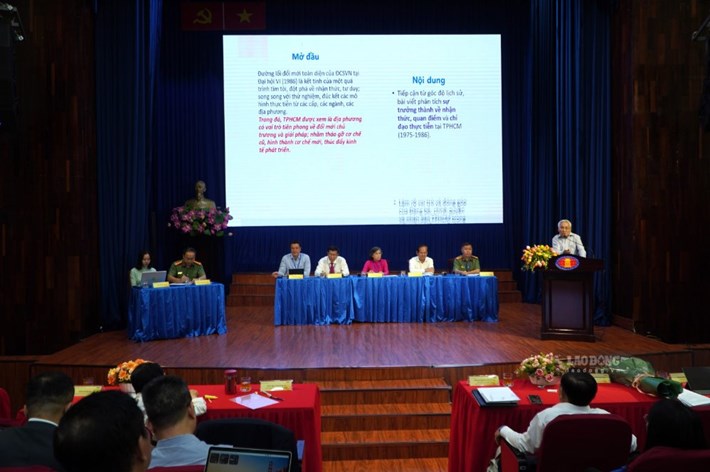
On October 31, the Propaganda Department of the Ho Chi Minh City Party Committee coordinated with the University of Social Sciences and Humanities, Vietnam National University Ho Chi Minh City and the People's Security University to organize a scientific conference "Ho Chi Minh City with the cause of renovation (1986-2026): Theoretical and practical issues".
The conference gathered experts and scientists from nearly 40 schools and institutes nationwide, along with many practically active officials, attached to the city's development process.
Findings and innovations from practice
Speaking at the opening ceremony, Mr. Tran Van Khuyen - Deputy Head of the Propaganda Department of the Ho Chi Minh City Party Committee, emphasized that in the renovation process, the city always affirms its pioneering role, daring to go ahead, daring to experiment with new models and mechanisms stemming from the urgent requirements of reality and people's lives.
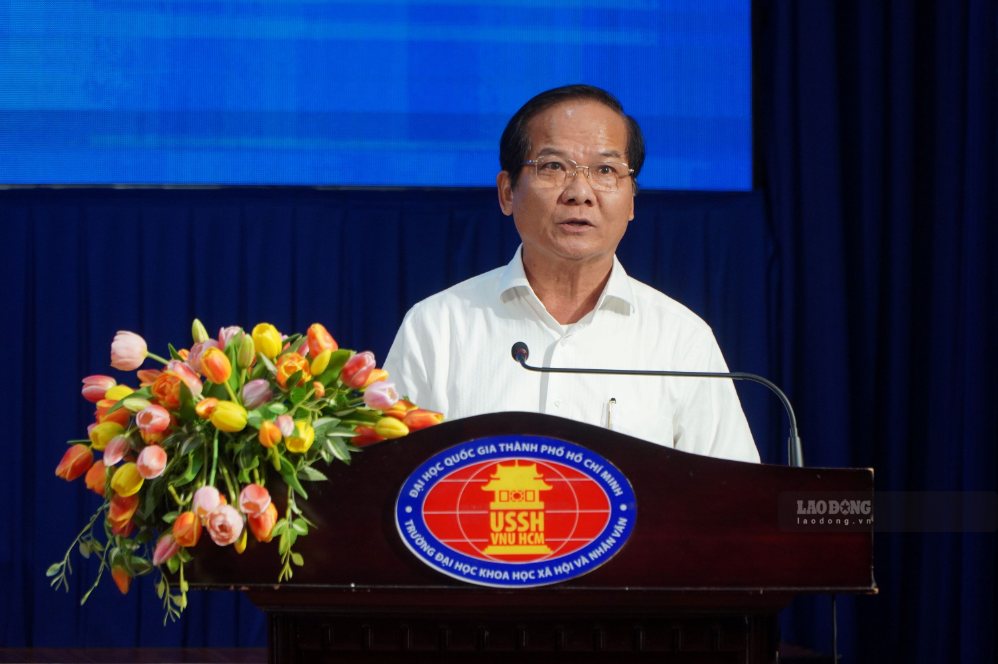
Over 40 years of renovation, the Party Committee, government and people of the city have united, made efforts to overcome difficulties, achieved many important and comprehensive results in all fields, and gradually improved the material and spiritual life of the people.
According to Mr. Khuyen, the city's economic structure is strongly shifting towards high-tech industry, high-quality services, green economy and digital economy. The infrastructure system of transportation, urban areas, energy, and logistics is invested synchronously, creating a premise for regional linkages and international connections.
Along with economic development, the city mobilizes social resources, promotes the tradition of affection to care for people. Gratitude movements, building houses of gratitude, houses of compassion, and supporting poor patients bring positive results, spreading throughout the country.
Mr. Khuyen emphasized that looking back at the past journey aims to summarize practice, clarify the basis for determining the goals and tasks of building, protecting and developing the city. The organizing committee hopes that the contributions at the workshop will supplement the theoretical basis and practical experience to serve leadership, management, and administration work, contributing to building Ho Chi Minh City to develop quickly, sustainably, modernly, integrate and be meaningful.
Creating development momentum in the new stage
Regarding the current development requirements, Mr. Nguyen Thanh Phong - former Chairman of Ho Chi Minh City People's Committee, acknowledged that the city's growth model shifted from mobilizing and expanding resources to improving the efficiency of resource use, creating motivation based on knowledge, technology and innovation.
As drivers based on capital, labor and development space expansion gradually reduce efficiency, the city faces the requirement to shift its focus from scale expansion to improving growth quality.
According to Mr. Phong, this is a process of gradually adjusting the economic structure and methods of using resources, in which productivity, knowledge, technology and innovation play an increasingly important role.
He pointed out three groups of barriers including: institutions; infrastructure and connectivity; the ability to spread innovation associated with the quality of human resources. These factors interact, affecting the efficiency of resource allocation and the ability to turn potential into real growth.
According to the Organizing Committee, the workshop received 169 papers, selected 118 articles to be included in the yearbook after editing and criticism.
The studies focus on theory, institutions and development models; economy; culture and society; foreign affairs, defense and security, contributing to supplementing scientific arguments for the city to develop breakthroughly.
See the original here