


Removing data bottlenecks to develop trade union members, establish grassroots trade unions
Some commune and ward trade unions proposed to strengthen coordination between trade unions, tax authorities and social insurance to develop union members and establish grassroots trade unions.
Difficulties in verifying addresses and contacts
Sharing experience in implementing the 90-day campaign to develop union members and establish grassroots trade unions of the Hanoi City Trade Union, Ms. Nguyen Thi Thanh - Chairwoman of Ba Dinh Ward Trade Union (Hanoi City) said that immediately after the city's policy on the peak period of developing union members and establishing grassroots trade unions, the Ward Trade Union quickly developed a plan and organized implementation in stages, with specific goals.
In the initial stage, the Ward Trade Union spent about a week surveying and reviewing the list of businesses in the area. Based on data provided by the tax and social insurance agencies, the ward identified 69 businesses with 20 or more employees and 267 businesses with 5 or more employees - which is a source to continue reviewing and mobilizing the establishment of trade union organizations.
The Ward Trade Union established 2 working groups, including full-time officials and representatives of relevant departments and agencies. At the same time, the ward invited tax authorities, social insurance and coordinated forces to participate in reviewing each area and residential group.
By the beginning of October, through review, the Ward Trade Union determined that there were still about 33 businesses that needed to continue mobilization. However, among these, there were many cases facing difficulties in verifying addresses and contacting.
Some businesses are no longer operating at registered addresses; businesses do not have contact phone numbers or cannot be contacted. Some businesses register for business in wards but factories and production facilities are located in communes, wards or other provinces and cities.
For these cases, the Ward Trade Union shall make a verification record, with the participation of the working group, local police and residential groups if any, as a basis for reporting the review results to the city.
In addition to reviewing, for businesses that have identified addresses and contacts, the Ward Trade Union sends invitation letters and official letters to business leaders for propaganda and mobilization.
One of the ways Ms. Thanh emphasized is to organize a conference directly with businesses. On September 28, the Ward Trade Union invited about 30 businesses to attend the conference, including more than 20 businesses.
At the conference, the Ward Trade Union invited leaders of the Party Committee, the Standing Committee of the Vietnam Fatherland Front Committee of the ward and leaders of the Ward People's Committee to participate. According to Ms. Thanh, mobilizing the participation of the entire political system and direct dialogue with businesses helps increase the effectiveness of propaganda and mobilization.
According to Ms. Thanh, in the process of mobilization, many businesses are interested in what benefits workers are entitled to when paying union dues.
Therefore, trade union officials must specifically explain the role of trade union organizations in caring for and protecting the legitimate and lawful rights and interests of workers; and at the same time clarify the benefits that businesses can receive when they have a trade union organization.
From the reality of implementation, Ms. Thanh believes that the exchange of experiences between commune and ward trade unions is very necessary. The unit that has done it can share approaches, methods of propaganda and mobilization so that the units that are implementing have more experience...
From practical experiences, the Chairman of Ba Dinh Ward Trade Union said that to complete the goals of the peak period, units need to closely monitor the area, carefully review data, strengthen coordination and especially innovate propaganda and mobilization methods in a practical, direct, and suitable direction for each business.
A business has 400 employees, but in reality there are only about 6 people at the headquarters.
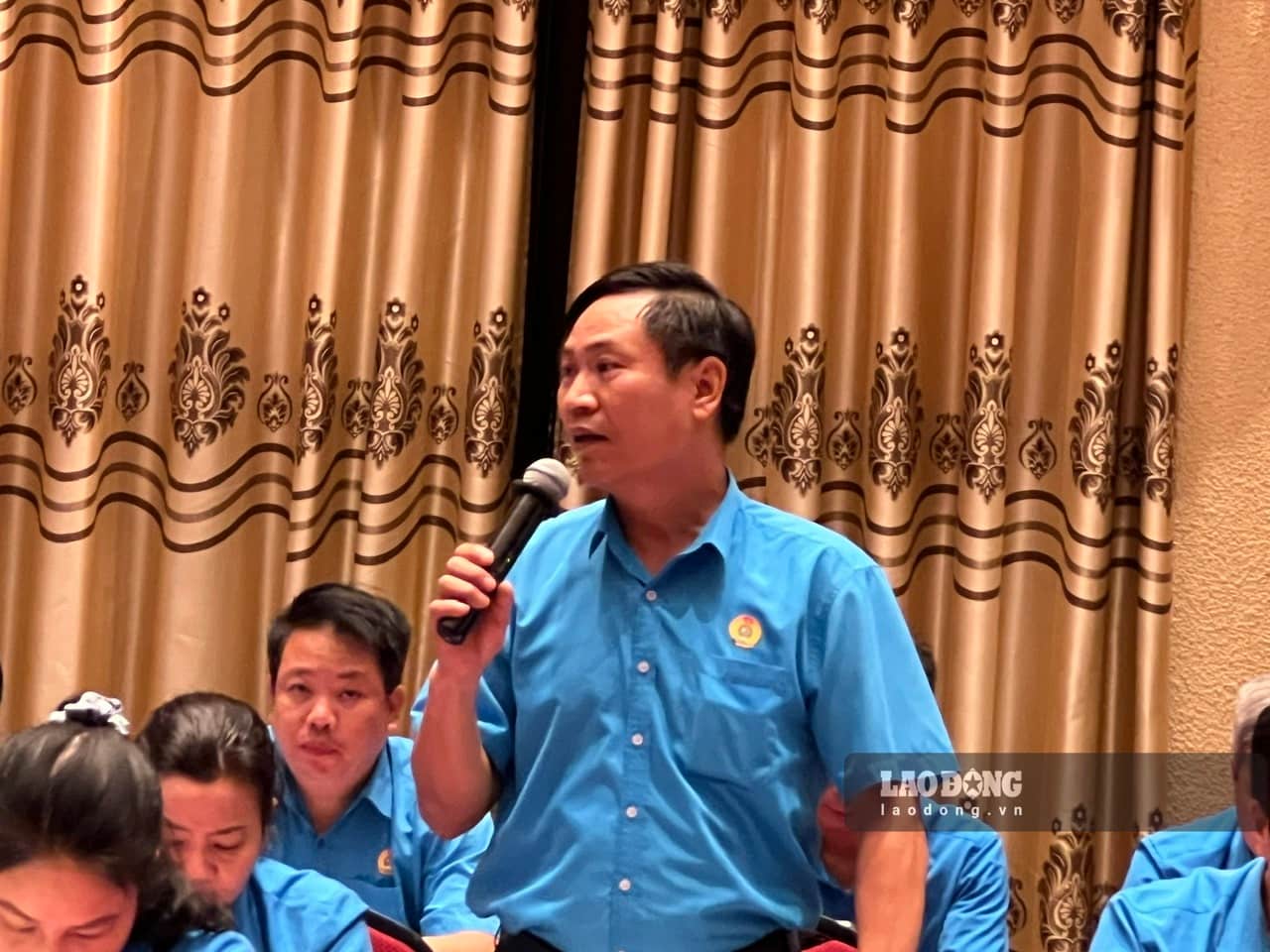
From the practical implementation in the locality, Mr. Nguyen Cong Nam - Chairman of the My Duc Commune Trade Union (Hanoi City) said that the Commune Trade Union is currently in charge of the area of 4 communes in the old My Duc district.
Currently, at the end of the year, the workload is relatively large. For businesses in the area, we currently have about 3 businesses that need to focus on mobilizing to establish trade unions," Mr. Nam said.
However, during the review process, the Commune Trade Union encountered many cases where the data on the system did not accurately reflect the actual situation. Mr. Nam cited a labor supply enterprise, according to social insurance data, there are more than 400 workers, but in reality at the enterprise headquarters there are only about 6 people. The remaining workers have been supplied by the enterprise to units in Binh Duong (former) and Binh Phuoc (former).
We have discussed with the business owner and the business also agreed on the policy of establishing a trade union. However, in this case, there needs to be specific guidance for us to implement appropriately," Mr. Nam said.
Another issue mentioned by the Chairman of My Duc Commune Trade Union is the coordination and data sharing between functional agencies. According to Mr. Nam, the City Labor Federation has issued documents to coordinate with agencies such as Social Insurance, tax authorities..., but it is not clear whether lower-level agencies have specific instructions to branches and affiliated units or not.
We have a list of businesses, but to access and propagate, information about business owners and contact phone numbers is very necessary. There are cases where we can get a list but there is no contact information, so it is very difficult to verify," Mr. Nam said.
According to Mr. Nam, in the area, there are businesses that only register representative offices but operate in other places. Therefore, without direct contact information, the Commune Trade Union finds it very difficult to approach businesses to propagate and mobilize the establishment of grassroots trade unions.
From this reality, Mr. Nam requested the leaders of the City Social Insurance to pay attention to directing units and branches in the area when receiving coordination documents from commune and ward trade unions to create conditions to provide necessary information, within the scope of regulations, especially contact information of businesses to serve propaganda and mobilization work.
Mr. Nam also proposed that the city continue to strengthen the coordination mechanism between trade unions and specialized agencies, especially in updating business data and providing information to serve business access; and at the same time pay attention to resources and human resources so that commune trade unions have conditions to complete the goals of the 90-day campaign to develop union members and establish grassroots trade unions.
See the original here