
Proposal to add holidays to the law, workers are entitled to full salary
The Government proposes to include Vietnam Culture Day November 24th in the list of holidays in the Labor Code. Workers are entitled to one day off, enjoying full salary.
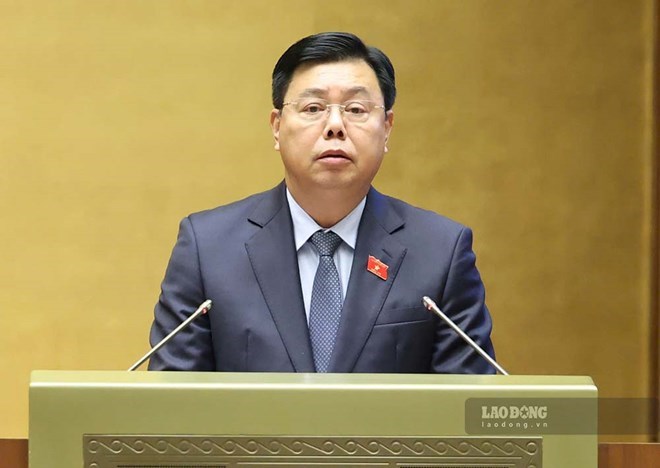
On October 21, continuing the 2nd Session, the National Assembly listened to Member of the Party Central Committee, Minister of Home Affairs Nguyen Tien Hai present the Draft Law amending and supplementing a number of articles of 5 Laws including the Labor Code, the Archives Law, the Gender Equality Law, the Red Cross Activities Law and the Employment Law.
The draft includes 7 articles, including one article amending and supplementing the Labor Code, focusing on decentralization, delegation of power, simplification of administrative procedures, reduction of business conditions and updating regulations suitable to the new organizational structure.
Notably, the draft proposes to transfer the task of announcing the annual holiday and Tet schedule from current regulations to assigning the Minister of Home Affairs to implement (replacing the Prime Minister as in current law). The notification must be completed before September 30 of the previous year.
In particular, the draft law adds November 24th every year as Vietnam Culture Day, and stipulates that this is a holiday and employees are entitled to full salary.
The proposal aims to institutionalize Resolution No. 80-NQ/TW on the development of Vietnamese culture, bringing the policy on culture into labor law regulations.
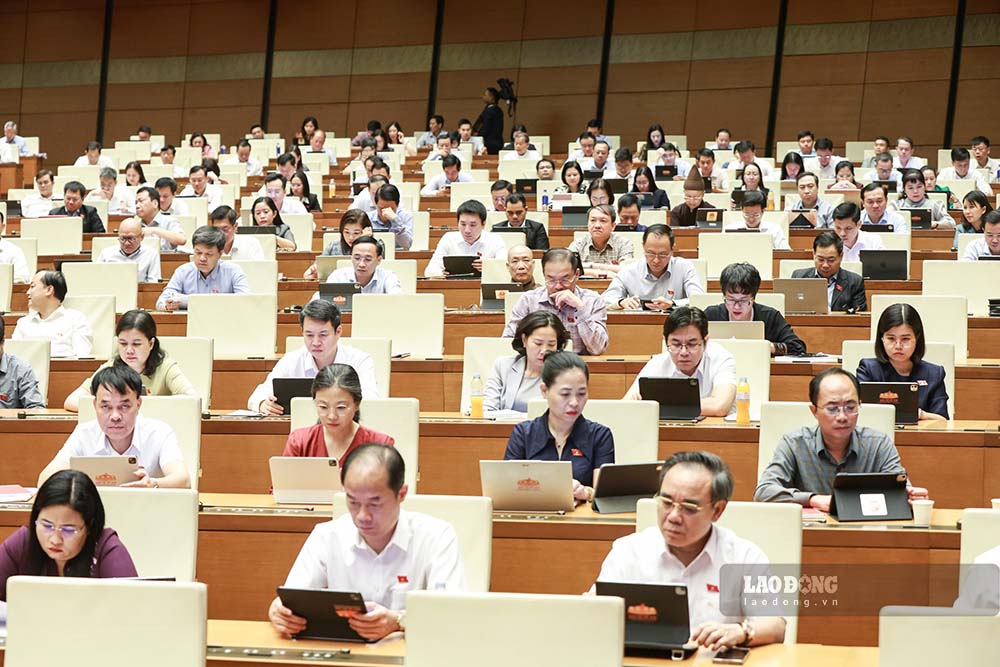
Presenting for verification, Member of the Party Central Committee, Chairman of the National Assembly's Committee for Culture and Society Nguyen Dac Vinh said that the Committee basically agreed with the addition of Vietnam Culture Day and full-time paid leave for workers.
However, the thẩm tra agency said that there was an opinion proposing to study adding July 27th, War Invalids and Martyrs' Day, to the list of days off to receive full salary.
The Committee proposed to supplement the responsibility of building and exploiting electronic databases on labor leasing enterprises and subleased workers.
At the same time, improve regulations on enterprise capacity, deposit and joint liability of the leasing party in case the enterprise violates or loses the ability to pay salaries and social insurance.
The draft law also proposes to redefine the authority between local government levels according to a two-level model.
Accordingly, the Chairman of the commune-level People's Committee can carry out labor regulations registration in cases authorized by the head of a specialized agency under the provincial-level People's Committee; and at the same time preside over and coordinate the handling of strikes that are not in accordance with procedures.
Regarding the regulations on strikes, the Committee for Culture and Social Affairs proposed to clarify which commune-level People's Committee Chairman will preside over handling when businesses have many establishments operating in many areas.
The role of provincial-level specialized agencies on labor and trade union focal points in the handling process also needs to be specifically identified.
Read the original here