

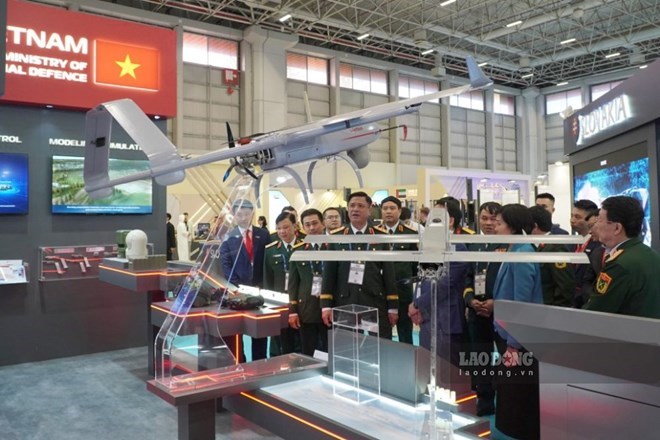
Politburo sets target to operate 3 national-level UAV flight testing zones
The Politburo sets a target to put into operation 3 national-level flight testing zones and at least 1 national UAV research and testing center by 2030.
This content is stated in Conclusion No. 99-KL/TW of the Politburo on exploiting, managing and protecting low-altitude space to serve national development in the new situation. The conclusion was signed and promulgated by Politburo Member, Standing Secretary of the Secretariat Tran Cam Tu.
In the Conclusion, the Politburo requested to focus on promoting internal resources, improving self-reliance in technology, infrastructure and strategic data, associated with the development of semiconductor industry, artificial intelligence, and space technology to transform into national strength; contributing to raising awareness and creating social consensus in low-level space economic development.
Conclusion No. 99-KL/TW sets a target to put into operation by 2030 3 national-level flight testing zones and at least 1 national research and testing center for unmanned aerial vehicles (UAVs).
By 2045, low-altitude space economy will become an important economic - technical sector, one of the new growth drivers of the economy, with high competitiveness in the region, contributing about 1.5% of national GDP, contributing to making our country a developed, high-income country.
Strive for the localization rate of key UAV lines serving production to reach over 30 - 40% by 2030 and over 85% by 2045.
The Politburo also requested to improve the legal system to meet the requirements of exploitation, management and protection of low-altitude space in economic, civil, defense, and security activities;
Improve the national governance model in a unified, modern direction, based on data, digital platforms and risk management; manage by operating area, height stratification, operating type and risk level.
In 2027, build and complete national technical standards and regulations on infrastructure, equipment, and management technology in accordance with international standard requirements; improve testing, inspection, certification and conformity assessment capacity.
The State plays a role in orienting and leading the initial market through the mechanism of ordering, piloting, and application in the public sector; and at the same time encouraging the participation of businesses, research institutes, and universities in UAV research, development, production and commercialization.
The Politburo also raised the requirement to strengthen infrastructure investment, scientific research, and promote the development of low-altitude space industry.
The State prioritizes budget investment in essential infrastructure development to serve management, exploitation and protection of low-altitude space, ensuring synchronization, modernity, common use, and integration and intercommunication with airspace management systems, military and civilian flight operations and other specialized management systems.
Develop support policies and incentives on taxes, credit, and land for businesses researching, producing, testing, and commercializing UAV products and services to serve domestic and export needs; establish national-level UAV flight testing zones and industrial clusters.
Read the original here