


Workers face many risks from verbal contracts
In the urban economy, informal employment plays an important role thanks to its flexibility. However, verbal contracts put workers in a weak position.
Almost lost money for general reasons
Mr. Nguyen Van Nam (38 years old, from Thuong Phuc commune, Hanoi) is a freelancer, can repair, install electricity and water, paint houses or assist in construction projects.
Nearly 10 years of freelance work with the motto "whoever hires what does it", Mr. Nam said that the job of repairing electricity and water, painting and repairing houses or installing equipment for households and small stores is usually done in half a day or a day, and at the end of the day, both sides accept and then pay cash or transfer money directly. Due to the specific nature of chores, and finished on the same day, he never thought about signing paper contracts, everything was only exchanged over the phone or verbal agreements on the spot.
Mr. Nam said that being late for wages or being cut back happens like daily meals, but he remembers most the time he received to repair the water pipe system for a newly opened restaurant.
This job is quite big, done in 3 days, so I invited 2 more brothers to work together to meet the schedule. The verbal agreement for the total wage of 3 people for 3 working days is 5 million VND. But when we finished, the shop owner gave all sorts of reasons not to accept it on time. They criticized the pipeline for not being aesthetic, the water flowing a bit weak, and then said a general sentence that it was "not up to standard" to bargain, only agreeing to pay 4.5 million VND," Mr. Nam said.
Mr. Nam had to compare each item, proving that the system met the technical standards according to the initial agreement for several hours to get enough wages. "After that time, I deeply understood that freelance work, verbal contracts always contain risks. Selling genuine labor, but when demanding money, it's like begging," Mr. Nam shared.
Ms. Le Thi Mai (42 years old, from Thien Loc commune, Hanoi) works as a maid, hourly helper and cleans a small construction site.
Ms. Mai shared that for more than 8 years working as an hourly maid, cleaning houses after construction or helping at restaurants, she has never known about labor contracts.
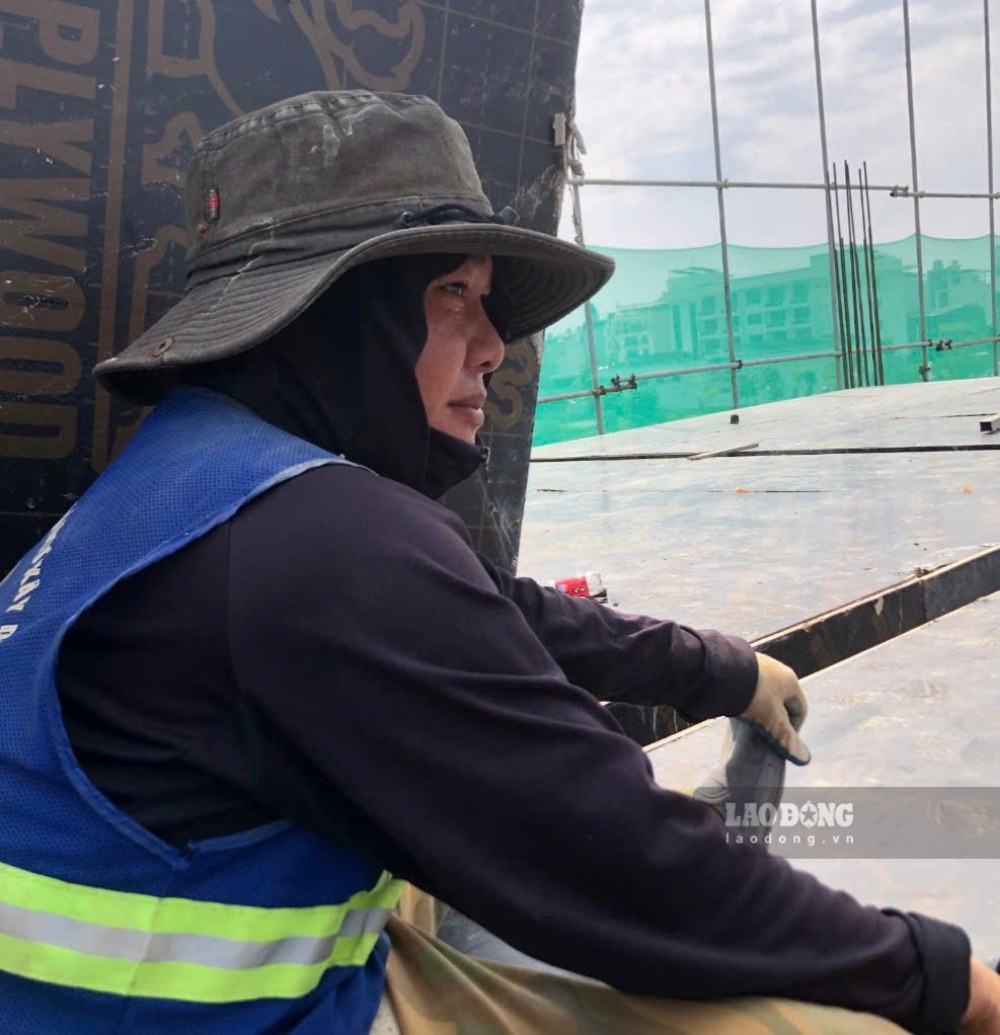
When people need someone, they call, I come to work for a few hours or a day or two, after finishing work, I take the money and go home. Working under a verbal contract is free, not bound and constrained, but the price to pay is instability and unsafety," Ms. Mai said.
According to Ms. Mai, because there are no clear terms or written agreements, the lessee can easily renege or generate unreasonable demands. Many times, initially, the homeowner agreed to clean up a 70m2 apartment for 400,000 VND in 4 hours. But when they arrived, they assigned countless unnamed tasks such as cleaning glass cabinets, scrubbing balconies, washing carpets...
Ms. Mai believes that the biggest risk is at the time of acceptance. Just because the homeowner excuses "not clean" in a small corner, they can use the excuse of deducting wages, even delaying payments. Due to lack of evidence or binding contracts, freelancers fall into a completely disadvantageous position.
There must be a form of agreement
Mr. Le Quang Trung - former Deputy Director in charge of the Department of Employment, said that the reality of freelance workers performing short-term jobs based only on verbal agreements is a common phenomenon, reflecting the flexibility of the informal labor market today. However, this looseness in labor relations is a major loophole that always puts workers at a disadvantage and risk.
When there is no contract conclusion - whether it is a labor contract or a simple service contract - the employment relationship lacks legal protection. When disputes arise over acceptance, work quality or late payment of wages, the lack of documentary basis makes it very difficult for functional agencies to intervene or handle. Employers easily give subjective reasons to pressure prices, delay payment or cut back on workers' wages.
To protect themselves in the context of the modern labor market, according to Mr. Trung, freelancers need to pay attention to changing the form of contracts. Whether it is a short-term job of half a day or one day, both parties should form the habit of establishing contracts in a simple written form, or at least via text messages (SMS, Zalo, Email). In which, it is necessary to clearly state the scope of work, specific acceptance criteria, completion time and agreed wages.
Workers should keep work evidence. In the process of performing work, workers should take photos and videos of the current situation before and after completion to serve as a basis for transparent comparison when accepting.
See the original here