

Submitting to the National Assembly a plan to apply a 0.2% tax on abandoned land
The government proposes a tax rate of 0.2% on abandoned land, not put into use, and no limits are applied.
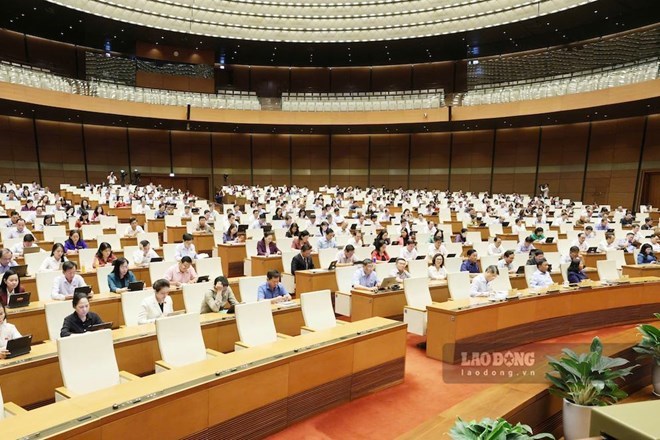
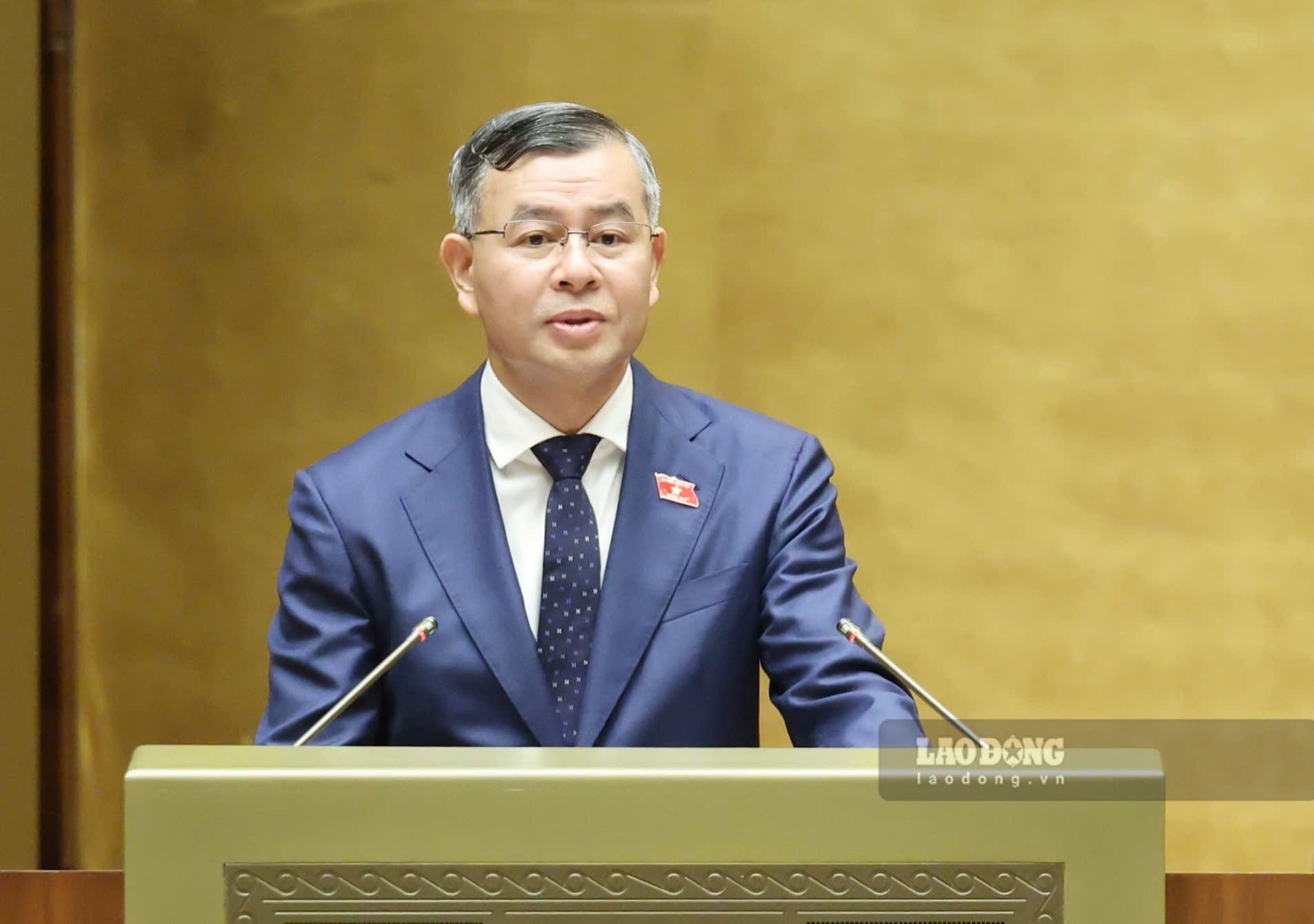
On the morning of October 23, continuing the second session, the 16th National Assembly, the National Assembly listened to Minister of Finance Ngo Van Tuan, authorized by the Prime Minister, present the Submission of the draft Law amending and supplementing a number of articles of the Law on Corporate Income Tax, Law on Non-Agricultural Land Use Tax, and Law on Personal Income Tax.
Regarding the Law on Corporate Income Tax, the draft amendment stipulates tax exemption for public science and technology organizations, public educational institutions and non-profit private educational institutions.
The identification of public educational institutions and non-profit private educational institutions is carried out in accordance with the law on education, vocational education and higher education.
According to the Government, the amendment aims to implement the policy of not applying corporate income tax to public educational institutions and non-profit private educational institutions.
Another noteworthy content is the proposal to exempt corporate income tax for the income of enterprises from providing meals to educational institutions, medical examination and treatment facilities according to the provisions of the law on education and health. Resident individuals with income from business services providing meals to these institutions are also proposed to be exempt from personal income tax. The application to both businesses and individual businesses aims to ensure equality between entities providing services together.
To ensure equality in tax incentives, the Government proposes to apply corporate income tax exemption to businesses providing meals, public science and technology organizations, and public educational institutions that pay taxes at a percentage rate on revenue, not only units that pay taxes according to the declaration method.
Regarding the Law on Non-Agricultural Land Use Tax, the draft supplements regulations on tax exemption for land used for educational and training purposes of educational institutions, except for cases that are already not subject to tax or tax exemption according to current regulations.
The draft also proposes to exempt non-agricultural land use tax for residential land within the limits of ethnic minorities in ethnic minority and mountainous areas according to the Government's regulations.
Notably, the draft supplements a tax rate of 0.2% for abandoned land, not put into use or late put into use, without applying limits. The identification of these types of land is carried out in accordance with the provisions of land law.
In addition to preferential policies, the draft amends regulations on declaring, calculating and paying non-agricultural land use tax to be consistent with the organizational structure after arrangement, in which the phrases related to district-level tax authorities are replaced by grassroots tax authorities, and corresponding administrative landmarks are updated.
The Law is expected to take effect from January 1, 2027.
Presenting the Appraisal Report of the draft Law, Chairman of the Economic and Finance Committee Phan Van Mai said that the Committee basically agrees with the necessity to study and promulgate tax incentive policies to implement the goal of encouraging development for the field of education and training.
However, policies to encourage education development need to be considered and designed carefully to ensure effectiveness, practicality, and achieve the goals set for areas in need of support, in accordance with the capacity and conditions for balancing state budget resources.
According to the appraisal agency, the corporate income tax exemption policy may reduce budget revenue by about 2,200 billion VND per year, according to the Government's estimate.
Read the original here