

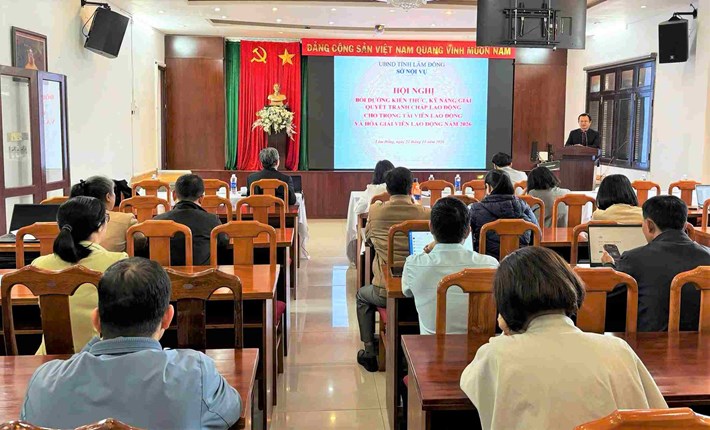
45 referees and mediators working in Lam Dong are trained in professional skills
Lam Dong - 45 arbitrators and labor mediators are trained in dispute resolution skills, contributing to protecting the interests of all parties.
On October 22, the Department of Home Affairs of Lam Dong province organized a training conference to foster legal knowledge and skills in resolving labor disputes for arbitrators and labor mediators in the province.
15 arbitrators and 30 labor mediators participated in the training. Mr. Nguyen Tat Nam, a labor relations expert, collaborator of the International Labor Organization (ILO), directly conveyed the contents at the conference.
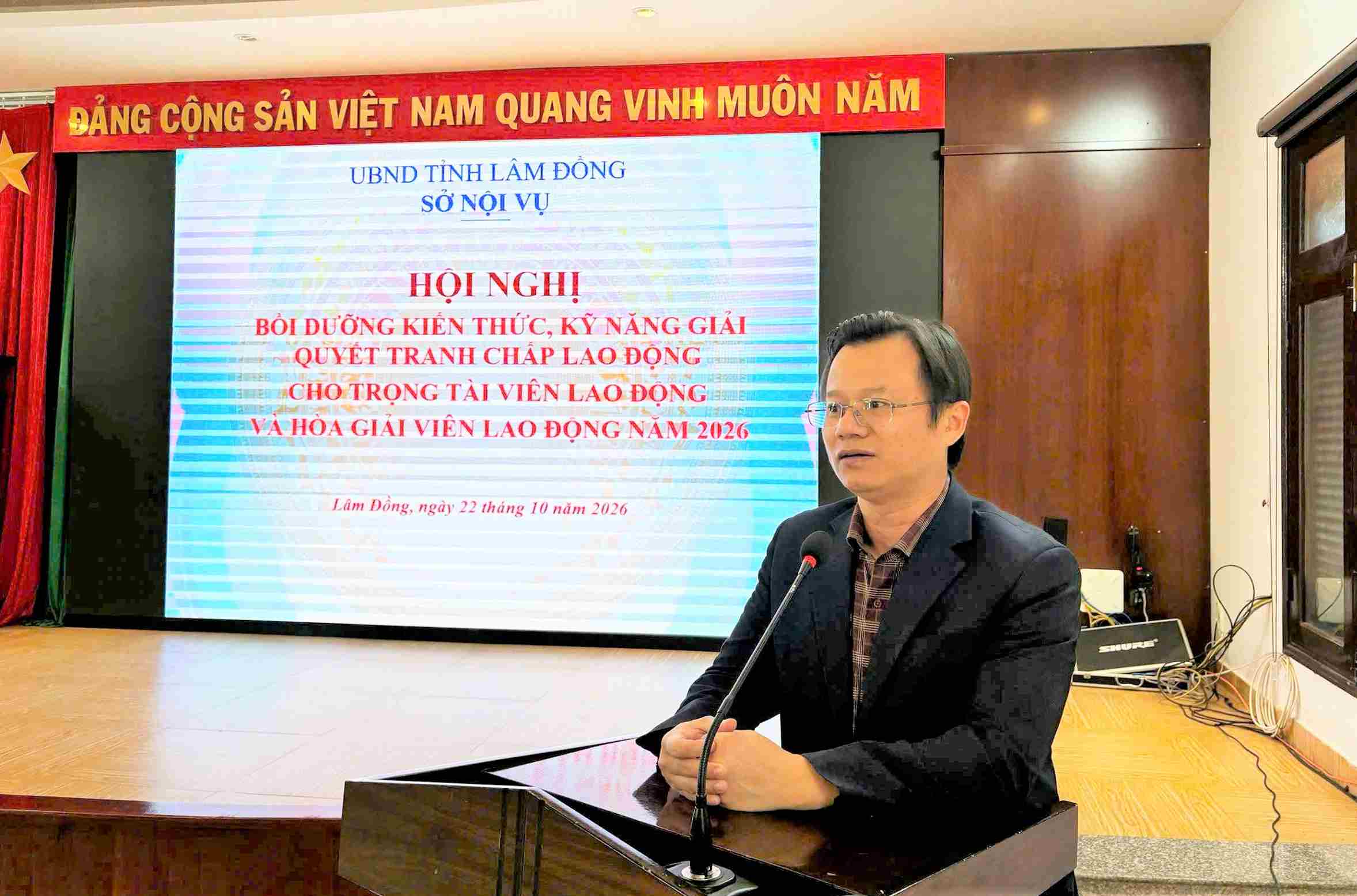
The program focuses on updating legal regulations on labor contracts, termination of contracts, labor discipline, salaries; and equipping knowledge about mediation, settlement of labor disputes and strikes.
Notably, trainees were able to exchange and answer practical problems and practice handling situations arising between businesses and employees related to labor cuts and occupational diseases.
Through this, students practice skills in collecting information, listening, asking questions, identifying the nature of disputes and orienting parties to find appropriate solutions.
According to Mr. Ninh Cong Dung, Head of the Department of Labor, Employment and Youth, Lam Dong Provincial Department of Home Affairs, after arranging and merging administrative boundaries, mediation and settlement of labor disputes pose many new requirements.
Large labor force, large shifts, working characteristics between different areas, while the managed area is large, travel distance is long.
In addition, the team of mediators consolidated after the arrangement needs to continue to improve practical experience and standardize nghiệp vụ.
Therefore, fostering legal knowledge and dispute resolution skills is of practical significance to state management of labor.
Through the conference, the Department of Home Affairs aims to improve professional capacity, unify professional processes, and strengthen coordination between state management agencies, businesses, trade union organizations and employees.
Thereby, contributing to timely dispute resolution, protecting the legitimate rights and interests of the parties, and building harmonious, stable and progressive labor relations.
See the original here