
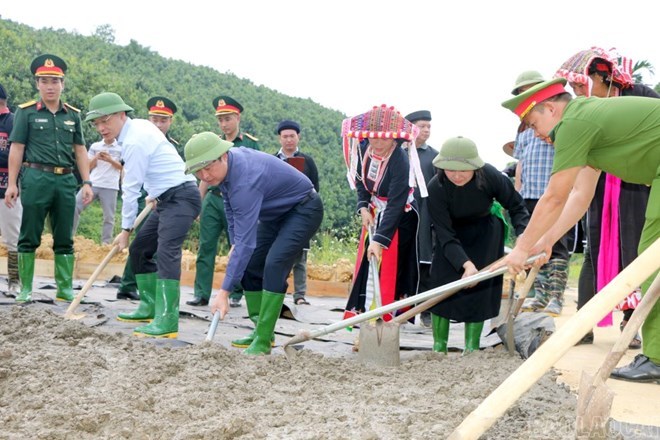
Sustainable poverty reduction with management thinking and new approaches
The national target program has integrated resources, innovated management methods, and empowered localities to improve poverty reduction efficiency.
Granting real power to localities
On August 24, 2026, the National Assembly passed Resolution No. 46/2026/QH16 approving the investment policy of the National Target Program (CTMTQG) for socio-cultural, rural, ethnic and mountainous development in the period 2026-2035 on the basis of merging 4 CTMTQG including: CTMTQG for new rural construction (NTM), sustainable poverty reduction, socio-economic development of ethnic minority and mountainous areas; CTMTQG for cultural development; CTMTQG for modernization, improving the quality of education and training; CTMTQG for health care, population and development.
The CTMTQG for socio-cultural, rural, and ethnic minority development in mountainous areas has a very broad scope, integrating many goals, fields, subjects, and resources; directly related to the lives of people, especially in rural areas, ethnic minority and mountainous areas, vulnerable groups, and policy beneficiaries.
From input-based management thinking, the program shifted to evaluating by output results; from the asking-giving mechanism to granting more initiative to localities; from spreading out to prioritizing particularly difficult areas and sustainable livelihood projects.
The core point of the integrated program is not that the Central Government decides what the locality does, but to delegate maximum initiative to the locality. The Central Government assigns the overall task, the locality decides specifically, organizes implementation and takes responsibility.
Resources of the program are allocated centrally, prioritizing difficult areas. In the 2026-2030 period, the total capital for the program implementation is 808,558 billion VND. Of which, the central budget is 345,000 billion VND (including 244,200 billion VND of public investment capital and 100,800 billion VND of regular funding). Resources are allocated centrally, avoiding spreading out, prioritizing areas that still lack basic services and subjects in need of support.
The total resources of the program amount to about 423,000 billion VND, of which the central budget is about 123,000 billion VND and the local budget is about 300,000 billion VND.
Thus, the most notable highlight is that the new operating mechanism will completely change management thinking, in the spirit of "locality decides, locality does, locality takes responsibility".
After being assigned the total medium-term capital source, the locality will proactively decide to allocate it to each commune, each project, and each task according to actual needs. The Central Government does not interfere in the specific allocation but focuses on checking the final results.
In which, the locality decides where to invest, and how to decentralize to the commune level is the local authority's right. The Central Government only evaluates based on output results.
To serve management according to the new method, the Ministry of Agriculture and Environment has built a unified digital data platform nationwide. The system will connect data from the Central to commune levels, monitor progress, disbursement, implementation results and evaluation indicators (KPI).
Removing difficulties, accelerating capital disbursement for national target programs
In Quang Tri, the disbursement of capital for programs has had positive changes. For the capital source in 2025, the implementation and disbursement time has been extended, the whole province achieved a disbursement rate of 41.8%, an increase of 74 billion VND, higher than the national average.
However, the disbursement progress of capital in 2026 is still slow; the completion of NTM construction criteria in some localities faces difficulties due to procedural obstacles and the impact of the rainy and storm season weather.
For the goal of building new rural areas, the whole province has 14 communes registered to strive to meet standards in 2026. Through review and assessment, 11 communes are identified as having high potential to meet standards this year. Three communes including Tuyen Phu, Quang Trach and Nam Cua Viet continue to focus on completing the remaining targets, and are expected to postpone the completion of dossiers for recognition to the first quarter of 2027.
On October 29th, Mr. Hoang Nam - Standing Vice Chairman of Quang Tri Provincial People's Committee chaired a meeting to remove difficulties and obstacles in implementing national target programs on building new rural areas, sustainable poverty reduction and socio-economic development in ethnic minority and mountainous areas.
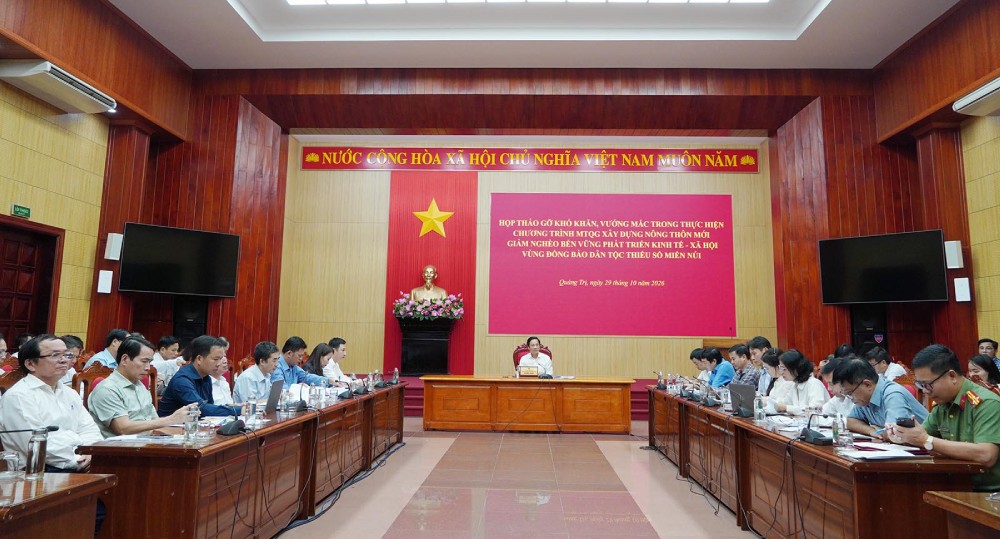
At the meeting, representatives of departments, branches and localities analyzed the difficulties and obstacles affecting the progress of program implementation. In which, the disbursement rate of capital in 2026 is still low due to late allocation of capital, prolonged implementation procedures and the impact of storms and floods.
In addition, the application of the new NTM criteria in the context of implementing the 2-level local government model is still clumsy; the volume of dossiers to be completed is large, while the allocated resources are still limited.
Standing Vice Chairman of the Provincial People's Committee Hoang Nam requested departments, branches and localities to focus on removing difficulties, accelerating the progress of implementing national target programs, striving to have at least 10 communes meeting NTM standards in 2026.
He emphasized that the evaluation and recognition must ensure substance, in accordance with regulations, taking the quality of criteria and people's satisfaction as the basis; and at the same time strengthen guidance and support for communes to complete criteria and evidentiary dossiers on schedule.
Regarding capital disbursement, units assigned capital must review each project, develop specific disbursement plans weekly, promptly handle problems, and not delay progress due to subjective reasons. Departments and sectors need to closely coordinate, improve responsibility in monitoring, urging and reporting results.
At the same time, urgently complete the plan to consolidate the National Target Program Coordinating Office, ensuring smooth operation, contributing to the effective implementation of sustainable poverty reduction and socio-economic development goals in the province.
Key political tasks
As a locality with a high proportion of ethnic minorities, Tuyen Quang identifies the new program as one of the key political tasks of the 2026-2030 period.
Vice Chairman of the Provincial People's Committee Do Hung Duc said that immediately after the program was approved, the province urgently completed the system of guiding documents, classified areas, consolidated the Steering Committee and concretized the regulations of the Central Government with many resolutions of the Provincial People's Council.
In parallel with perfecting institutions, the locality also focuses on arranging and integrating resources to promote NTM construction. In the first 6 months of 2026, Tuyen Quang has one more OCOP product achieving 5 stars, raising the total number of OCOP products from 3 stars or more to 357 products.
In the field of poverty reduction, the province sets a target to reduce the multidimensional poverty rate by about 3.5% in 2026; especially communes with a poverty rate of over 20% will be reduced from 4-6%. For ethnic minority and mountainous areas, the locality strives to remove 5 communes and 76 villages from particularly difficult areas right in the first year of program implementation.
According to Mr. Do Hung Duc, the biggest difficulties currently are still the slow progress of some projects, the rate of transferred capital disbursement not meeting requirements, and the ability to organize implementation between localities is still uneven.
Therefore, the province proposed that the Central Government continue to simplify procedures, strengthen training for officials directly implementing the program at the grassroots level and soon assign capital plans from the beginning of the period so that localities are more proactive in implementation.
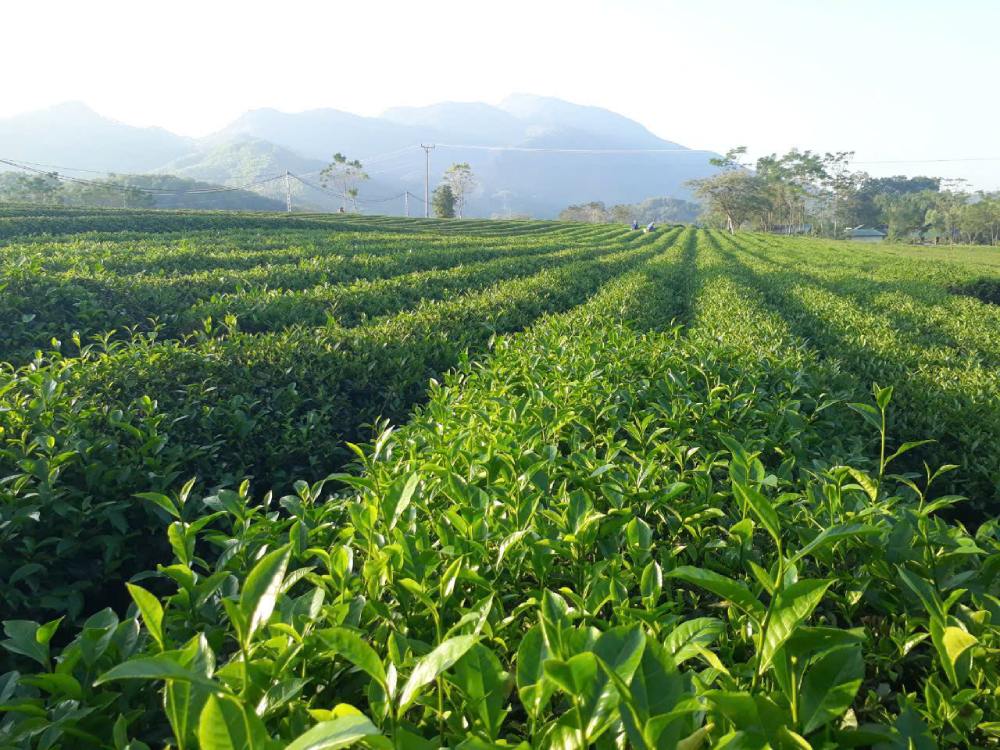
In Lao Cai, resources from the national target program for socio-economic development of ethnic minority and mountainous areas play an important role.
Resources are deployed for many contents, from infrastructure, population stabilization to production support, education, health care and cultural preservation, contributing to simultaneously solving the needs of people in difficult areas.
Preferential credit policies, production support, vocational training, education, health, and housing are implemented along with infrastructure investment, contributing to improving lives and reducing poverty. Housing support for poor households, near-poor households, policy families and households affected by natural disasters has helped many families have a safer place to live and stabilize their lives.
These changes are the basis for Lao Cai to continue innovating the implementation of the program. Improving policy efficiency, caring for essential needs and creating conditions for people to proactively develop will contribute to consolidating trust and promoting the strength of national unity.
That is also the foundation for building sustainable ethnic minority and mountainous areas, contributing to the goal of building Lao Cai province to develop "green, harmonious, unique and happy".
Read the original here