

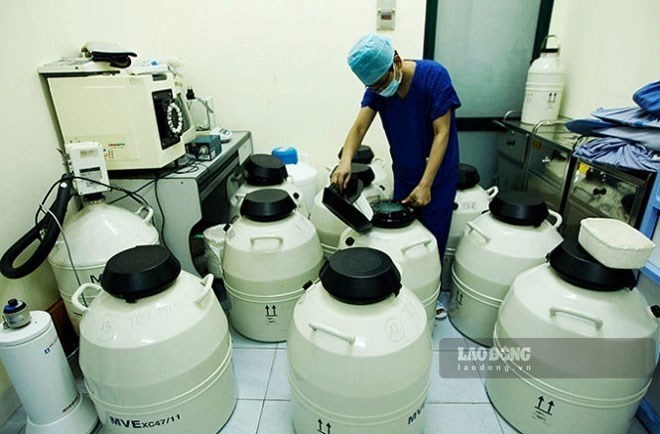
Proposal for wife to use sperm from deceased husband to give birth
The government proposes that the wife can receive her husband's sperm to give birth using assisted reproductive technology after her husband's death, if the wife wishes to.
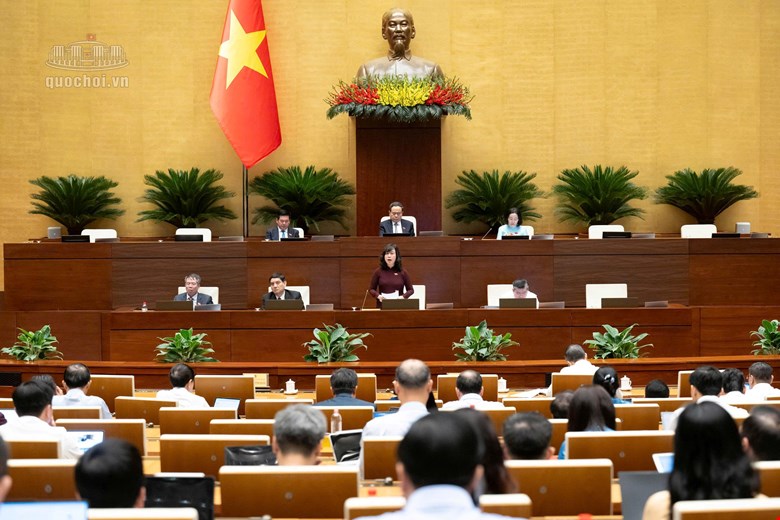
The draft Law on Donation, Extraction, and Transplantation of Human Organs and Parts of the Body and Corpse Donation and Extraction (amended) was revised by the Government to be submitted to the National Assembly for discussion on the morning of November 2.
Compared to the report submitted to the National Assembly in early October, the draft changes many contents related to the conditions for organ and tissue donation, the decision-making power of relatives, reproductive support and organ transplant activities in Vietnam.
According to the new draft, the Government removes the proposal to allow people under 18 years old to register for tissue, body parts and body donation; only people from 18 years old have the right to register, change or cancel donation registration.
People under 18 years old are only allowed to donate regenerative tissue to siblings when there are no suitable adult donors. The donor must be healthy enough, be consulted independently, only donate tissues under the permitted list and have a written consent from both biological parents, or the other if one person has passed away.
The draft continues to allow the wife to receive sperm from her husband or embryos of the two spouses being kept to give birth using assisted reproductive technology after her husband's death, if the wife wishes. In case the husband is determined to have brain death or circulatory death, the wife can also receive sperm taken after this time for in vitro fertilization.
Compared to the previous version, the draft clarifies that embryos of husband and wife must be kept, and at the same time excludes the case of the wife receiving sperm from her husband or embryos of husband and wife from the principle of anonymity between donor and recipient.
According to the Government, after the husband dies, the marriage relationship ends. The drafting agency cited the regulation on single women having children by assisted reproductive technology to argue that children born in this case are identified as children of the wife, the risk of inheritance disputes is not worrying and there is no need to amend the Civil Code.
The draft also requires donors and recipients of sperm, eggs, and embryos to be healthy enough and be consulted independently. Each person is only allowed to donate at one facility; donated sperm, eggs, and embryos are only used for one woman or one married couple. Men must be from 20 years old to donate sperm, women from 18 years old to donate eggs.
Read the original here