
Ensuring energy security and the role of Vietnamese workers in the new era
Energy security is not only an economic story but also related to social stability, competitiveness and the country's strategic autonomy.
Energy security - the foundation of development and strategic autonomy
Energy is the lifeblood of a nation. Therefore, energy security is not just an economic story. It is also a matter of social stability, competitiveness, crisis response capacity and strategic autonomy of the country.
Resolution No. 70-NQ/TW dated August 20, 2025 of the Politburo sets out the requirement to firmly ensure national energy security, associated with science and technology development, innovation, digital transformation and human resources.
The 14th Party Congress continued to emphasize the requirement to build a modern Vietnamese working class, strong in both quantity and quality.
These two requirements meet very clearly in the energy industry - a field that both needs modern technology and a force of workers with sufficient qualifications to master that technology.
An economy can have capital, technology, markets and modern infrastructure, but if energy is disrupted, costs increase sharply, or supply depends too heavily on the outside, growth will be slowed down, competitiveness will decline, and the economy's resilience will be challenged.
This is even clearer when Vietnam promotes green growth, digital transformation and high-tech development. Data centers, smart manufacturing, automation, electric vehicles and new technology industries all need large, stable, and high-quality energy sources. Energy security is therefore no longer a private matter of the electricity, coal, or oil and gas industries, but becomes a direct condition of the growth model transformation process.
At the strategic level, the problem lies in the level of dependence. If fuel, core technology, strategic equipment or energy supply chains are too heavily dependent on the outside, Vietnam will be vulnerable to geopolitical fluctuations and global shocks.
Therefore, ensuring energy security must go hand in hand with diversifying supply sources, rationally developing nuclear power, green energy, renewable energy, storage systems and smart grids; and at the same time improving reserve capacity, reducing strategic dependence and gradually mastering technology. The goal is not only to have enough energy for today, but to build a system strong enough for the country to develop without falling into a passive position.
Workers - the force directly ensuring energy security and mastering technology
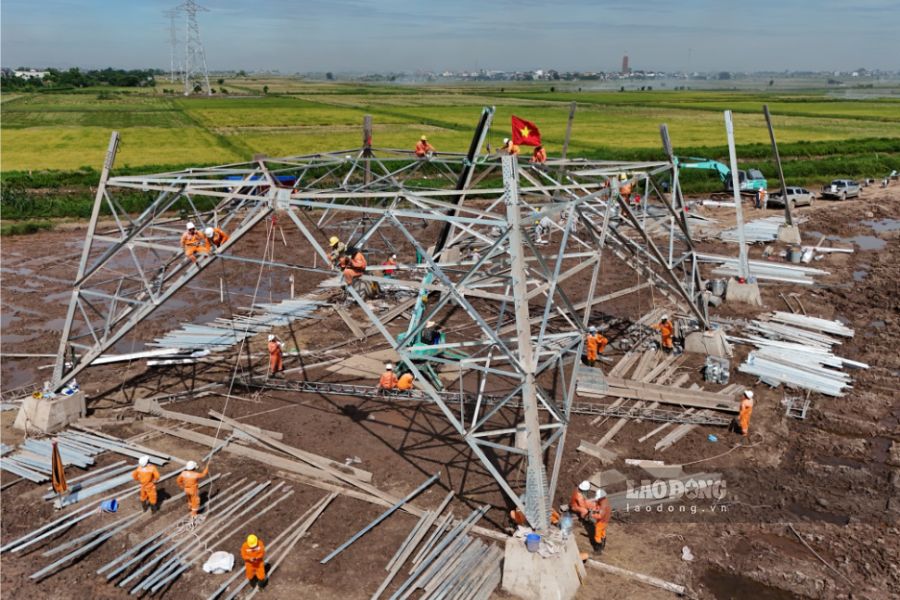
Plants, power lines, technology and fuel sources create an energy system. But for that system to operate safely, continuously and reliably, the decisive factor is still people.
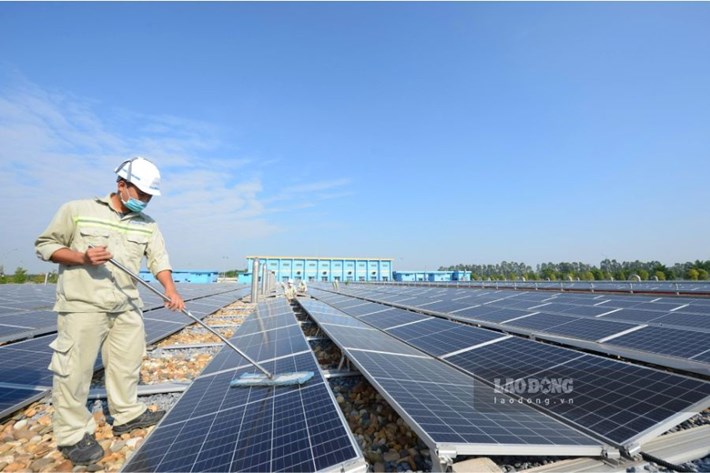
Workers are the force directly operating, maintaining, controlling and handling incidents at each link of the system. That role is expanding very rapidly: from coal, oil and gas, thermal power, hydropower to wind power, solar power, storage systems, smart grids, digital dispatch centers and in the future nuclear power.
The more modern technology, the higher the requirements for workers. In the new era, energy industry workers cannot just be equipment operators. They must gradually become technology masters, participate in process improvement, reduce losses, save energy and improve efficiency. To do so, training and retraining must go one step ahead, especially in automation, data, smart grids, renewable energy, energy storage and nuclear technology.
Businesses need to create an environment for workers' initiatives to be recognized and put into production. Trade unions and organizations in businesses need to accompany in improving skills, ensuring safety and building a sense of responsibility for the national energy system.
Ensuring energy security not only requires financial resources or new technologies but also needs a team of workers with sufficient qualifications to operate, master and continue to innovate those technologies.
When workers have enough skills, discipline and professional bravery, they not only keep the energy flow running continuously, but also directly contribute to reducing dependence and consolidating Vietnam's strategic energy autonomy.
See the original here