
Labor market changes before the green transition wave
To take advantage of the opportunities obtained from the green transition process, workers need to be equipped with appropriate capacity, while businesses and management agencies must have solutions to support the transition process.
Job opportunities from the green economy
Green transformation not only contributes to environmental protection but also creates more jobs in the fields of renewable energy, circular economy, clean production, waste management and green transportation.
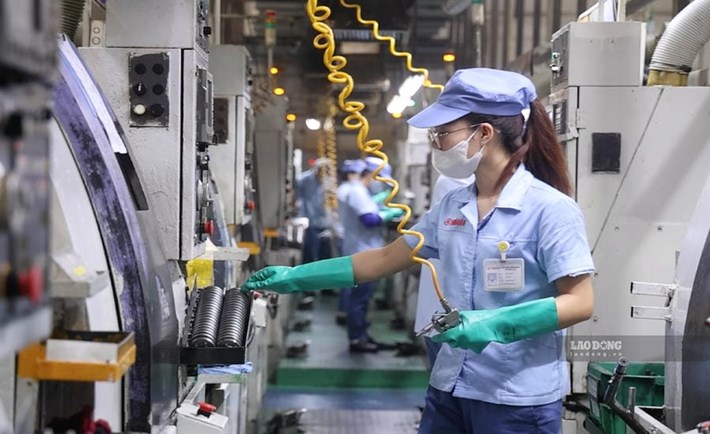
The demand for green human resources is also increasing at manufacturing enterprises, especially in locations operating energy-saving equipment, controlling raw materials, reducing emissions and applying technology to optimize processes.
According to Mr. Le Trong Linh (Head of Business Development Department, VSD Holdings Group), the green transformation and application of technology are posing new requirements for businesses as well as employees. This is an opportunity to develop job positions associated with technology, management and resource optimization, while requiring employees to update knowledge and improve skills to adapt.
Dual conversion requires new skills
Green transformation and digital transformation are changing the way of working. Digital technology, automation and artificial intelligence help businesses save energy, raw materials and improve production efficiency. However, some traditional jobs are shrinking, while new positions require higher professional skills and technology.
According to Dr. Trinh Quoc Dung (Faculty of Thermal Energy, Mechanical School, Hanoi University of Science and Technology), promoting efficient energy use and developing technology solutions to serve green transformation sets requirements for human resources with professional knowledge, technology access and the ability to solve practical problems. Workers not only need to master expertise but also understand the requirements for energy saving, efficient use of resources and reducing environmental impact.
This reality shows that green skills and digital skills are increasingly closely related. Workers need to know how to use technology in their work, analyze data, operate modern equipment, and understand how to reduce resource consumption and limit emissions. This is an important advantage to improve competitiveness in the labor market.
Although opening up many opportunities, the green transition process can also create a gap between recruitment needs and the actual capacity of workers. People working in energy-intensive, high-emission or risky automation industries may face difficulties if they are not retrained in time.
Also according to Dr. Trinh Quoc Dung, green employment development needs to go hand in hand with training policies, skills improvement and career change support. Vocational education institutions need to update training programs according to actual needs; businesses need to strengthen on-site training, helping workers access new technologies and adapt to green production processes.
In addition, green jobs need to be seen not only in terms of creating more jobs but also in terms of job quality, working conditions and long-term development opportunities. Workers need to be guaranteed rights, have lifelong learning opportunities and be supported when jobs change due to technology transformation.
Green transformation and digital transformation will continue to shape the labor market in the coming years. When businesses proactively innovate, training institutions are linked to practical needs, and workers are fully equipped with skills, green jobs can become a driving force to improve the quality of human resources, while contributing to building a sustainable developed economy.
See the original here