

Agricultural workers find it difficult to change careers despite having many jobs
The demand for recruitment and job search in Can Tho City is similar in scale, but agricultural workers still face difficulties when changing careers due to seasonality, mechanization and limited skills.
Supply-demand mismatch
Through data collected from 349 businesses, the Can Tho City Employment Service Center (DVVL) recorded the recruitment demand for 24,173 job positions and the job search demand of 24,347 workers in the third quarter of 2026.
According to the center, although the overall scale is equivalent, labor supply and demand are still not balanced in some occupational groups, reflected in the difference between the recruitment needs of businesses and the job search needs of workers.
In which, the occupational group with a large labor supply-demand gap is the Agriculture - Forestry - Fishery group. The cause stems from the combination of seasonality, mechanization and limitations in the ability of workers to change careers.
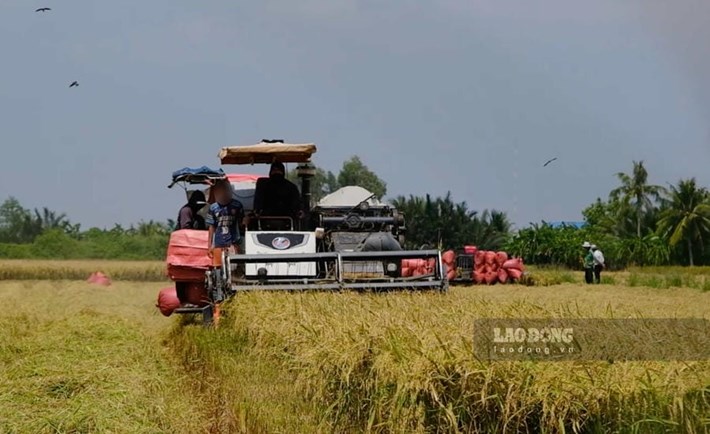
Mr. Nguyen Van Hung (42 years old, freelancer in Thoi Lai commune) said that machinery is replacing many stages from tilling the soil, sowing to harvesting, causing the number of working days on the fields to gradually decrease.
I also want to switch to working at processing workshops or factories to have stable jobs. However, I personally encounter difficulties when approaching positions that require compliance with labor discipline, production processes and job requirements in the industrial environment," Mr. Hung shared.
Similarly, Mr. Le Van Tam (53 years old, freelancer in Phong Dien commune, Can Tho city) shared: "Previously, I worked as a seasonal hired laborer such as mowing grass, spraying pesticides, harvesting fruit, so my income was unstable. I want to switch to working as a worker to have monthly income, but I am over 50 years old, used to freelance work, so it is difficult to adapt to the factory environment, especially the age and shift requirements.
Barriers when entering the factory
Commenting on this situation, Master of Public Policy Nguyen Tuan Anh - Saigon Industry Corporation - analyzed: "The core of the problem is that jobs are changing faster than the ability of a part of workers to change careers. Businesses have recruitment needs, people also have the need to work, but the two sides have not met about skills, age, workplace or acceptable income levels.
According to Master Nguyen Tuan Anh, for agricultural labor, we also have to look at seasonality. At the time of sowing and harvesting, the demand for labor may increase, but between crops there is a shortage of work. When machinery replaces some stages, the number of working days can be further reduced.
Meanwhile, switching to factories or service industries is not simply changing workplaces. Workers also have to get used to procedures, shifts, safety requirements and coordination in a completely different environment.
In my opinion, we should not look at the number of recruits and conclude that workers have many opportunities to find jobs. That number reflects the needs that businesses announce at a certain time. Access to reality is another story," Master Nguyen Tuan Anh assessed.
From the perspective of public policy, Master Nguyen Tuan Anh believes that the effectiveness of connecting labor supply and demand needs to be assessed throughout the process, from the time there is recruitment information to when workers truly stabilize their jobs.
Indicators such as the number of people introduced, the number of people recruited, the rate of occupancy after 3-6 months and the level of income improvement will more clearly reflect the connection results.
See the original here