

Need appropriate housing policies for officials and civil servants
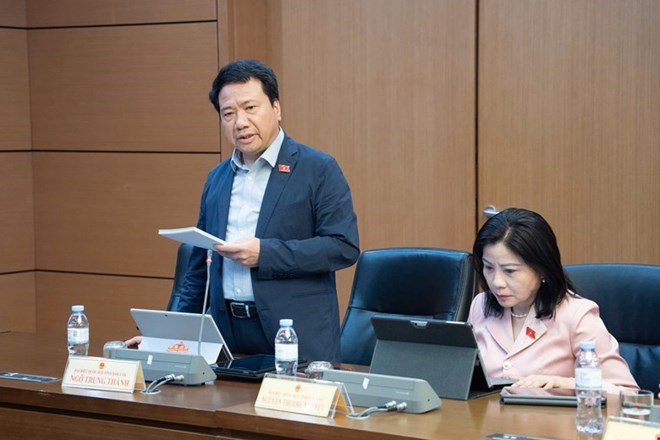
Contributing opinions to the draft Law on Housing (amended), delegate Ngo Trung Thanh (Dak Lak National Assembly Delegation) said that it is necessary to pay attention to housing policies for cadres and civil servants.
In the afternoon of October 22, the National Assembly continued to discuss in groups about the draft Law on Land (amended), the draft Law on Housing (amended) and the draft Law on Real Estate Business (amended).
Discussing in groups, delegate Ngo Trung Thanh said that it is necessary to pay attention to housing policies for cadres and civil servants.
The delegate shared that after the revolution to arrange the organization and streamline the apparatus, many officials and civil servants had to move their workplaces, leading to an urgent need to stabilize new accommodation.
However, the settlement of housing after the merger faces many difficulties and inadequacies. Many civil servants when moving to work have to sell houses in the old place at low prices, but selling them is not simple, while the purchase price of houses in the new place of residence has skyrocketed.
In some localities with tourism characteristics such as Da Nang, the rental market mainly serves homestays to serve tourists, so rental prices are very high and not effective for the needs of civil servants, making it very difficult for officials to access accommodation.
Therefore, it is absolutely necessary to pay attention to institutionalizing housing policies for this team in the draft revised Housing Law.
Delegate Ngo Trung Thanh proposed to study the development of the commercial housing segment with reasonable prices. The draft Law needs to be based on the actual needs and capacity of each locality to open up a decentralization mechanism, allowing localities to proactively apply flexible policies to create conditions to stabilize housing for cadres and civil servants.
In the group, delegate Pham Kieu Anh Tho (Delegation of National Assembly Deputies of Can Tho City) highly appreciated that the draft has expanded the subjects of application for officials moving jobs to new administrative centers after arranging administrative units. However, the delegate pointed out an important legal gap for the education and health sectors.
According to the delegate, the 2023 Housing Law previously stipulated that teachers, doctors, and medical staff working in rural areas, remote areas, extremely difficult areas, border areas, and islands were eligible to rent official housing, but the new draft ignored this group.
Although the drafting agency explained that health and education officials, if they meet the conditions for transfer from one locality to another, are still hired, in reality, most teachers and doctors in communes face difficulties due to new recruitment or transfers from within the province.
On the other hand, the 2025 Law on Teachers also stipulates that teachers working in difficult areas are allowed to rent official residences according to housing laws.
From that reality, delegate Pham Kieu Anh Tho proposed to add point e to Clause 1, Article 50, clearly stipulating: teachers and medical staff at public institutions who are recruited, transferred, rotated, or assigned to work in rural areas, remote and isolated areas, ethnic minority and mountainous areas, particularly difficult areas, border areas, and islands are allowed to rent official housing.
This is a very meaningful policy to retain the staff who are directly caring for the education and healthcare career of people at the grassroots level.
In addition, the delegate proposed to restore the condition of "not being able to buy, rent, or rent social housing in the locality where you come to work" to avoid the situation where one person both buys social housing and rents public housing; and at the same time review Clause 5, Article 53 on exemption from public housing rent to ensure that the exempted subjects coincide with the leased subjects.
Read the original here