
4 key focuses of the 4th Central Conference to focus on resolving
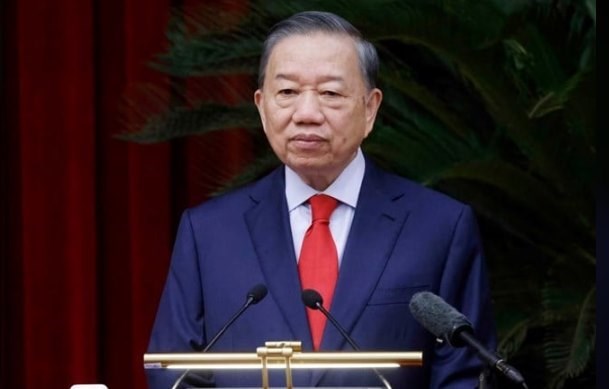
On the morning of October 5, 2026, the fourth Conference of the 14th Central Committee of the Party solemnly opened in Hanoi Capital. We respectfully introduce the full text of the opening speech of the fourth Conference of the 14th Central Committee of the Party by General Secretary and President To Lam.
Dear Comrades Members of the Politburo, Members of the Secretariat, Members of the Party Central Committee,
Dear comrades delegates attending the Conference,
Today, the 14th Central Committee of the Party opened the 4th Conference to consider important issues on Party building, the political system and national development. On behalf of the Politburo and the Secretariat, I warmly welcome you to the Conference.
The conference takes place in the context of the entire Party, people, and army striving to complete the task of socio-economic development in 2026, preparing plans for 2027 and the following years. International fluctuations, technological competition, trade wars and the requirement to innovate the country's development model, GDP growth target of over 10% require us to improve strategic autonomy, resilience, adaptability and determination to act. To seize opportunities, we must have strategic thinking and proactiveness to analyze the situation, make correct decisions, and organize effective implementation. What is particularly important is the consensus and support of the people.
The 14th Party Congress has identified guidelines, goals and major strategic orientations. The 2nd Central Conference decided on important issues on organization, cadres and regulations on the Party's foundation for the new term. The 3rd Central Conference continued to concretize the Congress Resolution with major policies on Party building, development models and strategies to protect the country in the new situation. This conference must both solve the conditions for effectively implementing those policies and prepare the theoretical, organizational and human basis for the long-term development of the country.
The overarching requirement is to improve the leadership capacity, ruling power, and combat strength of the Party, to gather and promote the strength of the great national unity to realize the development goals. Issues of organization, Party building, leadership and ruling methods; cadres, resources and socio-economic development need to be considered in organic connection with each other: The Party orients correctly. The political system and administrative machine operate effectively. Human potential and strength are promoted. The people enjoy achievements. Linking immediate tasks with the goals of 2030, 2045 and long-term vision. I would like to suggest 04 key points that the 4th Plenum of the Central Committee needs to focus on solving.
I. Improving the capacity of the Party to self-innovate, self-rectify and orient national development
The Party's leadership capacity is fostered from the steadfastness of Marxism-Leninism, Ho Chi Minh's ideology, the goal of national independence and socialism, the ability to summarize practice, develop theory and self-renovate, self-rectify. Summarizing 15 years of implementing resolutions and conclusions on Party building and rectification, it is necessary to clarify: how far have the changes in organization and Party building improved the quality of leadership, the ability to solve development issues and consolidate the people's trust? In which areas are Party organizations and Party members strengthened and matured? In which areas need to be overcome.
The Central Government needs to look directly at the prolonged limitations: why the shortcomings and defects have been pointed out but are slow to be corrected; violations have been warned but are still recurring; there are contents that are in accordance with procedures but the right people have not been selected, things have not been resolved, and the effectiveness is low. New Resolutions must address the root causes, determine responsibilities, including the responsibilities of leadership and advisory agencies at the Central level.
The new Resolution must closely combine construction with rectification and education. Prevention with strict handling. Forming a mechanism for the Party organization and each party member to self-discover and self-correct shortcomings. Building a truly moral and civilized Party must be reflected in integrity, impartiality, respect for the truth, protection of the right and responsibility to the People.
It is necessary to truly rely on the People to build the Party. The People's trust must be nurtured by listening to and absorbing correct opinions, resolving legitimate rights and correcting the shortcomings of cadres and party members. It is necessary to promote the role of the Fatherland Front, socio-political organizations; ensure that the People participate in contributing to policies, supervising implementation and enjoying achievements. That is the foundation for consolidating great unity and gathering national strength.
Outlines summarizing 100 years of the Party leading the Vietnamese revolution, 40 years of implementing the Platform and researching and amending and supplementing the Party Charter need to be placed in the requirement of preparing a foundation for the long-term development of the country. The summary must explain the success, limitations, shortcomings and new issues about the country's development path, the leadership role of the Party. The 2030–2130 vision needs to identify the values to be maintained, the capacity to be accumulated, and responsibility to future generations; do not turn the long-term vision into rigid forecasts.
Research on amending and supplementing the Charter must be linked to the above summaries. Maintain the basic principles, clarify new requirements on organization, authority, responsibility and power control. Distinguish obstacles caused by the Charter, enforcement documents or organization of implementation; clearly identify content belonging to the Charter, content regulated by the Central Government, issues to be verified. Only propose amending necessary issues with long-term value; do not mechanically transfer the content of the resolution into the Charter. The Conference gave opinions on the research outline, without limiting the specific amended content; the amendment of the Charter is under the authority of the Congress.
II. Innovating leadership and ruling methods to improve the operational effectiveness of the political system
The organizational model changes require the completion of synchronous leadership and ruling methods. It is not possible to only rearrange the apparatus but keep the working method that is no longer suitable. Innovation in leadership and ruling methods must ensure unity in orientation, clearly define responsibilities, fully promote the authority and proactiveness of each Party committee, Party organization and agency, unit. Preliminary review Resolution No. 28 needs to clarify how leadership and ruling methods must be innovated to make policies of higher quality, the apparatus more proactive, and work resolved better. The mechanism of Party leadership, State management, and people as masters must operate substantively, overcome excuses, replacements, lax leadership and ask for opinions in many rounds for matters under authority.
The Party comprehensively leads with guidelines, strategic orientations, ideological work, organization, cadres, inspection, supervision and exemplary behavior. It is necessary to fully promote the functions and powers of state agencies, the Fatherland Front and socio-political organizations. The Central Government decides on major, inter-sectoral, inter-regional issues of long-term significance; agencies assigned authority proactively concretize and be responsible for organizing and implementing them.
Leadership quality must be improved from problem detection, forecasting, option selection to decision making, inspection and adjustment. It is necessary to clarify how to overcome the situation of many documents, many meetings but slow progress in work. Data and technology must help provide accurate advice, early identify risks; do not replace the responsibility of organizations and decision-makers.
Decentralization and delegation of power must create practical action capacity in the two-level local government model. The Central Government needs to clarify the relationship between powers, responsibilities and implementation conditions; the mechanism for resolving inter-sectoral and inter-level tasks, exceeding the grassroots capacity. Do not transfer tasks to lower levels when there is a shortage of people and resources; do not interfere to lose the assigned initiative. Collective and individual responsibilities must be defined, not overlapping or replacing each other.
The replacement of Regulation No. 21 needs to ensure uniformity in Party organization, authority to implement discipline, resolve disciplinary complaints and implement procedures, in accordance with the new model. At the same time, improve the effectiveness of inspection and supervision, early detection of loopholes, control of both abuse of power and evasion of responsibility. Strictly maintain discipline in parallel with protecting honest officials, innovating for the common good; not covering up violations.
III. Innovating cadre work, valuing talents to meet the requirements of national development
Policy decisions only become reality when there is a contingent of cadres with sufficient qualities, capacity and responsibility to implement. Summarizing Resolution No. 26 must open a new step in cadre work, preparing the contingent of cadres from task requirements and long-term development. It is necessary to manage the contingent uniformly and interconnectedly; link political tasks and job positions with resource creation, training, evaluation, arrangement and screening; overcome fragmentation according to each stage, each level, and each term.
Cadre evaluation must identify qualities, real talent, prestige and prospects through work, especially how to handle difficult tasks. The results must be placed in relation to authority, resources and implementation conditions; do not take achievements to compensate for violations of politics, ethics, and integrity. It is necessary to clarify the mechanism for evaluation leading to proper use, commensurate assignment of tasks, or timely replacement, and clarify the responsibilities of the evaluator, representative, and decision-maker for both the results and consequences of cadre arrangement.
Strategic-level cadres must have vision, systematic thinking, capacity to select and organize the implementation of major policies; grassroots cadres must firmly grasp the area, have the capacity to solve work and serve the People. Heads must know how to discover and value virtuous and talented people, promote collective wisdom and prepare successor teams. Each term must leave behind a better team, a stronger organization, and higher implementation capacity.
It is necessary to clarify the mechanism for detecting and attracting cadre sources from the non-state sector and overseas Vietnamese; prepare an open source of cadres, many classes, many plans; create opportunities for young cadres, female cadres, ethnic minority cadres, and scientific and technical cadres. Develop commensurately the leadership, management and specialized experts team; value practical standards, implementation conditions at the grassroots level, avoid formalism.
The project "National Strategy on attracting, valuing and developing talents in key industries and fields to serve rapid and sustainable national development" must stem from strategic tasks and the country's capacity is lacking. How to train, attract, and connect talents to master technology, improve productivity and self-reliance? Valuation is the key link, creating resources is a fundamental and long-term task.
It is necessary to discuss mechanisms for assigning large tasks, granting real power, ensuring resources and evaluating according to contributions; creating an environment that respects creativity, accepts controlled research risks. Connecting domestic talents, Vietnamese intellectuals abroad and international experts; interconnecting schools, institutes, businesses, public and private sectors. Attracting talents must go hand in hand with effective use, developing successors and knowledge transfer.
IV. Identify priorities correctly, promote resource efficiency for rapid and sustainable development
In general, the socio-economic situation in 2026 continues to maintain positive growth momentum, the GDP in 09 months of the whole country reached 9.01%, of which 12/34 provinces and cities reached over 10%. However, the macroeconomic management space is shrinking. It is proposed that the Central Government comprehensively assess the results of 2026, clarify the level of completion of targets and growth foundations for the following years. It is necessary to consider the quality of growth through productivity, business health, income and people's lives; clearly point out the limitations of development drivers, causes and responsibilities and what needs to be focused on to complete the highest tasks in 2026. The results of implementing development tasks are an important measure of policy effectiveness, quality of personnel work and organizational capacity.
2027 must accelerate, break through, and make strong changes, creating momentum to implement the goals of the entire term. It is proposed that the Central Government carefully discuss the general objectives, key targets and key solutions, especially the basis and conditions for striving for GDP growth of 10% or more, inflation of about 4.5%. The issue is to create stronger growth momentum, while consolidating macroeconomic stability, ensuring major balances and the resilience of the economy. The annual plan must concretize Conclusion No. 18-KL/TW, linking acceleration with the implementation of innovation in the development model.
The Central Government needs to clarify: what are the breakthroughs to turn resources into production and business capacity and substantive development results? It is necessary to remove institutional bottlenecks, improve capital absorption capacity, ensure infrastructure, energy, and human resources; unlock private and foreign investment, both direct and indirect, consolidate purchasing power, and improve the competitiveness of domestic enterprises. Attracting foreign investment must be associated with technology transfer, business linkage and increasing domestic added value. Science, technology, innovation, and digital transformation must become sources of productivity growth. Public resources must create spillover effects, attract social investment and practical benefits for the people. Coordinating fiscal and monetary policies needs to create conditions for growth, maintain stability; choose the right priorities, clearly define roadmaps and implementation responsibilities.
Regarding the state budget, it is proposed that the Central Government assess 2026, give opinions on the 2027 estimate, clarify the ability to balance and the necessary adjustments to serve the requirements of acceleration and breakthrough. Mobilizing revenue sources must be associated with nurturing revenue sources and developing businesses. Resource allocation needs to ensure the leading role of the Central budget, promote local initiative; harmonize between development investment, salary reform and social security. It is necessary to discuss mechanisms to overcome spreading and unreasonable constraints, thrift right from allocation to focus on key tasks; assess spending efficiency through actual results. Budget management and implementation evaluation need to be flexible in the face of fluctuations and policy changes, associated with financial discipline, accountability and long-term balance.
Promoting the effectiveness of resources requires creating conditions for economic sectors and each citizen to contribute and get rich legitimately. Regulations on party members participating in investment and business activities need to be considered in that requirement, linking pioneering in economic development with maintaining the nature of the Party, strengthening Party building in the non-state sector. It is necessary to clarify the rights, conditions, and limits in accordance with legal status, responsibilities and the risk of conflicts of interest; protect legitimate economic activities, control the truly dominant and beneficial entity. Do not let power, information, and public assets become private advantages.
All development choices must aim to improve the material and spiritual life, expand opportunities and ensure fairness in the enjoyment of the people. Education, health, culture, housing, and social security must be placed in the quality of development, focusing on vulnerable people and disadvantaged areas. Growth must be associated with environmental protection, disaster prevention, and strengthening national defense and security; maintaining peace and stability for the long-term development of the country.
Comrades,
The four focuses above all aim at one requirement: building a Party and a political system capable of leading and organizing the implementation of development goals, promoting the participation and creativity of the entire people. In the process of considering the contents of the program, it is proposed that the Central Government focus on clarifying 04 consistent issues.
First of all, each project must correctly identify the issues that need to be resolved. Problems in policies, institutions or in implementation organization, coordination and personal responsibility? Why have regulations been amended, resources have been allocated, but the work is still slow? Clearly distinguish between the inadequacies of policies and weaknesses in implementation; ensure unified policies, not removing obstacles in this field but creating barriers in other fields.
Second, major guidelines and orientations have been identified as having to be fully and synchronously institutionalized and effectively implemented. Which laws and policies need to be amended; which agency presides over, which deadline to complete? Do not let local interests and procedures arise to narrow the guidelines. Responsibility must be linked to the quality, progress of institutionalization and implementation results.
Third, it is necessary to ensure human resources, authority and resources immediately when deciding. Doing things thoroughly: things that are clear must be decided and implemented promptly; new and difficult projects that need to be piloted must clearly define the scope, authority, time limit, control mechanism and evaluation criteria. Doing things thoroughly to go quickly, not taking caution as a reason for delay. But also absolutely do not be subjective or hasty.
Fourth, each policy must have a way to verify the results and adjust from practice. Which issues are resolved, which resources are unlocked, what benefits the people receive? All results must ensure effectiveness. The immediate task must be linked to the 2027 plan and budget; long-term research must clearly define products, progress, and responsibilities.
It is proposed that the Central Committee comrades discuss democratically, frankly, and delve into major choices and issues that are still different; clearly state the basis, plans and recommendations. The Central Committee must set an example of decisiveness, self-criticism and implementation responsibility. All choices must put national and ethnic interests, and the legitimate rights and interests of the People first.
With that spirit, on behalf of the Politburo and the Secretariat, I declare the opening of the Fourth Conference of the 14th Central Committee of the Party.
Wishing the Conference a great success".
(Article title set by Lao Dong Newspaper)
Read the original here