

Leaving the factory, workers return to their own joys
After long shifts, the cultural and spiritual life of workers appears with many nuances.
Small joy in the rented room
In the afternoon, in the worker dormitory area in Bau village (Thien Loc commune, Hanoi), after working hours at the factory, each person returns to their own rhythm of life.
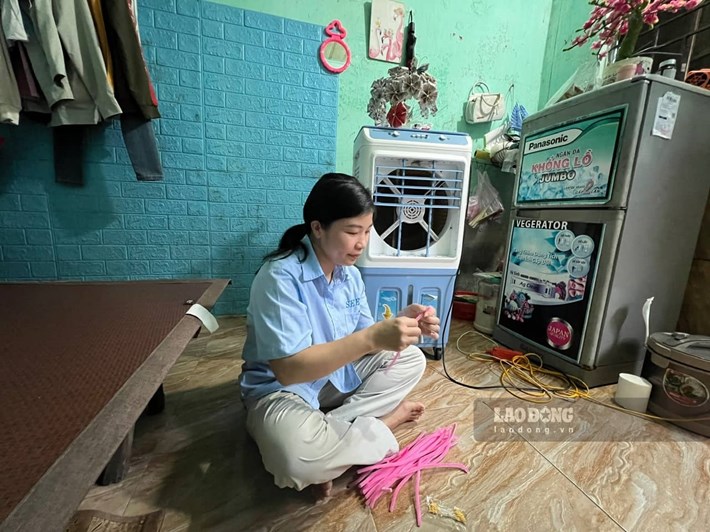
Ms. Nguyen Thi Mung's job (born in 1991) is associated with continuous shift changes. Morning shift from 6am to 2pm, afternoon shift from 2pm to 10pm, night shift from 10pm to 6am.
There are days when she works 12 hours. A week, working hours can be up to 60 hours. For long shifts, the body is tired, but when there is time to rest, she does not choose to confine herself in a small room.
Zinc fibers, paper and small materials are used by her to make handicraft flowers. When free, she makes cakes, dried chicken and brings them to the company for colleagues to eat together. Some people like the items she makes, ask her to help, and she happily accepts.
Those seemingly small pleasures create a different break from the rhythm of the factory's life. After many hours of working, her relaxation is not a long trip or expensive activities.
It could just be sitting making a handicraft, chatting with people in the same rented room area, or preparing a meal together.
Ms. Mung's rented room has people from many different hometowns. Each person has a different situation, a different job, a different voice. But after work hours, those differences seem to be narrowed down at the common meal.
My boarding house sometimes focuses on cooking. Thanks to meals, we are more sociable and share with each other more" - she recounted.
For Ms. Mung, that exchange is not simply for fun. It is also a way for people living far from home to find closeness in a space that is not their home.
She used to live quite reclusively. Going home from work and then returning home, paying little attention to those around her. But then, she realized that living in the same row of rented rooms, if everyone is "every person lives their own way", very small inconveniences can also become causes of discomfort.
From keeping the common area clean to how to contribute ideas to each other, she believes that if everyone is friendly and open, reminders will also become gentler.
For this female worker, spiritual life is therefore not something distant. It is created from the relationships in the place where she lives, from a common meal, a story after work or a few hours of sitting and making handicrafts.
When the shift ends, another shift begins.
In another worker dormitory, the story of Ms. Dang Thi Thuc (born in 1993) shows a different spiritual life.
We came to her rented room when it was getting dark. Ms. Thuc was busy preparing meals for her children to prepare to start the third shift at 8:30 pm.
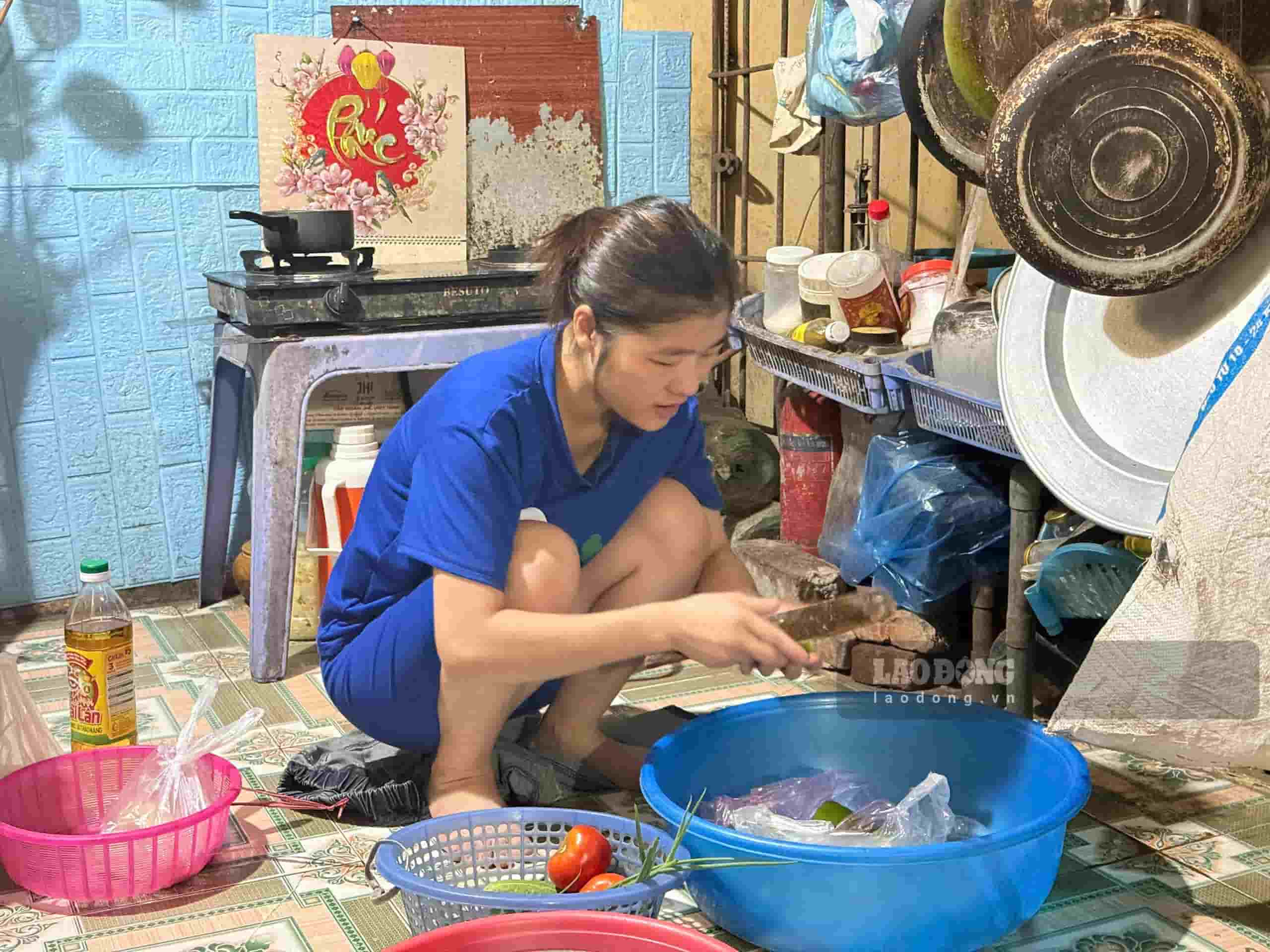
She had to do it very quickly. After cooking rice, she also had to take her two children to bathe, she arranged everything before leaving the rented room. The eldest son is in 6th grade, the second child is only 2 years old, and is being sent to a private daycare center.
Ms. Thuc has worked as a worker at Thang Long Industrial Park for 14 years. Her family rents two opposite rooms, one room for sleeping and resting, the other room for storage and is her son's studying place. Including electricity bills, the rent is about 2.8 million VND per month.
For her, spiritual life is important, but the most difficult thing is not having time.
After work, instead of having a proper break, she started a series of other jobs: picking up children, cooking, personal hygiene, and preparing for the next shift.
The rare time she can spend for herself is usually just before going to bed.
I just surf my phone or sometimes cook rice and listen to music. When I'm too tired, I go to bed, I don't have the energy to watch any movies" - Ms. Thuc shared.
In a woman who has been attached to the industrial park for 14 years, spiritual life is not unnecessary. On the contrary, she understands that it is an important part of life. But between work, children, rent and daily expenses, the space for herself is increasingly narrowing.
Traveling with family has therefore become a luxury. The money earned is mainly to cover living expenses, sometimes even having to borrow more from relatives" - Ms. Thuc said.
The female worker wishes to have more rest time. After many years of working in the industrial park, she still has to rotate between shifts, taking care of children, cooking and housework.
Two stories in two rented rooms show that the cultural and spiritual life of workers does not have a common pattern. After work, some people find joy in small things, proactively creating connections with the dormitory community. Others just hope to have enough time to lie down after a long day.
Mr. Nguyen Dinh Thang - Chairman of the Trade Union of High-Tech Parks and Industrial Parks of Hanoi City, said that caring for workers and laborers does not only stop at salaries, jobs, housing or welfare regimes.
Cultural and spiritual life is also an important part of the quality of life of workers.
In recent years, in parallel with taking care of material life, trade union levels have increasingly focused on improving the spiritual life of union members through many cultural, artistic, and sports activities being organized; Cultural activity points for workers, Ho Chi Minh cultural spaces have been built and maintained, creating more healthy living and exchange spaces after work hours...
According to Mr. Nguyen Dinh Thang, these activities not only help workers relieve pressure and regenerate labor, but also contribute to building a civilized and healthy living environment, increasing solidarity among workers and gradually pushing back social evils.
See the original here
- An Giang promotes the effectiveness of the Self-management Group model for workers' boarding houses
- Retaining workers in tea areas with practical policies
- Workers brace themselves in cramped rented rooms
- Dong Nai builds thousands of social housing, opening up housing opportunities for workers
- Workers away from home seek opportunities to stabilize their lives in Hai Phong