

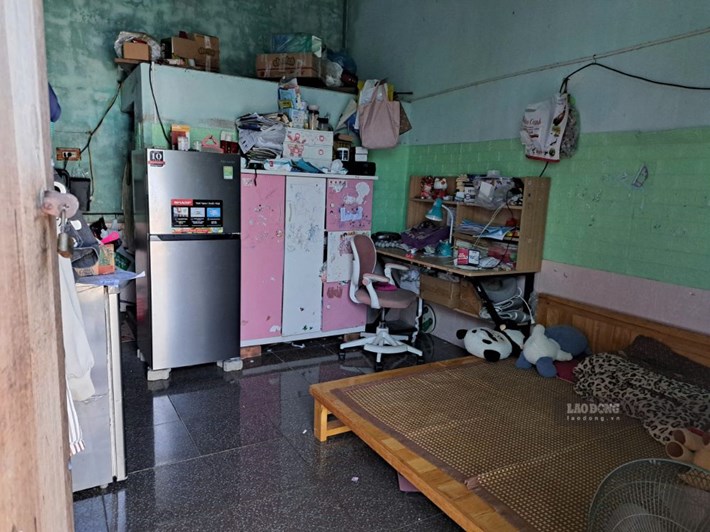
Workers brace themselves in cramped rented rooms
Da Nang - Meager wages and expensive living costs make many worker families in Da Nang have to find ways to balance revenue and expenditure, living in cramped conditions.
Heartbroken to rent two rooms because the accommodation is too cramped
In the rented room hamlet group 30, Cam Le ward, where many workers of Hoa Cam Industrial Park are concentrated, Ms. Trinh's family from Hue City has been staying for nearly ten years. Unlike the surrounding single rooms, she and her husband and young daughter are renting two adjacent rooms.
Ms. Trinh said that before, the whole family lived in one room for 800,000 VND per month. When their daughter grew up, things became cramped, and the accommodation became too cramped and stuffy. The kitchen, refrigerator, and fan were placed close to the sleeping area, leaving no space for the child to sit and study. Extremely reluctantly, the couple had to squeeze their stomachs and rent an additional room next door just to have a place to place the desk and separate the cooking area.
This decision doubled the living expenses. Room rates doubled, leading to an increase in electricity and water bills. Meanwhile, the work at the factory was in rotation shifts, sometimes the couple worked completely off-hours, one person had just returned to the door early in the morning when the other had already parked their motorbike to go to work. To compensate for the surcharge, both had to strain themselves to receive extra overtime hours.
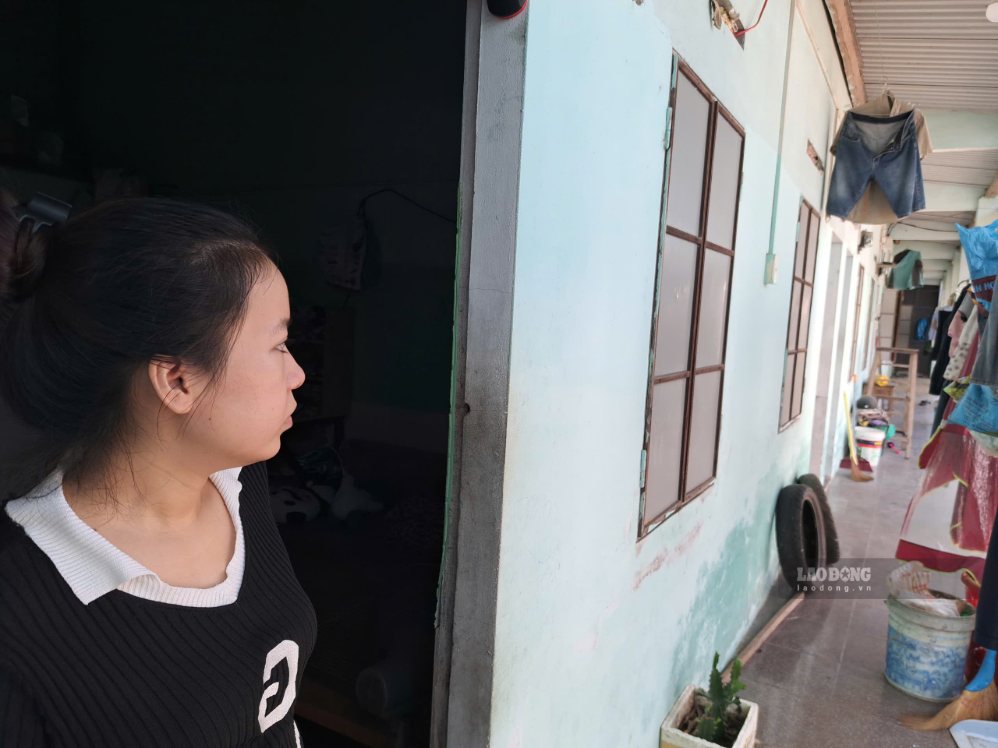
Jostling in a 16m2 room
Leaving Cam Le ward to a rented room of more than 16m2 on Dang Chiem street, Lien Chieu ward, the cramped living conditions of workers became even clearer. At seven o'clock in the morning, Ms. Tran Thi Lan left the factory after an 11-hour night shift at Hoa Khanh Industrial Park. Returning to her room with dark circles under her eyes due to lack of sleep, she hurriedly helped her mother take care of breakfast and then took her children to school.
More than 11 years working as workers, Ms. Lan and her husband have not escaped temporary renting houses. The burden of spending weighs heavily when three young children gradually enter school age. The monthly income if not overtime is only 5,200,000 VND, when overtime is also only 7,300,000 VND, causing the family to regularly borrow money. To have someone to pick up and drop off their children, Ms. Lan's husband was forced to quit his job and switch to working as a technology motorbike taxi driver, while his grandmother from Hue had to come to live with him to help take care of the grandchildren.
The room of more than 16 square meters is the living space of the whole family. The area is too small, so only one bed can fit for the elderly and three children, the space next to the ground floor below is a place to spread mats for the couple to lie down. Ms. Lan chose to work a fixed night shift from 8 pm to 7 am the next morning not because she could adapt, but to be present at home during the day to help with work and look after the children. The night shift worker came home to make up for sleep, the elderly looked after the children, and the motorbike taxi driver came in and out continuously, making the small room always stuffy.
With meager wages and living expenses weighing heavily every day, finding a more spacious place to live is still out of reach for workers' families here.
See the original here