

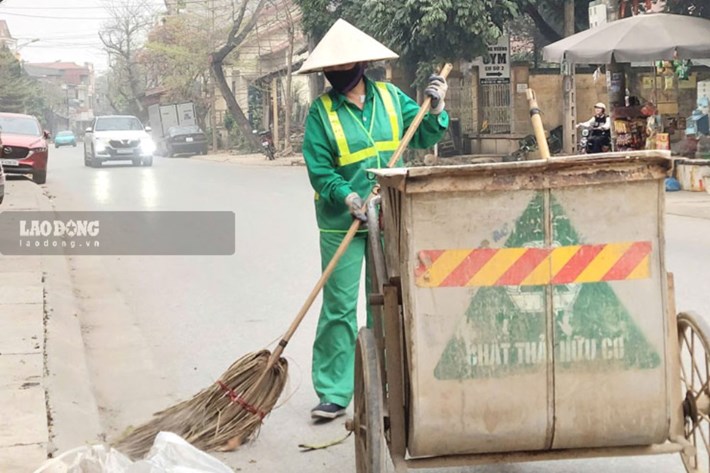
To reassure female environmental workers to stick with the profession
Health care, improving working conditions and supporting workers' families are factors that help female environmental workers feel more secure at work.
The work of collecting domestic waste is inherently heavy and potentially risky to health, but for female environmental workers, the pressure does not only come from working hours on the streets.
After work, many people continue to return to the responsibility of taking care of children, the elderly and family work. This is creating a "double burden", making women easily fall into a vortex of difficulties in health, time and economy.
Because the specific nature of the environmental profession is that workers (NLĐ) regularly work outdoors, in shifts, including night shifts. With a relatively high proportion of female workers, these job requirements pose many challenges to the physical and mental health of women.
Possible risks include bone and joint diseases, occupational accidents, and health problems related to working conditions and exposure environments.
From that reality, for female environmental workers to be assured and attached to their jobs, synchronous coordination between management agencies, businesses and the community is needed, from improving working conditions, preventing occupational diseases to building health protection policies suitable to the specific characteristics of female workers.
Referring to solutions to protect the health of female environmental workers, Assoc. Prof. Dr. Nguyen Ngoc Bich - Head of the Faculty of Environmental and Occupational Health, University of Public Health emphasized 3 groups of issues that need to be concerned about, including occupational health protection policies, solutions to improve working conditions at enterprises and community participation.
First of all, regarding occupational health protection policies, Assoc. Prof. Dr. Nguyen Ngoc Bich said that surveys and international research documents mentioned in the program show that the proportion of workers in the industry facing musculoskeletal problems is high.
This is an issue that needs attention because garbage collection and transportation work often requires workers to move a lot, use energy and perform repetitive operations.
Therefore, it is necessary to continue researching and evaluating to have appropriate policies, contributing to protecting the rights of workers, and at the same time supporting them in the process of treatment and health recovery when suffering from occupational diseases.
In addition to perfecting policies, businesses need to continue to invest in improving working conditions in the direction of reducing manpower and increasing the effectiveness of technical support. The use of mechanical vehicles to support movement, collection and transportation of waste is one of the solutions to help reduce the physical burden for workers.
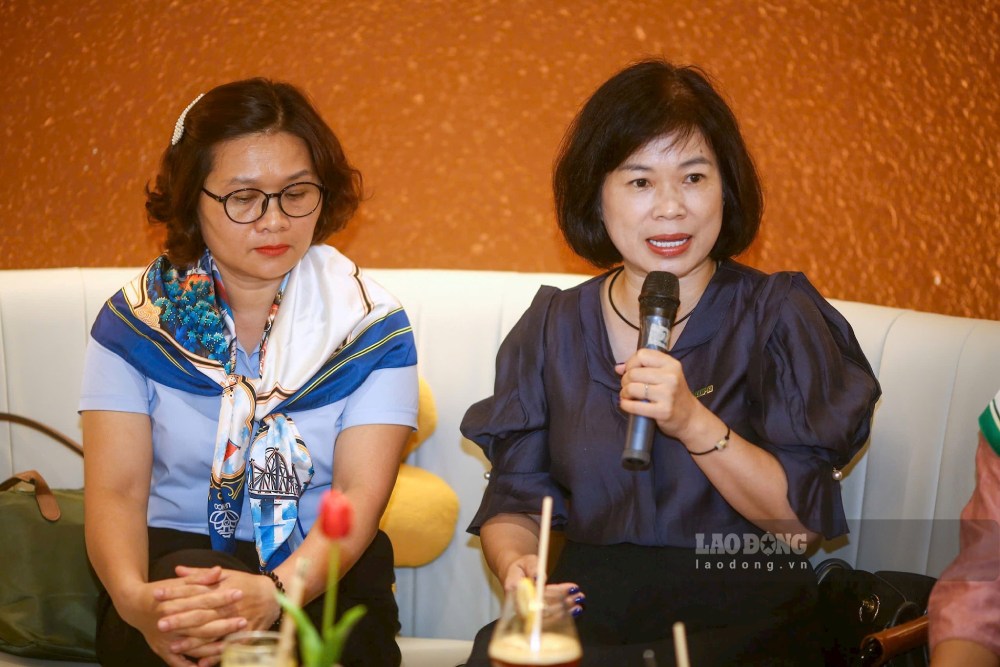
URENCO Trade Union Vice Chairman Hoang Bich Hanh said that the enterprise currently has 5,781 officials and employees, of which female workers account for more than 60% and female workers working in night shifts account for 77.8%. The nature of VSMT work, especially regularly working at night and outdoors, makes employees face many factors that can affect physical and mental health.
Concerned about protecting workers' health, the Company maintains annual periodic health check-ups, and organizes specialist check-ups for female workers. These are activities aimed at early detection of health problems, helping workers receive timely care.
Focusing on improving working conditions, the Trade Union has proposed building mobile guesthouses for workers to have a place to rest between shifts; and at the same time paying attention to support solutions during nighttime work, contributing to improving safety and helping workers feel secure in their work.
Not only in terms of physical health, URENCO also organizes activities to care for the cultural and spiritual life of female workers. Welfare programs for workers' families, such as scholarships and learning support for workers' children, are also being implemented to create motivation for them to stick with their jobs.
Reality shows that protecting health and improving happiness for female environmental workers is a specific step to clearly concretize the orientations of Resolution 72-NQ/TW in organizing coordination between periodic health check-ups, free screening, health check-ups for students, occupational health check-ups, health check-ups for workers according to regulations and health insurance medical examination and treatment to provide free medical examinations and complete the creation of electronic health records for all people.
See the original here