
National Assembly and legislative thinking taking people and businesses as the foundation
In the process of perfecting institutions and promoting socio-economic development, the National Assembly has made a strong impression through a breakthrough shift in thinking. All legislative decisions of the National Assembly always place people and businesses at the center, as the subject and ultimate goal.
Do not push difficulties towards people and businesses
Innovating legislative thinking starts from resolutely eliminating the philosophy of "if you can't manage it, then ban it" or the policy design style that prioritizes convenience for public authorities. Instead, each law when promulgated must play the role of a "launchpad" to unlock resources, protect the freedom of business and the legitimate rights of the People.
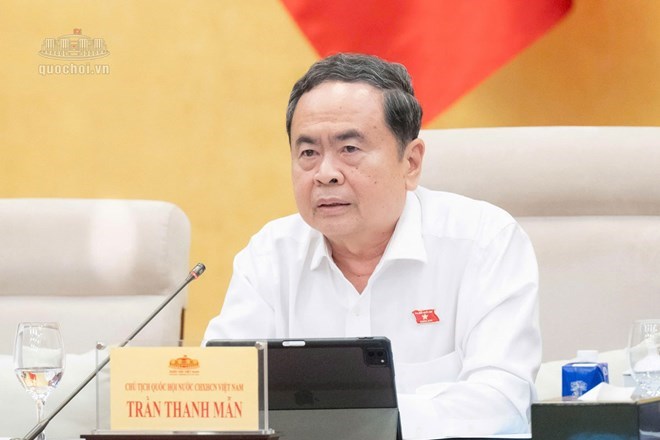
At the meeting of the National Assembly Standing Committee in early September 2026, Politburo Member, National Assembly Chairman Tran Thanh Man proposed that legislative work must put quality, feasibility and development requirements first. "Resolutely overcome local thinking, industry and sectoral interests; do not create more procedures and costs, do not push difficulties onto the people and businesses" - the National Assembly Chairman said.
This spirit is concretized by drastically reducing overlapping barriers and business conditions and simplifying the time to resolve key administrative procedures by 30-50%. And more specifically, the innovation of thinking in law-making work is clearly shown at the first non-scheduled session of the 16th National Assembly.
Typically, the National Assembly passed the Law amending and supplementing a number of articles of 10 laws related to administrative procedures and business conditions in the field of agriculture and environment. The Law has cut 40 administrative procedures, simplified 12 administrative procedures and cut 40 business conditions; delegated 24 administrative procedures of the Ministry of Agriculture and Environment to the Chairman of the Provincial People's Committee to implement.
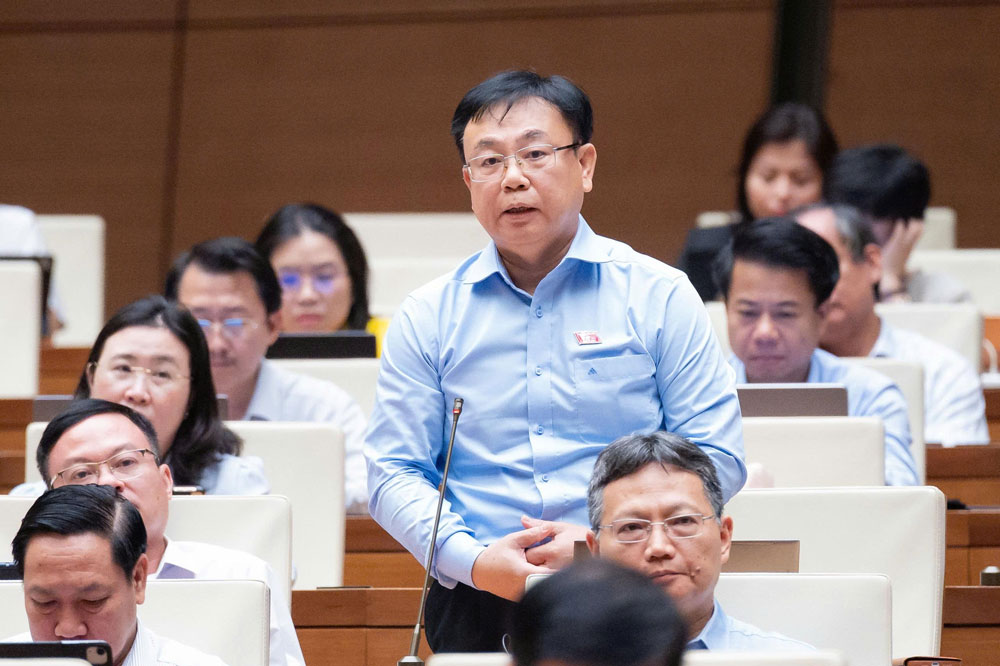
In addition, legislative thinking is increasingly practical and flexible, aiming to bring life into the law so that the law goes into life. This is clearly shown in the National Assembly focusing on handling specific and urgent issues arising from practice; solving problems in the development of state healthcare, private healthcare, science and technology, innovation and digital transformation. National Assembly deputy Nguyen Cong Long, who works full-time at the Law and Justice Committee, said that the National Assembly has had very important changes in thinking. Accordingly, the National Assembly must not only stop at institutionalizing policies and guidelines, but also must pave the way, create motivation for development and create new development motivations.
More correct, more accurate and more feasible policies
Assoc. Prof. Dr. Bui Thi An - Delegate of the 13th National Assembly, Director of the Institute of Natural Resources, Environment and Community Development - affirmed that the National Assembly has fundamentally innovated the thinking of building laws in the direction of both ensuring state management requirements and encouraging creativity, unlocking all resources for development.
Assoc. Prof. Dr. Bui Thi An added that, in addition to complying with principles in the digital age, laws need to be open, flexible, reduce policy delays, and create space for innovation. When building laws, there must be forecasting, that is, it must be linked to reality because if not, forecasting will be outdated and lead to being easily passive. At the same time, thinking must be innovated, showing responsibility to the people. From thinking, feasible laws will be built and promulgated, promoting the development of the country.
Assoc. Prof. Dr. Bui Thi An said that it is necessary to change the law-making process in accordance with the development, modernization and integration trends to ensure that the law is both core and orienting the country's development.
According to Deputy Chairman of the Committee for Science, Technology and Environment Do Duc Hong Ha, the spirit of innovation of the National Assembly is first of all expressed by a very fundamental change in the working method: from "passive waiting" to "proactively joining in", from reacting to arising problems to proactively identifying problems, together with the Government and relevant agencies to find solutions early and remotely.
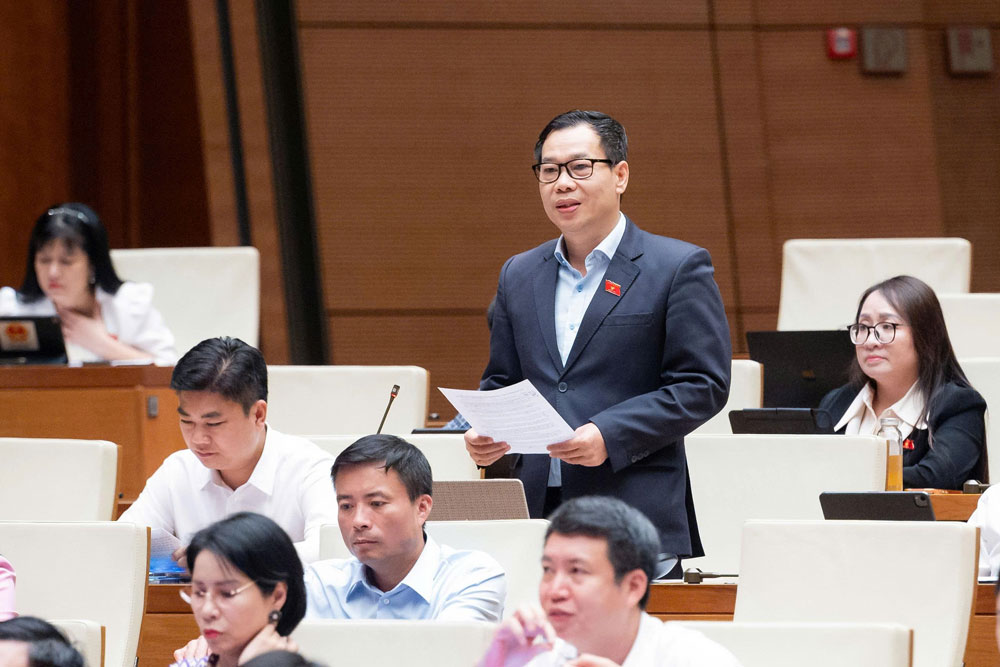
Behind the changes in working methods is a new awareness of the responsibility of the legislative body: Not only deciding policies but also contributing to bringing policies into life as quickly and effectively as possible. The spirit of innovation of the National Assembly, therefore, can be said to be very simple: Say less, do more; go straight to the core issues; not avoid bottlenecks, including difficult and sensitive issues, and above all, all decisions must put national, ethnic interests and legitimate rights of the People in the highest position.
The Deputy Chairman of the Committee for Science, Technology and Environment said that this shift is first and foremost felt in the daily work of the National Assembly agencies. That is the change in the approach to a draft law: Not only asking "Is the regulation in this draft correct?", but also asking "if it is promulgated, will it solve the practical problem, create development motivation or generate new costs and procedures for people and businesses?".
If previously the National Assembly was seen more as having passed or not passed a draft law, today, the requirement is much higher: To work together to make policies more correct, more accurate and more feasible.
In the current legislative process, the coordination between the drafting agency and the auditing agency is implemented sooner and more closely. The National Assembly's agencies not only point out the shortcomings and inconsistencies of the draft, but also work with the Government and relevant agencies to find amendments to bring policies into life.
The measure of the quality of the National Assembly's legislative activities does not lie in the number of documents or the length of chapters and articles, but is measured by the breakthrough of economic sectors and social satisfaction. When institutions are truly for the people and for businesses, market confidence will be firmly consolidated, creating motivation to bring the country to rapid and sustainable development.
Read the original here