

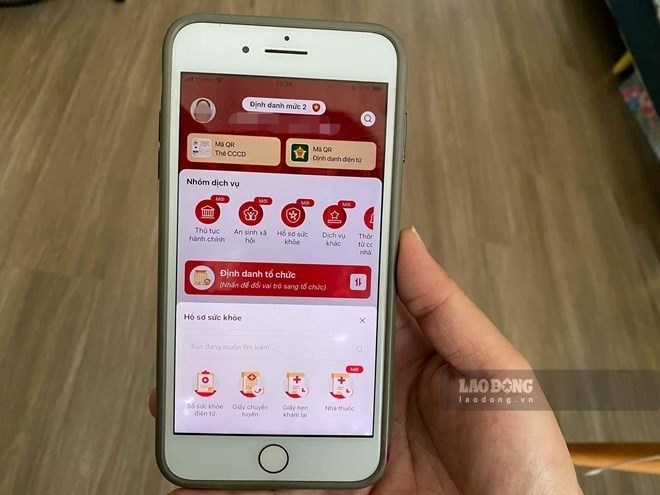
Ministry of Health proposes extending referral slips to 20 days, using them immediately on VNeID
Patients can use referral slips and re-examination appointment slips on VNeID instead of paper; the deadline for transfer slips is proposed to be increased from 10 to 20 days.
Transfer slips can be used on VNeID
The Ministry of Health is seeking opinions on a draft amendment and supplement to a number of regulations on health insurance (HI) medical examination and treatment, which proposes to promote the use of electronic transfer slips and re-examination slips.
According to the draft, medical facility transfer slips can be made in paper or electronic form, the validity period is increased from 10 to 20 days from the date of signing.
Patients can use the form on the VNeID application, health insurance assessment information system, digitally signed electronic documents or paper copies with QR codes to look up. The form displayed on the electronic health management application of the medical examination and treatment facility is also equivalent to the paper copy.
With the re-examination appointment form, patients are required to come to the medical examination and treatment facility within 3 working days from the date recorded on the appointment form. In case they cannot arrive on time, patients can contact a doctor or treatment facility to make another appointment.
Notably, for people with chronic diseases or requiring long-term treatment in the prescribed list, the transfer slip is valid for 1 year. If during treatment, the receiving facility discovers another disease also in this list, the patient does not have to make an additional transfer slip.
Reducing procedures for chronic patients
The draft also proposes to change the way patients are transferred between medical examination and treatment facilities. The referral will be based on professional requirements and the treatment capacity of the receiving facility, instead of rigidly depending on the hospital rank and technical expertise line as before.
After stable treatment at the basic level or specialized level, people with chronic diseases can be transferred to the initial level facility for continued management. When the treatment results need to be reassessed, patients can still return to the facility they were treated at before, up to once every 6 months.
The Ministry of Health said that bringing patients who have stabilized to the grassroots level in the past time contributes to reducing overload for the upper level, and is also more convenient for long-term disease monitoring. However, the lower level still faces difficulties due to lack of drugs, supplies, equipment and human resources; information on diagnosis, drugs, treatment regimens, and test results between levels has not been fully interconnected.
The draft proposes to study the function of automatically reminding appointments and supporting relatives to look up appointment slips for children, the elderly and dependents on electronic applications.
Some diseases are also proposed to be added or adjusted in the list of chronic disease management at the primary level, including epilepsy that has stabilized after the acute stage.
The Ministry of Health also proposed to expand some groups to be registered for initial health insurance medical examination and treatment and requested to increase investment in facilities, equipment, and human resources for the grassroots level. The specialized level will focus on treating complex, high-tech diseases and providing professional support for the lower level.
If passed, the amended regulations are expected to take effect from April 1, 2027.
Read the original here