

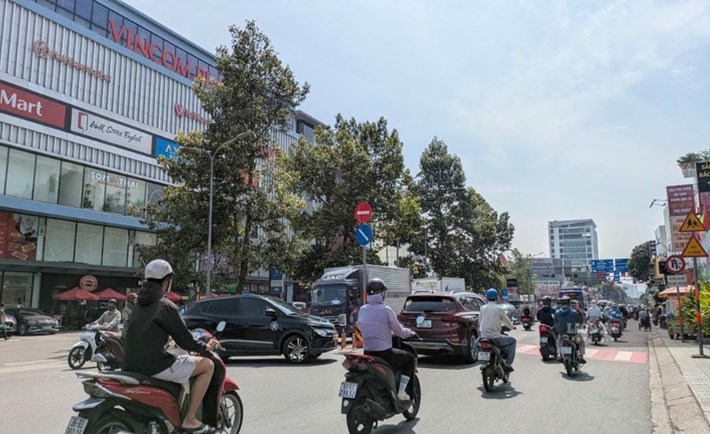
Bringing technological utilities to directly serve people's lives
Applying technology from public services to school food safety, Ho Chi Minh City is gradually digitizing urban life, creating a foundation for transparent management and proactive service.
Digital transformation into people's lives
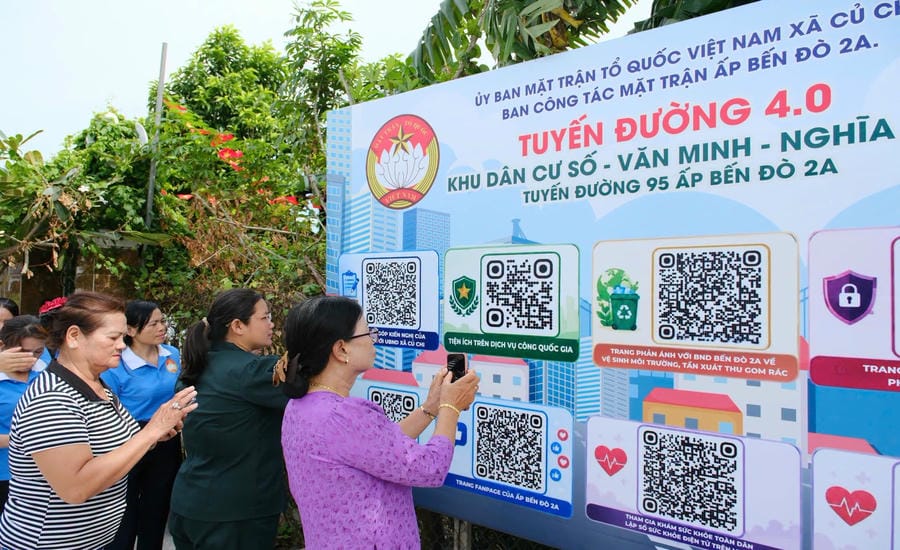
In Cu Chi commune, the model "Road 4.0 - Civilized and meaningful digital residential area" is implemented on Highway 95 with 7 QR code scanning points, supporting people to access public services, reflecting people's livelihood issues and using digital utilities. Business households are also guided on non-cash payments.
According to Ms. Cao Thi Thanh Nhan, Chairwoman of the Vietnam Fatherland Front Committee of Cu Chi commune, the model contributes to increasing community connection, linking digital transformation with building green, clean, beautiful, and safe residential areas.
Launched in August 2026, the digital citizen station on Pham Van Nghi street (Tan Hung ward) integrates many utilities such as online application submission, remote fine lookup, SOS connection, tourist maps and free health measurement.
Experiencing at the station, Ms. Ta Thi Ngoc Diep (Tan Hung ward) commented that the model helps public services become closer and clearer, and at the same time proposed that localities arrange more forces to support the elderly in operating medical equipment.
In An Dong ward, the "An Dong Road and Sidewalk Licensing" application allows people to register and pay online, while integrating ID card and VNeID data to reduce errors.
Mr. Luong Quang Nhat Minh - specialist of An Dong Ward People's Committee - shared that the software can automatically draft and issue permits on the same day for 14 routes under the ward's management; routes under the Department of Construction are transferred dossiers within 24 hours.
Ms. Le Thi Yen Van, a business household on Tran Hung Dao street, assessed that scanning QR codes helps pay fees quickly, transparently, without having to travel; and also has a legal parking space, so they are more assured to trade.
Green tick of responsibility for transparency of the school food supply chain
Digital transformation in Ho Chi Minh City also goes deep into life through the application of technology to ensure food safety in school kitchens.
Ms. Phan Minh Nguyet - parent of Le Van Tam Elementary School - said that just scanning the QR code on the semi-boarding menu can see the dish, ingredients, supplier, processing time, delivery and means of transportation.
The model is really very convenient. The fact that processed food information for students is publicly and transparently available via QR code helps parents like me feel very secure. I hope this model will be replicated further so that my children's meals are always guaranteed to be safe" - Ms. Nguyet shared.
This is the result of the "Responsibility Green Stick" model at school kitchens piloted by Tan My Ward People's Committee from July 2026, aiming to build a safe food supply chain, allowing parents to trace the origin from production to service.
In September 2026, Dong Thanh commune launched the "Responsible Green Tick Standard Meal" model piloted by the Ho Chi Minh City Department of Industry and Trade.
According to Mr. Truong Van Tanh, Vice Chairman of Dong Thanh Commune People's Committee, the core point is not in the blue tick but in the responsibility and transparency of each link. The locality wants to build a safe food ecosystem where suppliers compete by quality and responsible business.
Assessing the model, Mr. Dao Ha Trung, Chairman of the Ho Chi Minh City High-Tech Association, said that traceability data helps shift from paper management to controlling the food journey from suppliers to kitchens. However, technology is just a tool, the key to success is the proactive monitoring participation from the community and parents.
Digital transformation imprint of Ho Chi Minh City
Ho Chi Minh City currently has 8,541 BTS stations, 5G coverage of about 95%; the data system integrates 31 databases, connects 13 national data groups and provides 78 open databases. All 164 hospitals have deployed electronic medical records, and 1.52 million student records have been digitized.
The city is supporting digital transformation for small and medium-sized enterprises, with 200 enterprises being piloted to support 100% of funding and 50% cost support packages according to Resolution 22/2026/NQ-HĐND.
Total foreign investment in science, technology and digital transformation exceeded 17 billion USD; the AI Data Center project worth 2.1 billion USD has signed a memorandum of understanding.
In 2026, Ho Chi Minh City ranked 2nd in the country in the Local Innovation Index, leading 12/52 component indices. According to StartupBlink, the city's startup ecosystem increased by 12 places, to 98th in the world, valued at about 7-7.5 billion USD. NGUYEN DANG
Line number
In Hanh Thong ward, digital transformation is concretized by the "Digital Road" model Phan Van Tri - Nguyen Thai Son and the "Digital Quarter" application on National Digital Transformation Day 2026.
The "Digital Road" model helps people and businesses provide public services, electronic identification, cashless payments and reflect inadequacies through QR codes. Thanks to this, procedures are more convenient, saving time, increasing interaction with the government and bringing technology into daily life.
See the original here