


Tuyen Quang strives to eliminate wave depressions, bringing information to each village
From having to travel a few kilometers, going up mountains to find phone signals to being able to make video calls, update agricultural product prices and search for learning materials via the Internet, the lives of people in the low-wave area in Tuyen Quang have gradually changed.
No longer having to go far just to find waves
In Minh Loi village, Hung Loi commune, the hilly terrain is divided, making it difficult for people to communicate by phone. To make phone calls or access the Internet, people have to travel a few kilometers, go up the pass or find high positions to pick up signals.
A similar situation also occurs in Khuon Tham hamlet, Tan My commune. With 26 households living, this area has hilly terrain, making phone signals weak and intermittent. Calls asking about relatives, exchanging work or informing about the situation in the village sometimes take a lot of time.
In places where traffic is already difficult, having to move just to find phone signals makes life even more inconvenient. When there is an emergency, people find it difficult to contact relatives, authorities or functional forces immediately. If there are rain, floods, landslides, forest fires or other emergencies, notification and coordination may also be delayed due to lack of stable communication equipment.
No phone signal also makes it difficult for people to access practical information to serve production and life. For households mainly relying on cultivation and animal husbandry, updating agricultural product prices, learning farming techniques or referring to economic development experiences online all face obstacles. Online public services, educational information and other digital utilities are also more difficult to access.
These inconveniences show that in remote and isolated areas, phone and Internet waves are not simply a means of communication. This is also a condition for people to access information, connect with the government, expand economic development opportunities and improve the quality of life.
Identifying the elimination of wave hollow zones as an important task in digital infrastructure development, Tuyen Quang province is coordinating with telecommunications enterprises such as Viettel, VNPT, MobiFone to review and survey areas that do not have signal or connection quality does not meet demand.
According to statistics, by the end of September 2026, the whole province had 3,227 BTS stations operating, with a mobile coverage rate of nearly 98.5%. However, the complex terrain and dispersed population make the expansion of infrastructure to some villages and hamlets still face many obstacles.
Mr. Le Duy Huy, Head of Viettel Tuyen Quang Infrastructure Department, said that in the coming time, the unit will continue to implement solutions to expand coverage in remote and isolated areas.
In which, sharing infrastructure between network operators, combined with taking advantage of infrastructure from the electricity and transportation industries, will contribute to reducing investment costs and shortening construction time. Businesses are also gradually mobilizing more resources, including social security capital, to invest in broadcasting stations, gradually bringing connections to areas that are still difficult.
This is a necessary direction when many residential areas are far from the center, the terrain is divided, while the cost of building and operating telecommunications stations is large. The coordination between the government and businesses helps identify priority areas and choose investment options suitable to actual conditions.
With the Internet, people have more opportunities for development
If the wave hollow situation in Minh Loi, Khuon Tham shows the inconvenience of lack of connection, then in Ngoc Son village, Bach Ngoc commune, the changes after having telecommunications and Internet waves show more clearly the meaning of bringing digital infrastructure to difficult areas.
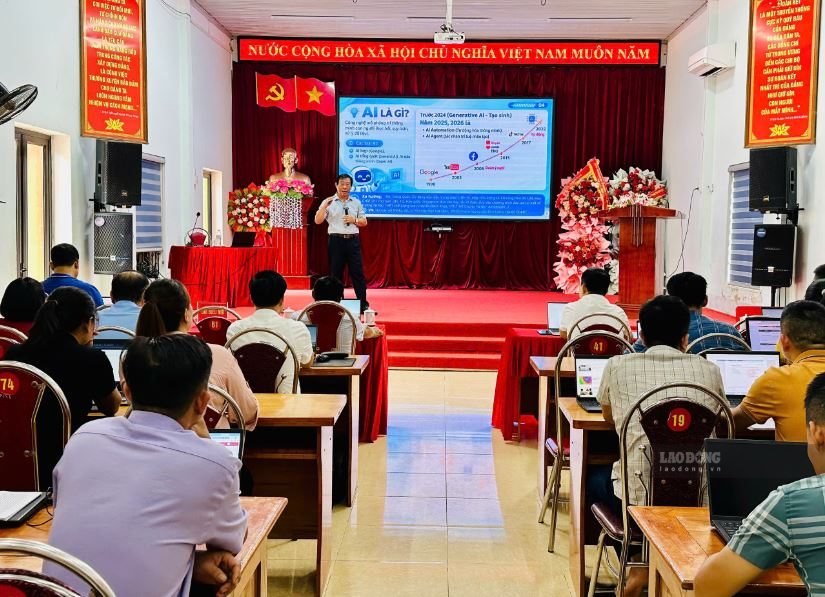
Ngoc Son is a particularly difficult village, with high hilly terrain and many traffic obstacles. The village has 191 households with about 1,000 people, mainly Mong and Dao ethnic people. The poverty rate is still high (accounting for 50.78%).
Previously, due to the lack of telecommunications and Internet signals, people faced many difficulties in contacting, exchanging work and accessing information. Things that needed to be notified directly often had to be delivered to their homes; communication between people and the government also took longer.
From the beginning of 2026, when telephone and Internet signals are brought in, people's lives will gradually change. People can use phones to communicate more conveniently, search for information and exchange work without having to move to high positions to catch signals as before.
The seemingly familiar amenities in convenient areas have now become a significant change for the people here. Calling by video to chat with relatives far away, updating news or searching for information to serve life is no longer too difficult.
The Internet also opens up more opportunities for people to access production knowledge. Instead of just relying on available experience, people can learn about farming and animal husbandry techniques, refer to disease prevention methods and update market prices. This information helps households have more basis to calculate production plans, gradually improving family economic efficiency.
For families with children going to school, Internet connection helps find materials, refer to lessons and access online education programs more conveniently. Children have more opportunities to access knowledge outside the village, while parents also easily exchange with teachers when necessary.
Not only serving each family, telecommunications connection also helps the common work of the village to be more convenient. When problems arise, people can quickly notify each other or report to local authorities by phone. Information about natural disasters, epidemics or issues that need to be handled at the grassroots level can therefore be transmitted more promptly.
Mr. To Van Truong, Vice Chairman of Bach Ngoc Commune People's Committee, said that the locality will continue to coordinate with relevant units to review and specifically statistically identify wave hollow points in the area; coordinate with Viettel, VNPT, MobiFone to conduct field surveys, assess signal quality and people's usage needs.
The commune also creates conditions for land, procedures and propaganda work for businesses to invest in and upgrade telecommunications infrastructure. This task is linked to the digital transformation program, new rural construction and administrative reform. For particularly difficult areas, the locality continues to propose to higher levels to pay attention to support so that people have conditions to access services.
However, Ngoc Son is still not evenly covered. According to local information provided, the coverage rate of telecommunications and Internet in the village is about 80%; some areas still have weak, intermittent signals or no connection.
This reality shows that bringing signals to a new area is only the first step. For people to truly benefit, infrastructure needs to be further improved to ensure stable signals, meeting the needs of communication and Internet access in daily life.
In addition, guiding people to use smartphones, look up useful information, access online public services and identify unreliable information also needs to be emphasized. Especially in villages with high poverty rates, digital skills support will help people better exploit the benefits that telecommunications infrastructure brings.
From "removing wave depressions" to "opening digital space" for villages
Although certain results have been achieved, the journey to eliminate wave hollows in Tuyen Quang still has much to do. According to statistics, the whole province currently has 199 villages without waves, of which 74 villages have not been completely covered by mobile waves.
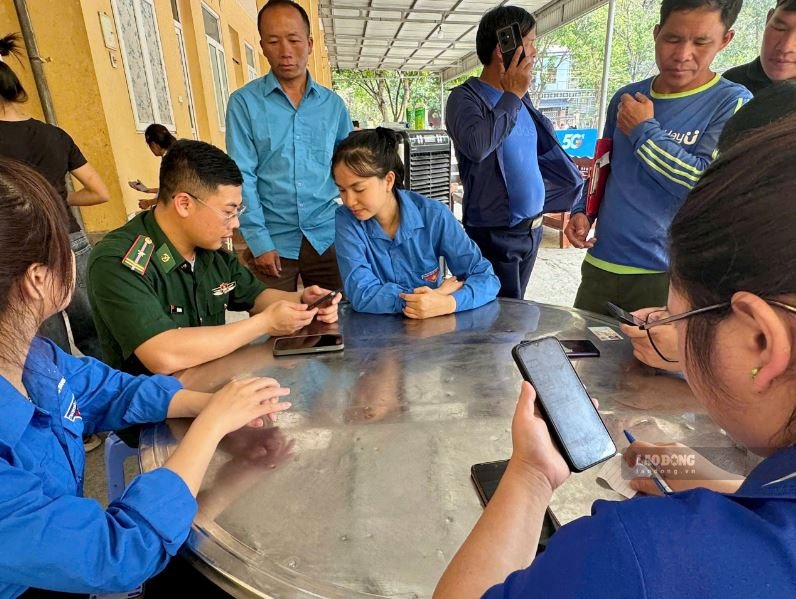
Behind these figures are residential areas that still face difficulties in communication, accessing information and using online services. For people in remote and isolated areas, lack of connection not only causes inconvenience in daily life but also limits opportunities to access knowledge, develop production and enjoy essential services.
Complex terrain and dispersed population make investment in these areas not easy. Some locations are far from traffic, construction conditions are difficult, and investment costs are high, while the number of subscribers is not large. Therefore, the expansion of coverage needs close coordination between the government, telecommunications businesses and related units, while prioritizing resources for truly necessary areas.
Implementing the spirit of Resolution No. 57-NQ/TW of the Politburo on developing science, technology, innovation and national digital transformation, Tuyen Quang is gradually removing bottlenecks in infrastructure, towards building digital government, digital society and improving the quality of people's lives.
The province determines that it is necessary to strengthen coordination between departments, branches, local authorities and telecommunications enterprises; create favorable conditions in terms of land and administrative procedures to deploy infrastructure projects. The selection of the location of the station should be based on terrain characteristics, population scope and actual needs, ensuring coverage efficiency and people's accessibility.
Along with that, sharing infrastructure between network operators, taking advantage of existing works and mobilizing social resources will contribute to reducing costs and shortening deployment time. Localities need to proactively review points without signal, clearly identify the level of connection shortage and coordinate with businesses to develop appropriate handling plans.
In parallel with the goal of eliminating voice signal white spots, the province aims to upgrade and expand the high-speed data network 4G, 5G, striving to ensure 100% of villages are covered by broadband mobile Internet.
This is not only a task of developing technical infrastructure but also a requirement to narrow the digital gap between regions. Bringing waves to the village is not simply solving the need for listening and calling. Erasing "wave density" is the key to "opening up digital space" for people in the highlands of Tuyen Quang.
That digital space is where farmers bring local agricultural products to e-commerce platforms, livestream selling goods right in the fields; it is where people sit at home to register for birth certificates and land records through online public service portals; it is where children in the deepest villages can still access the vast treasure of human knowledge through computer screens.
Tuyen Quang is aiming for the goal of covering 4G and 5G broadband mobile Internet to 100% of villages and hamlets. With the joint efforts of the government and telecommunications businesses, each white spot is gradually disappearing on the map. The clear "Alo" sounds and the smooth flow of information today are a solid foundation for ethnic minorities in Tuyen Quang to rise out of poverty and join the digital transformation beat of the whole country.
See the original here