


Eliminating wave-logged areas, opening up livelihoods for people in mountainous areas
From videos introducing local culture to thousands of agricultural product orders sold online, the Internet is opening up more livelihood directions for mountainous people. But for that opportunity to reach the most remote villages, it is necessary to continue to eliminate wave hollows, support equipment and reduce barriers to connection costs.
From the highland kitchen to the thousand-order market
Hello everyone, I am Mai Tay Bac here," the simple greeting of Ms. Pham Thi Phuong Mai, from Tan Tien village, Trinh Tuong commune, Lao Cai province, has become familiar to many viewers on social networks. Through videos cooking rustic dishes, introducing forest vegetables, stream fish, sticky rice and local customs, she brings the daily life of people in the Northwest closer to audiences in many regions.
It is noteworthy that social networks not only help Mai promote culture. This is also a sales channel, expanding output for local agricultural products.
At the National KOL Conference in August 2025, Mai said that previously, when selling agricultural products in the traditional way to people in the commune, her family only consumed about 5-10 orders per day. After building TikTok, Facebook channels, filming product experience videos and livestreaming sales, there were days when the number of orders reached thousands.
Mai Tay Bac Channel currently has about 787,200 followers. This number does not automatically mean revenue, but shows the ability to bring products and homeland stories to a large audience. To turn interest into orders, sellers still need to ensure product quality, price, packaging and delivery.
Currently, wild honey, black pork fat, earth ginseng, vermicelli, and cabbage seeds are items that Mai sells year-round to consumers nationwide along with local seasonal agricultural products. Videos selling agricultural products bear the simple beauty of Lao Cai mountain and forest villages.
In addition, she also actively links with cooperatives with OCOP products to put products on social networks to improve prestige, product quality, and expand consumption markets.
Mai also often participates in guiding young people in the commune and district on how to sell goods online as well as making product promotion videos as well as training everyone on how to film and edit basic films, so that there are more and more local sales channels, bringing local agricultural products and specialties to people across the country.
When villages can tell their own stories
Not only Mai Tay Bac, Mr. Sung A Tua, known through the A Tua - Phinh Ho channel, is also an example of how highland people take advantage of digital platforms to promote their homeland. As a commune official, a Mong person in Phinh Ho, he uses videos introducing mountains and forests, local life and local products to bring images of his homeland to the online community. His channel was once recorded to have more than 400,000 followers on TikTok.
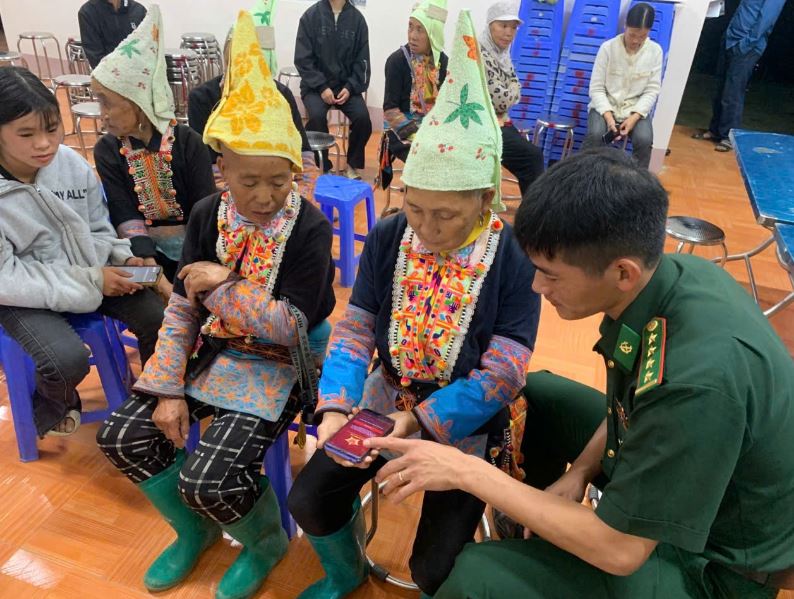
A noteworthy point in content creators like A Tua is that they do not need to start with strange stories or elaborate products. It is the scenery, customs, dishes and daily life in the village that become the material to attract viewers. When content is spread, the locality has more opportunities to promote tourism, products and unique cultural features.
In the same direction, Mr. Pham Duc Nam, Chairman of Dong Van Commune People's Committee, Tuyen Quang province, with more than 13,000 followers, and Mr. Nguyen Duy Tu, Secretary of the Party Committee of Van Son commune, Phu Tho province, with more than 30,000 followers, also used videos to introduce landscapes, waterfalls and local life.
These examples show that the Internet can create a new promotion channel for the highlands. When tourists learn about a destination through video, they can learn more about routes, accommodation, food and local experiences. If the locality organizes appropriate services, online interest can turn into a need for sightseeing, accommodation and consumption, creating more jobs and income for people.
Similarly, the Nong San Tay Bac 26 channel with 216,000 followers and May Lung Yen Bai with 245,000 followers are taking advantage of social networks to introduce local specialties. These figures show the ability of digital channels to reach customers, although economic efficiency depends on product quality and sales organization capacity.
But behind videos with thousands, hundreds of thousands of views are connection conditions. To film, post content, livestream, receive applications and exchange with customers, people need mobile signal, sufficiently stable Internet and suitable equipment. If signals are intermittent, market access opportunities will also be narrowed. Therefore, removing the wave congestion area is not only to ensure communication, but also to create conditions for people to participate in new economic activities.
There are still about 400 villages and hamlets with wave hollows.
According to the Ministry of Science and Technology, in the period 2021-2025, telecommunications enterprises have coordinated to deploy coverage in 3,245 remote villages, bringing the rate of villages with mobile broadband connections to 99.56%. As of September 2026, the 5G network has covered 91.99% of the population, while fiber optic cables have been deployed to 100% of communes and wards.
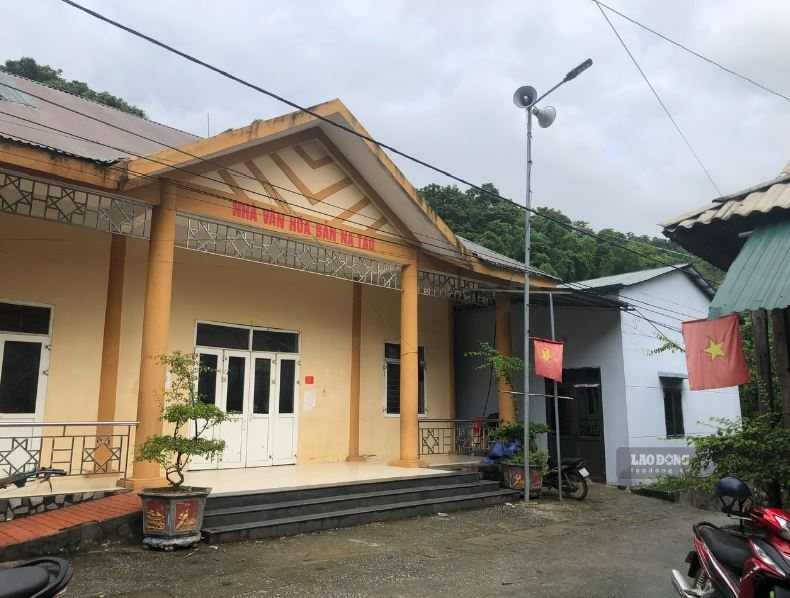
However, according to the 2026 review, there are still about 400 villages and hamlets in 13 provinces and cities nationwide with wave hollows. These are mainly areas with complex terrain, scattered population, and high investment costs, making the construction and maintenance of telecommunications infrastructure difficult.
These connection gaps make it difficult for people to fully access digital utilities. Not only is online business activities limited, but updating weather information, receiving natural disaster warnings, learning about production support policies or searching for administrative procedures may also encounter obstacles.
In the period 2021-2025, telecommunications enterprises have invested in building and maintaining 1,817 BTS stations providing mobile services, along with 1,755 fixed broadband telecommunications infrastructure projects. More than 900,000 poor and near-poor households are supported to use telecommunications services; about 4,500 educational institutions and nearly 1,100 health stations in particularly difficult communes are supported with terrestrial fixed broadband Internet.
However, having signal does not necessarily mean that people are qualified to exploit opportunities in the digital environment. For poor households, the cost of buying smartphones and maintaining Internet charges is still a barrier. People also need to be guided on skills to search for official information, use online public services and sell goods safely online.
Therefore, along with infrastructure investment, it is necessary to support terminal equipment and usage costs for disadvantaged groups; promote community Internet access points, bookshelves and digital libraries. Grassroots information systems continue to play the role of bringing disaster warnings, policies and production knowledge to people, especially in places with unstable connections.
In the period 2026–2030, the Public Telecommunications Service Program not only focuses on infrastructure development but also aims to ensure equal access to information, narrow digital gaps, especially in remote, isolated, ethnic minority, border and island areas.
Inheriting the previous phase program, the new program is adjusted to suit the requirements of digital infrastructure development, national digital transformation and ensuring social security. In which, priority is given to supporting particularly difficult areas and vulnerable groups, implemented with focus, suitable to the actual needs and access to services of the people.
The program identifies two core task groups: supporting infrastructure development and supporting people to use public telecommunications services. Regarding infrastructure, the scope of support is expanded to particularly difficult villages in ethnic minority and mountainous areas; and at the same time supplements the task of upgrading telecommunications infrastructure, ensuring communication in emergency situations.
A noteworthy new point is that all poor and near-poor households nationwide are allowed to choose to use terrestrial mobile telecommunications services or terrestrial fixed broadband Internet, instead of being limited to particularly difficult areas as before.
For sparsely populated areas, without grid electricity, and difficult to build broadcasting stations, the supplementary program supports the use of low-altitude satellite network telecommunications services at community points. In addition, continuing to support broadband Internet charges for kindergartens, general schools, including satellite school points, health stations and information technology application support points in ethnic minority areas will create conditions to encourage people to access essential digital services.
With these adjustments, the 2026–2030 program is expected to contribute to narrowing the digital gap, improving people's knowledge, expanding development opportunities and promoting ethnic minority and mountainous areas to participate more deeply in the national digital transformation process.
From the story of Mai Tay Bac selling agricultural products online to A Tua Phinh Ho's homeland promotion videos, it can be seen that digital connection is opening up a new path for livelihood development for people in mountainous areas. To prevent that path from stopping at favorable places, the removal of wave-logged areas needs to be accompanied by support for equipment, costs and usage skills. When people can connect, access the market and proactively bring products out to their villages, telecommunications infrastructure will truly become a driving force for economic development.
See the original here