

Female workers with the cycle of work and family
Working shifts at the factory and when returning to rented rooms in succession make the female worker's rest time scarce.
Busy before entering the factory
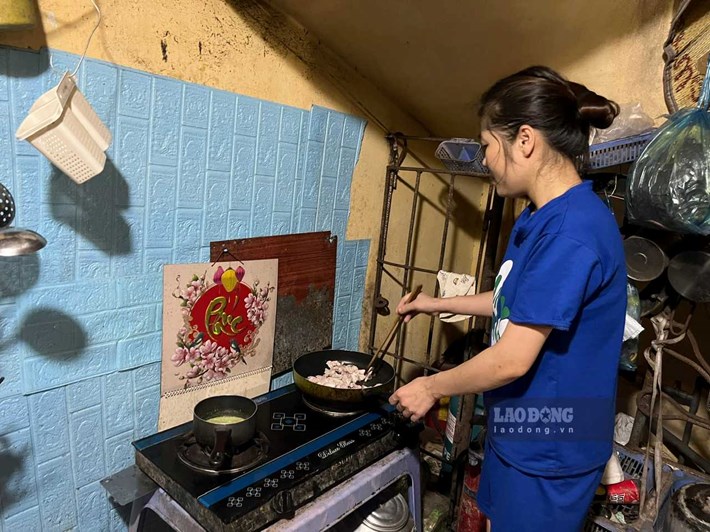
The first time we met Ms. Dang Thi Thuc (born in 1993), a worker at Thang Long Industrial Park (Hanoi), we saw that she was always busy. She was chatting, collecting dry clothes to put away, preparing dinner, and constantly urging her two children to prepare clothes to take a bath.
Whatever you ask, I will tell you, I don't have time to sit and answer interviews," Ms. Thuc said quickly, her eyes still watching the unfinished work in the house.
At that time, she was frantically arranging everything before going to the night shift at 8 pm. Meals had to be prepared, clothes had to be neatly put away, the two children had to be bathed, everything in the house had to be settled before she left. For her, as long as there was still work to be done, she could hardly be assured to step out of the door.
Having been a worker for 14 years, Ms. Thuc has become accustomed to the rhythm of life revolving around the factory's hours. On the production line, she tries to complete the assigned work.
When she returned home, she started another cycle with unnamed tasks: cooking, cleaning, taking care of children and preparing for the next shift.
Without the sound of machinery or specific production stages, housework still requires her to constantly move, calculate and arrange. There are small tasks that few people pay attention to, but if there is no caregiver's hand, the family's life can be disrupted.
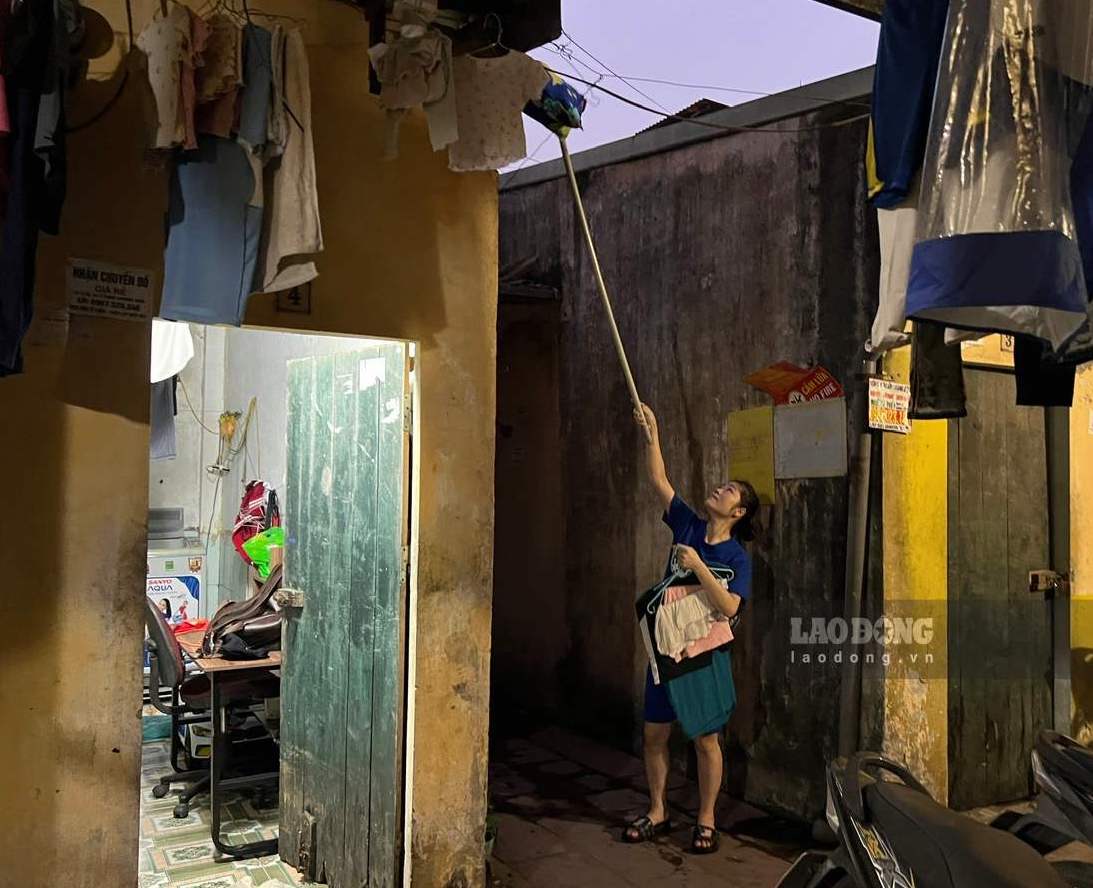
For Ms. Thuc, fatigue is inevitable. However, when talking about family matters, she still considers it her responsibility, a necessary thing to do for her husband and children to have a stable life.
That thought makes her rarely spend time for herself, even when her body is tired after many hours of work.
What makes Ms. Thuc's story worth contemplating is not only the hardship of a woman working in the night shift, but also the way family care work naturally becomes an extension of work after working hours for many female workers.
Expanding the model of supporting child custody and building happy families
Also at Thang Long Industrial Park (Hanoi), we can see images of female workers taking advantage of every minute after work to return to their families.
For a female worker named Nguyen Thi Loan, 32 years old, from Phu Tho, the life of the couple working as workers and raising young children is always associated with the problem of arranging time.
On day shifts, Ms. Loan takes advantage of picking up her children, going to the market and then returning to prepare dinner. After eating and drinking, she then does laundry, cleans up, and checks the belongings for her children the next day.
If any day the work at the factory ends late, those tasks are extended to the evening. Sometimes, when everything is temporarily stable, she has time to sit down and rest.
What makes this woman tired is not necessarily a specific job, but the feeling that there is always work waiting for her. At the factory, she has to ensure production progress; at home, she takes care of her children, cooking and daily activities. The time spent on herself is therefore often narrowed.
According to statistics from the Vietnam General Confederation of Labor, by the end of 2025, the country had more than 10.2 million trade union members, of which female workers accounted for about 56%.
The Vietnam General Confederation of Labor has issued a Project to support workers in industrial parks and export processing zones in caring for and raising children in the period 2025–2028.
The 2026 Women's Affairs Guidelines also emphasize grasping the thoughts and aspirations of female union members, improving working conditions, supporting workers and strengthening dialogue and negotiation to have policies that are more beneficial for female workers.
Over the past time, trade unions at all levels have focused on dialogue, negotiation, supervision and protection of the rights of female workers; at the same time, maintaining and replicating health care models, supporting child support and building happy families.
With her situation, Ms. Loan proposed: "Workers working night shifts, overtime or changing shifts continuously often find it difficult to arrange people to take care of children. The Trade Union can continue to survey needs, propose to localities and businesses to develop nurseries and kindergartens near industrial parks; connect childcare facilities with operating hours suitable for workers' work schedules".
See the original here