
Ethnic minorities learn to cook parties to open up livelihoods in villages
The cooking class in A Ngo village helps ethnic minorities learn to prepare banquet dishes, aiming to create livelihoods and increase income.
Men and women excitedly learn to cook parties
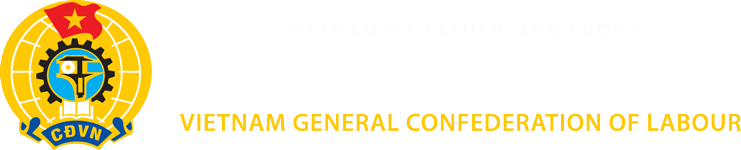
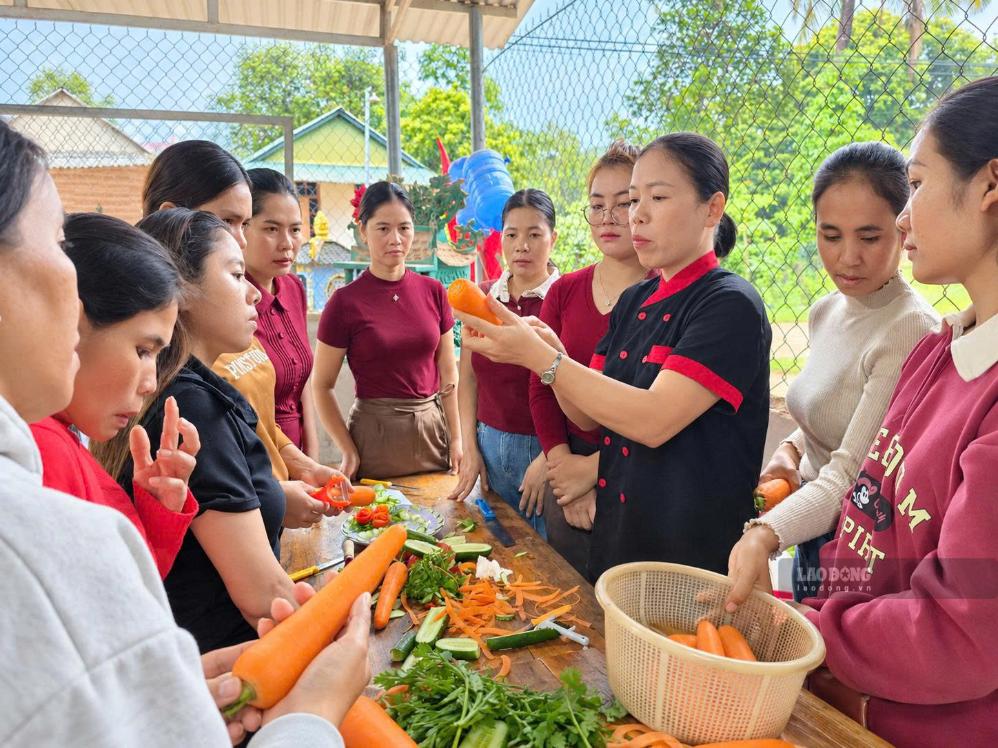
At the beginning of October 2026, at a resident's house in the center of A Ngo village, La Lay commune, Quang Tri province, a cooking technique class attracted 20 students to participate. Not only women, the class also had men who are Pa Co ethnic people coming to learn a trade.
Around the wooden table, the students attentively watched teacher Nguyen Thi Luan, Quang Tri Technical College, guide them on how to choose ingredients, use knives, trim vegetables and decorate dishes. From familiar tomatoes and carrots, under the guidance of teachers, students gradually create flower shapes to decorate the food dish.
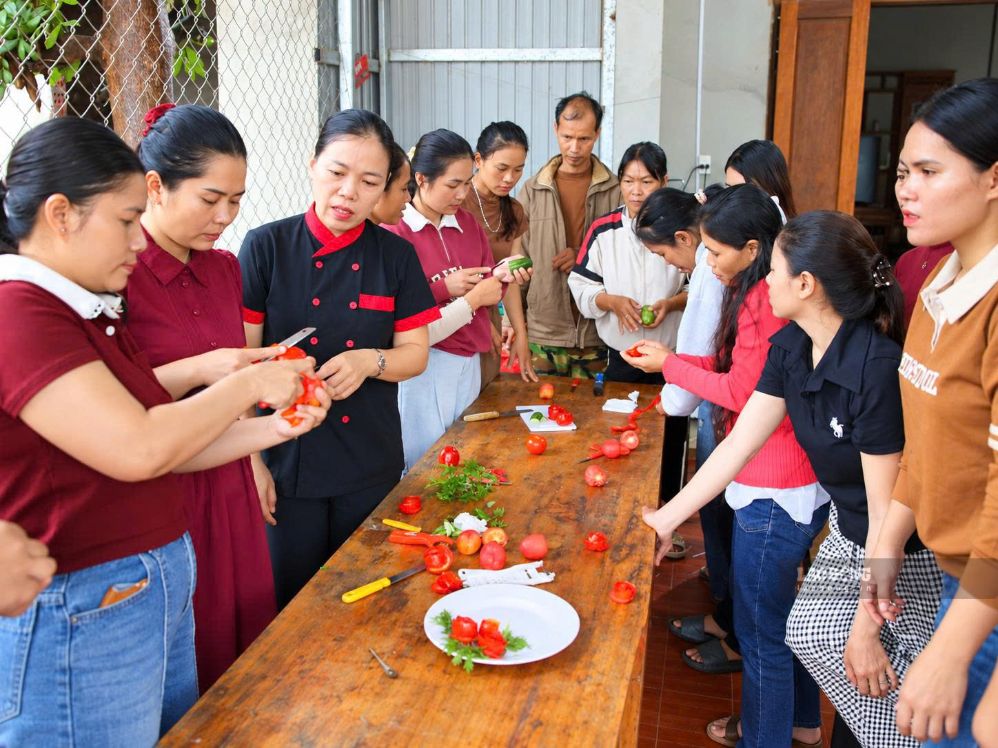
Ms. Ho Thi Yen, a Pa Co ethnic person in A Ngo village, originally worked in agriculture. When she learned that the locality was organizing a cooking class, she immediately registered to participate.
Being enthusiastically guided by teachers on how to trim tomatoes into flower shapes, Ms. Yen was happy when she personally completed a decorative plate with red flowers standing out on a green vegetable background.
Ms. Yen shared that before, every time her family held a engagement ceremony or death anniversary, they often had to hire people from elsewhere to cook parties. The cost was quite expensive, while the dish was sometimes not suitable for the taste of the people.
Being interested in organizing classes by the commune, I am very happy. Previously, I only knew how to cook daily dishes, now I have learned more about how to process and decorate dishes beautifully. Learning the profession will give me more opportunities to work and earn income later" - Ms. Yen said.
Sharing the joy, Ms. Ho Thi Tinh, a Pa Co person in A Ngo village, said that her family mainly lives by growing cassava and melaleuca. Her two children have married, and every time weddings are held, they have to rent restaurants outside the city to serve.
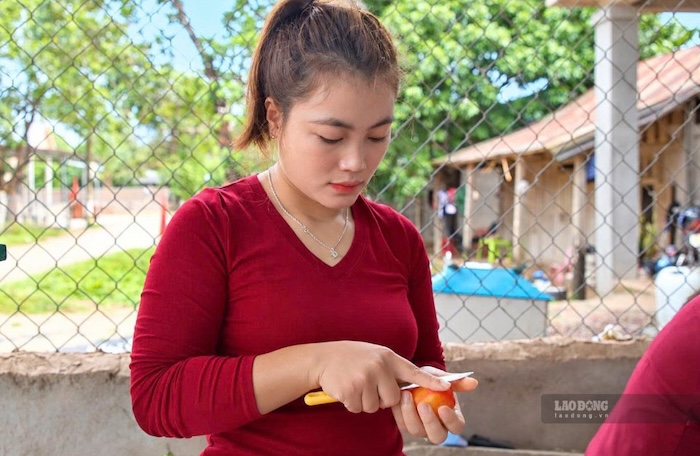
According to Ms. Tinh, learning how to prepare banquet dishes right in the village is a practical opportunity. She hopes that in the future, when family or relatives organize weddings, women in the village can stand together to cook, both saving costs and meeting local tastes.
In particular, among the 20 students, there are 2 men. Mr. Luu Quang Dung (born in 1978), residing in A Ngo village, is one of the two men participating in the class.
Mr. Dung said that at home he still often helps his wife cook, but mainly based on experience. Dishes are often cooked in a flavorful style, simply presented.
After 3 days of studying, he learned more techniques for cutting and decorating dishes. He hopes to continue learning dishes for parties so that he can cook for his family, friends and villagers.
Learning a trade to cook parties for people
According to teacher Nguyen Thi Luan, the class lasts for a month. During this time, 20 students are guided to choose ingredients, pre-process, trim, decorate and arrange dining tables.
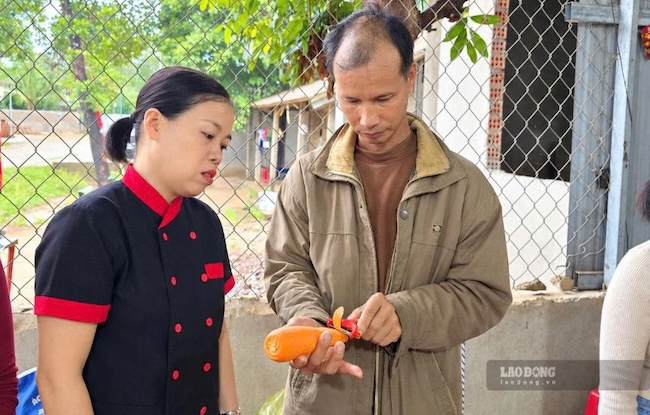
The program is expected to guide the processing of 16-24 dishes, including appetizers, dishes after appetizers, main dishes and desserts. Some local traditional dishes are also introduced into teaching, focusing on improving the flavor and presentation.
Ms. Luan said that the goal is that after the course, students can prepare family parties themselves, participate in cooking to serve weddings and engagements in the locality.
This is also Ms. Ho Thi Yen's plan. After the course, she wants to gather a group of women in the village, together contribute money to buy necessary tools to cook weddings, engagements, and death anniversaries.
If implemented, people will not have to hire all remote catering services, while creating more jobs and income for participants.
The class belongs to the project "Developing vocational education in poor and difficult areas", aiming to support workers from poor and near-poor households who have just escaped poverty to access vocational training, prioritizing ethnic minorities.
According to the plan, activities will be implemented in 5 villages A Ngo, A Bung, Ty Ne, La Lay and A Rong, from September 15 to November 30, 2020, depending on actual needs and conditions.
From the cooking and party decoration skills learned right in the village, Pa Co people are having more opportunities to develop livelihoods, gradually increasing income and reducing poverty sustainably.
See the original here