

Promote vocational training so that people in the La Lay highlands have the opportunity to escape poverty
Vocational training suitable to actual conditions is opening up more job opportunities, creating livelihoods, helping Van Kieu and Pa Co people in La Lay commune rise out of poverty.
La Lay commune is a mountainous and border area of Quang Tri province, mainly home to ethnic minorities Van Kieu and Pa Co. People's lives are still difficult, and livelihoods are mostly based on agricultural production and small-scale animal husbandry. To help people gain more knowledge and production skills and gradually increase income, the locality is implementing vocational training classes right in the village.
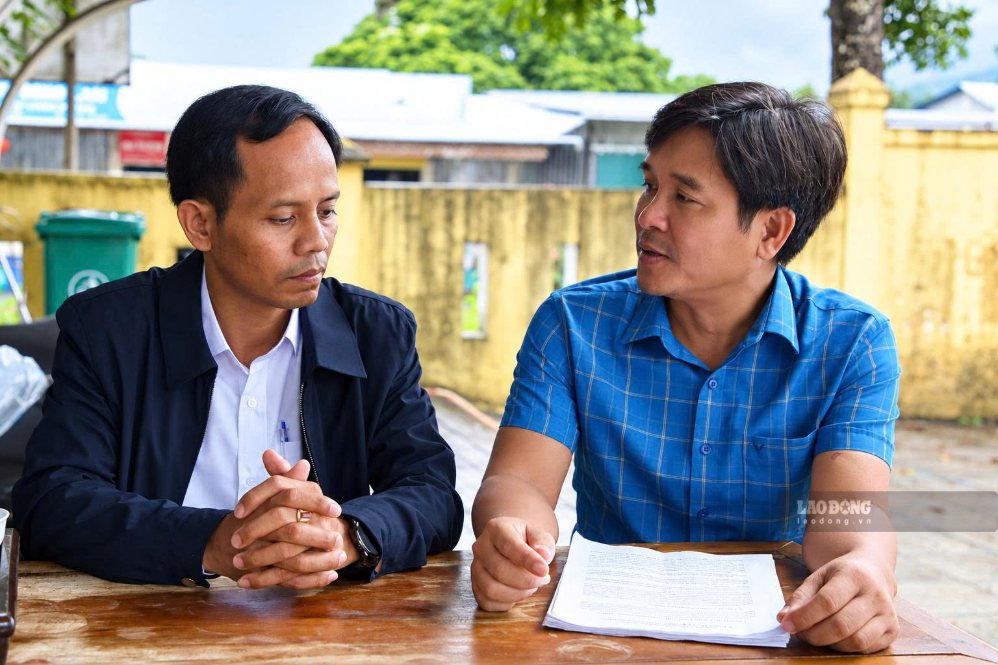
Lao Dong Newspaper exchanged with Mr. Ho Van Hien - Vice Chairman of La Lay Commune People's Committee - about the necessity and orientation of vocational training associated with the goal of sustainable poverty reduction.
Sir, from the reality of life and production of the Van Kieu and Pa Co people, how do you assess the necessity of organizing vocational training classes in the locality?
- La Lay is a mountainous, border commune, with difficult economic development conditions. Most people live on swidden farming, cassava cultivation, rice cultivation, and small-scale livestock breeding. Production is mainly based on experience, so productivity and economic efficiency are not high, and income is unstable.
According to the report for the first 9 months of 2026, the whole commune has created jobs for 235 workers, reaching 117.5% of the annual plan. However, the skill level and ability to access stable employment of a part of the labor force are still limited.
We identify vocational training as an important solution to change production methods, helping people have knowledge and skills to develop the economy. To reduce poverty sustainably, it is not possible to only support seedlings and breeds, but it is necessary to help people know how to produce effectively, limit risks and create income themselves.
In 2026, how will La Lay commune implement vocational training classes to suit the needs and actual conditions of the people, sir?
- The Commune People's Committee has issued Plan No. 227/KH-UBND dated September 14, 2026 to implement Sub-project 1 "Developing vocational education in poor and difficult areas" under Project 4, National Target Program for Sustainable Poverty Reduction.
According to the plan, from September 15 to November 30, 2016, the locality plans to organize 5 vocational training classes with 140 students in 5 villages A Ngo, A Bung, Ty Ne, La Lay and A Rong.
The selected professions include food processing techniques, breeding and disease prevention techniques for chickens and ducks, and free-range chicken farming. These are all close-knit professions with the ability to be applied immediately in life.
The priority subjects are workers from poor and near-poor households, who have just escaped poverty, especially ethnic minorities. We advocate bringing classes to villages, creating favorable conditions for people to participate.
Through the classes that have been implemented, what are the notable changes and how can learned knowledge truly become a livelihood for people?
- The good news is that people have begun to see the practical benefits of vocational training.
In A Ngo village, the cooking technique class has 20 students participating, including men. People are instructed on preparing and decorating dishes for weddings and engagement ceremonies. If applied well, people can organize party cooking themselves, save costs or form service provider groups to increase income.
In Ty Ne village, many households who used to raise chickens often died in the cold rainy season, not daring to expand their flocks. When participating in the class, people were instructed on techniques for building barns, caring for, preventing and treating diseases.
However, vocational training is only the first step. The important thing is that people must be able to apply knowledge to production, gradually shifting from doing according to experience to doing with technique, creating products and real income.
To make vocational training not stop at completing the target of opening classes, what solutions will La Lay commune focus on in the coming time, sir?
- First of all, the locality needs to continue to survey vocational training needs, selecting industries suitable for the production conditions and economic development capacity of each village.
We focus on coordinating with capable vocational education institutions, increasing practice time, helping learners absorb knowledge easily and can apply it right at home.
In addition, it is necessary to link vocational training with job counseling, support production development, access to capital sources and gradually form appropriate linkage models.
In particular, it is necessary to promote the role of village heads, reputable people and organizations in propaganda and mobilization so that people understand that learning a profession is learning how to improve their lives.
The ultimate goal is not to train how many people, but after vocational training, how many people can apply the knowledge, create more jobs, increase income and gradually escape poverty sustainably.
Thank you, sir!
See the original here