

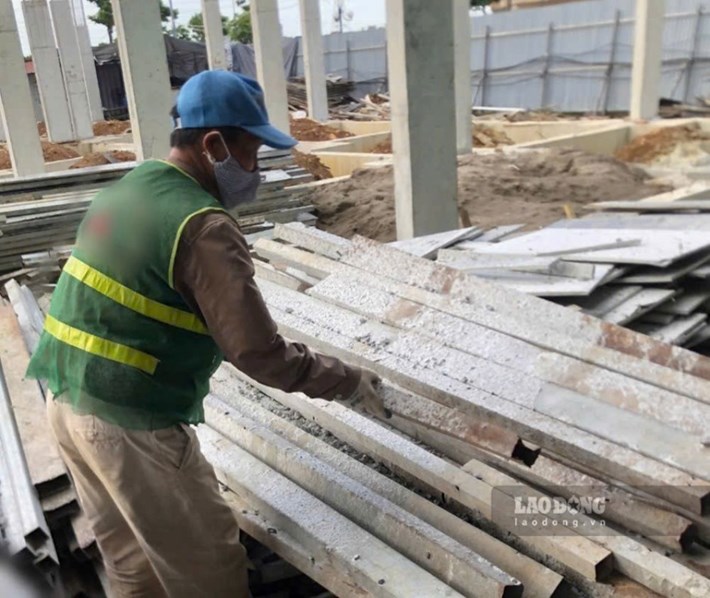
Social security gap for construction workers
Following construction projects, not staying permanently for long, many construction workers are floundering because of many social security gaps.
Following the project
Mr. Pham Van Tung (49 years old, from Ninh Binh) is currently a formwork worker at a construction site in Thanh Liet ward (Hanoi).
More than 8 years in the construction profession, that much time Mr. Tung lived in temporary shacks built of corrugated iron surrounding the foot of the construction site.
In the summer, the corrugated iron shack is like a giant steamer, during the day the sun shines directly down, suffocating, in the evening even if you turn on 2-3 fans, you still only see burning heat. In the winter, the wind blows gently through the gaps, thin blankets are not warm enough. "We are most afraid of rainy and stormy nights. Corrugated iron roofs are hanging, the sound of steel and iron clattering on our heads, everyone is afraid," Mr. Tung said.
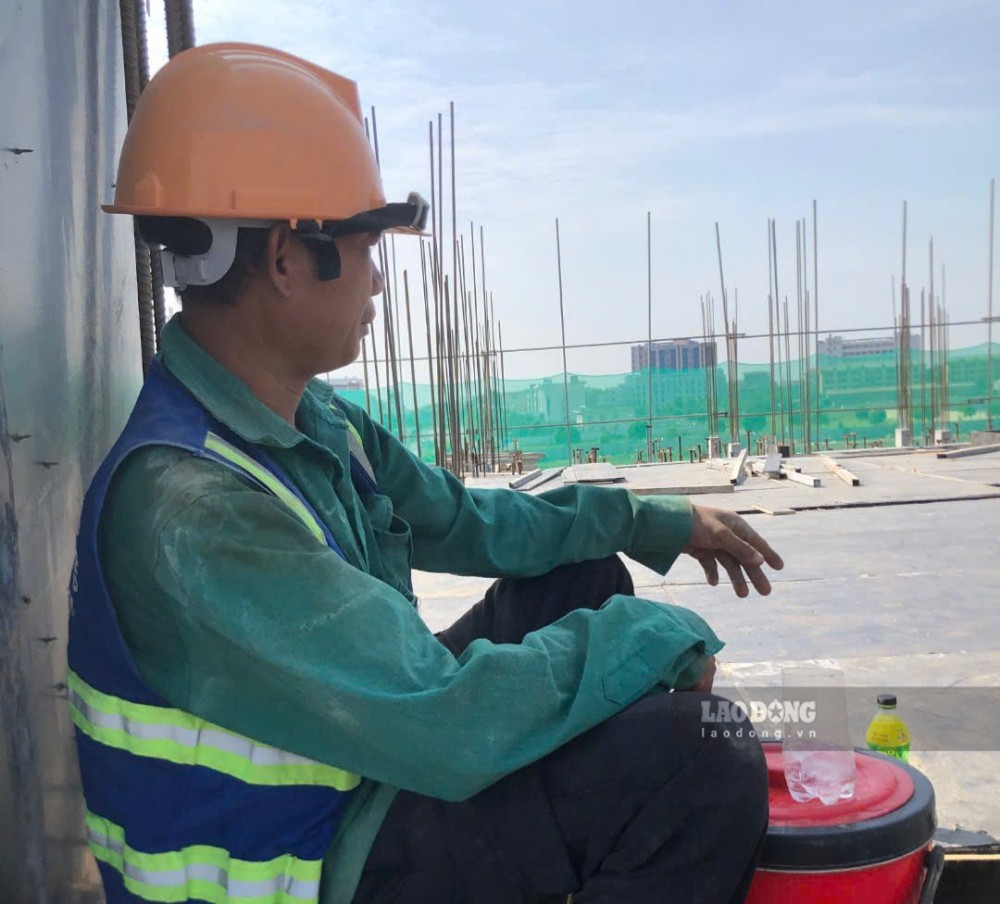
Mr. Tung said that in addition to housing, other living conditions of workers have not improved much.
At the construction site where Mr. Tung is working, nearly 20 brothers share a temporary toilet area, domestic water for many days is cloudy because of using raw drilled well water.
Mr. Bui Van Lam (41 years old, from Phu Tho) is a construction worker in Ha Dong ward (Hanoi). 14 years as a worker, the longest he stayed at the construction site was 1 year, quickly about 5-6 months.
When the project is roofed or the rough part is completed, I fold up my clothes, remove the tarpaulin and move to a new project," Mr. Lam recounted.
He and his wife work at the same construction site, and their children are sent to their hometown for grandparents to take care of. Alternately, each month, he and his wife will have 1 person come to visit their children.
“We miss our children very much but cannot take them to Hanoi. Work is here and there, accommodation is temporary and noisy.
The children's education needs to be stable, so we decided to leave the children in the countryside with their grandparents. Try to work for five more years, have a little more capital and then return to the countryside with our children," Mr. Lam shared.
Mr. Tung and Mr. Lam both said that because they needed money to send back to their hometown for their children to study, even though the work was hard, they still tried to stick with it.
Enhancing the responsibility of investors and contractors regarding minimum living conditions
Ms. Nguyen Thi Lan Huong - former Director of the Institute of Labor Science and Social Affairs, said that construction camps are temporary shelters for workers after working hours, directly affecting the health, psychology and labor productivity of workers.
The current reality shows that many contractors, due to cost optimization, have underestimated investment in shack infrastructure, pushing workers into dilapidated, unsafe and unsanitary living conditions.
To overcome this situation, according to Ms. Huong, social responsibility and law compliance of both investors and construction contractors need to be put first.
Ms. Huong clearly stated that the investor and contractor must maintain minimum living infrastructure standards. In the overall construction plan, contractors are required to arrange separate, safe camp areas, far from locations at risk of material falling. The camps must ensure solid structure, basic insulation, and sufficient minimum space and area per worker.
Ensure electricity, clean water and environmental sanitation. The investor must supervise the contractor in providing standard domestic water sources, installing sufficient bathrooms and septic tanks to ensure disease hygiene. Absolutely do not allow water source pollution or fire and explosion risks from the self-made electrical system in the camp area.
Tighten safety standards and on-site medical care. Contractors need to equip first aid medicine cabinets and have plans to respond to natural disasters and storms for the camp area.
Taking good care of the minimum living conditions for workers is a legal obligation and reflects the civilized behavior culture of businesses.
A safe and clean living environment at the construction site is the core foundation for maintaining the quality of works and the sustainable development of the construction industry," Ms. Huong said.
See the original here