

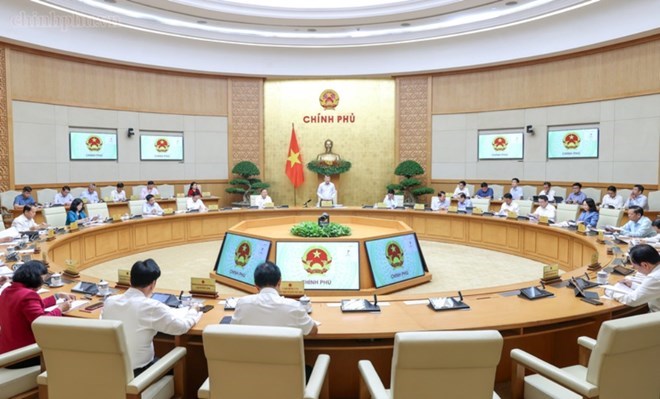
New standards for considering awarding the Government's Emulation Flag title from October 1st
Decree No. 368/2026/ND-CP of the Government specifically stipulates the criteria for considering awarding the title "Government Emulation Flag".
The Government has issued Decree No. 368/2026/ND-CP detailing a number of articles and measures to organize and guide the implementation of the Law on Emulation and Commendation, effective from October 1.
Article 6 of the Decree stipulates the criteria for considering and awarding the title "Government Emulation Flag":
1. The title "Government Emulation Flag" is awarded to collectives that meet the standards specified in Clause 1, Article 25 of the Law on Emulation and Commendation, and are evaluated, compared, evaluated, and honored by emulation clusters and blocs as leading collectives of emulation clusters and blocs.
The number of collectives considered and proposed for the title "Government Emulation Flag" according to the provisions of this clause does not exceed 20% of the total number of leading collectives in emulation clusters and blocs organized by ministries, departments, branches, and provinces and meets the standards for awarding emulation flags of ministries, departments, branches, and provinces.
2. Collectives considered for the title "Government Emulation Flag" according to the provisions of Clause 2, Article 25 of the Law on Emulation and Commendation meet the following standards:
a) Having outstanding achievements in socio-economic development, ensuring national defense and security;
b) Effectively implement the Party's guidelines, policies, and laws of the State; build a clean and strong political system;
c) Perform well the tasks of emulation and commendation work.
Collectives specified in Clause 2 of this Article are evaluated, compared, evaluated, and honored by emulation clusters and blocs as leading collectives in emulation clusters and blocs.
3. The title "Government Emulation Flag" is considered for award to collectives specified in Clause 3, Article 25 of the Law on Emulation and Commendation that meet the standards:
a) With ministries, departments, and branches: Collectives with many outstanding achievements in advising on building institutions, perfecting mechanisms and policies to promote socio-economic development; innovating the content and form of organizing emulation movements and campaigns to mobilize the active participation of union members and association members;
b) For localities: Collectives achieve many outstanding achievements in socio-economic development, maintaining security and social order; have new models, creative ways of doing things, achieving high efficiency nationwide.
Collectives meeting the standards specified in Clause 3 of this Article are selected by ministries, departments, branches, and provinces, and a list is made for commendation; the Ministry of Home Affairs receives, summarizes, and appraises dossiers before submitting them to the Prime Minister for consideration and decision.
Article 25 of the Law on Emulation and Commendation stipulates the title "Government Emulation Flag" as follows:
1. The title "Government Emulation Flag" is awarded annually to typical and outstanding collectives among the leading collectives of emulation clusters and blocs organized by ministries, departments, branches, and provinces and meeting the following standards:
a) Having excellent achievements, exceeding the emulation targets and assigned tasks in the year;
b) Internal solidarity; clean and strong Party and mass organizations; taking the lead in practicing thrift, combating wastefulness, preventing and combating corruption, negativity and other social evils.
2. The title "Government Emulation Flag" to be awarded annually to leading collectives of emulation clusters and blocs organized by the Central Emulation and Commendation Council.
3. The title "Government Emulation Flag" is awarded to collectives leading emulation movements launched by the Prime Minister with a implementation period of 5 years or more when summarizing and summarizing the movement.
Read the original here