

Small jobs open the door to autonomy for people with autism
Hanoi - From vocational training to income creation, VAPs builds an economic model to help autistic people gradually affirm their abilities and independence.
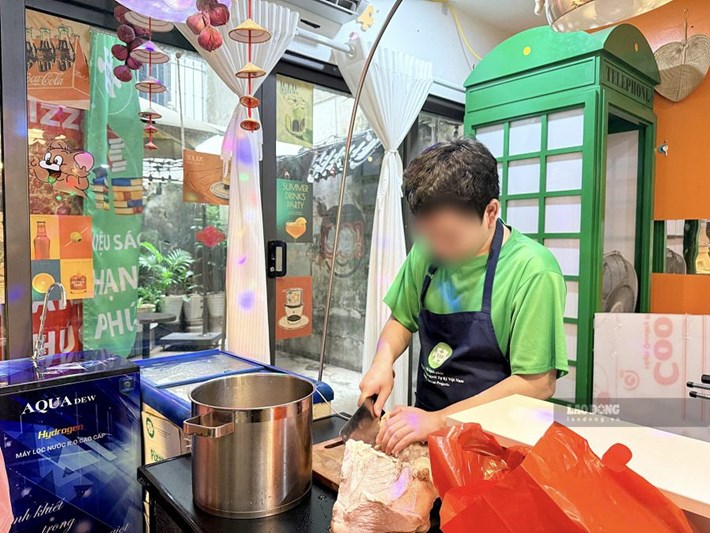
At a small corner of a restaurant on Thai Ha street, VAPs staff work regularly every day. Some stand at the counter, some prepare food, some arrange books, some wait for customers to order. Those familiar operations are a process of training for each person.
This is the workplace of employees at Vietnam's Autism Projects (VAPs), a project founded by Mr. Nguyen Duc Trung, for people with autism, Asperger's and people with ADHD.
The 7-story space is arranged into many areas such as supermarkets, bakeries, cafes, restaurants, bookstores and other working areas. Each place brings its own tasks, from selling goods, serving to arranging and consulting.
The work is divided into steps for employees to easily get acquainted with. Mr. Trung directly guides 1:1, from how to welcome guests, serve, consult to pay. Through the process of practicing and repeating each day, each person gradually can perform their part of the job themselves.
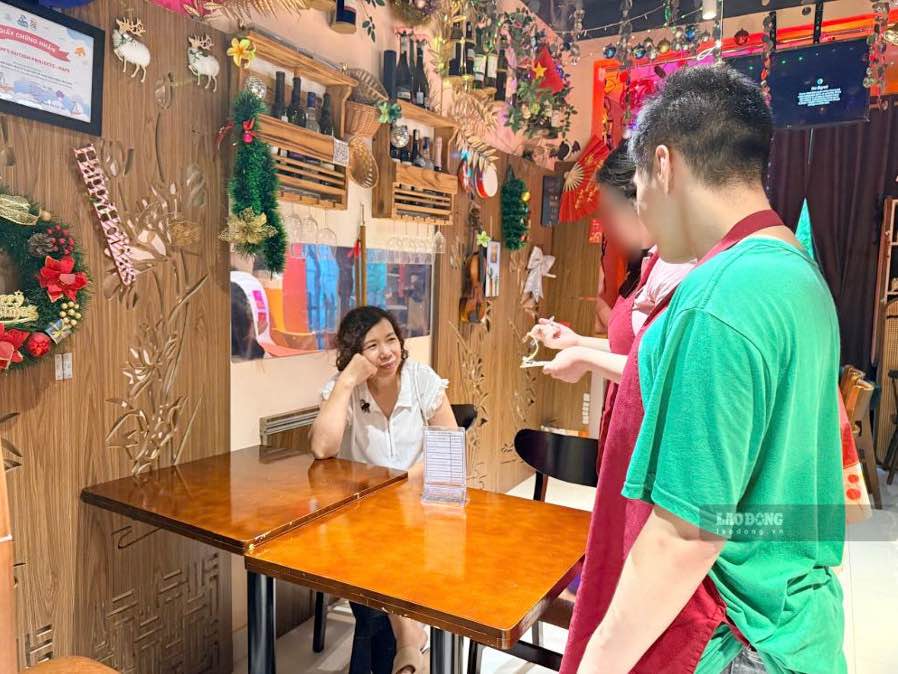
Not everyone can do everything from the beginning. Some people need time to remember product prices, some people have to get used to each operation. Repeats each day gradually help you form skills and get used to the pace of work.
Talking to Lao Dong, Ngo Hoang Lam (21 years old) - an employee at VAPs - said that he has been attached to VAPs for nearly 3 years. From supermarkets, restaurants to bookstores, each time he changes positions, Lam learns new tasks.
Making income for myself makes me very happy. I feel that I have improved and matured a lot compared to before," Lam shared.
The early days were not easy, Lam encountered many difficulties when starting. But with the step-by-step guidance of Mr. Trung, new operations gradually became familiar, helping Lam become more confident in his work.
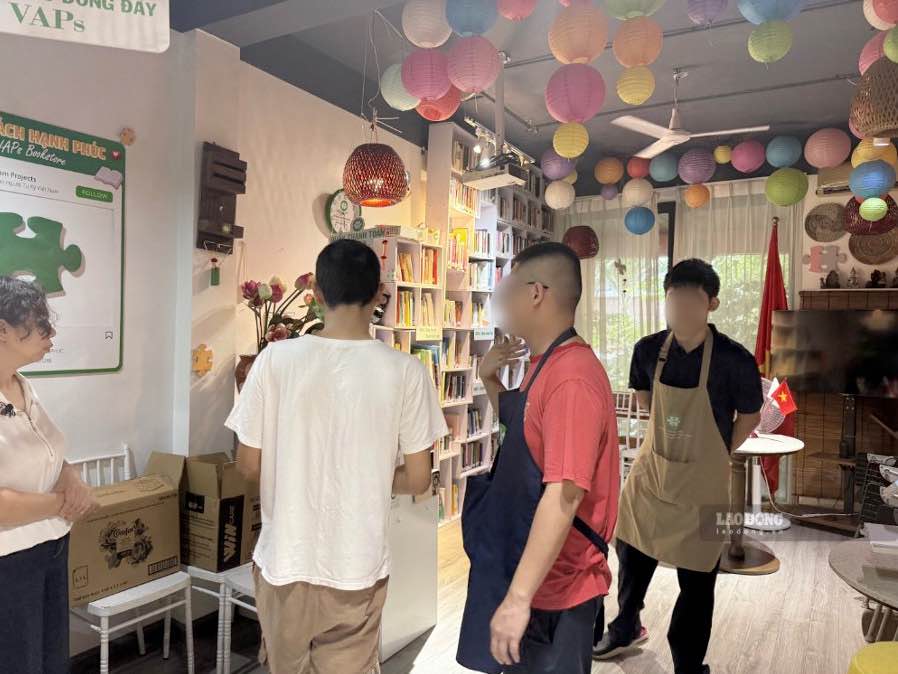
For Mr. Le Xuan Tung (32 years old) - an employee at VAPs - the initial difficulty lies in selling goods and remembering product prices.
At first, when I started working, I also encountered some difficulties, especially selling goods to customers because I had to remember all the prices of all goods. But gradually, thanks to being supported little by little, I learned more and knew how to solve everything," Mr. Tung said.
According to Mr. Tung, newcomers need perseverance to adapt: "For newcomers, the most important thing is to hope you try your best. Try to do all the work in the company well and catch up with everyone.
At the end of each day, revenue is statistically determined and salaries are divided among employees based on the number of customers serving. For many people, signing to receive a salary may just be a familiar part of a working day. For employees at VAPs, it is the result of the working hours they complete on their own.

For Mr. Nguyen Duc Trung - the founder of the VAPs economic model project for people with autism, creating a suitable working environment is only the first step. More importantly, finding a livelihood that can sustain people with autism for a long time when they grow up.
Parents will eventually get old and pass away, we must honestly recognize that reality. Today's companionship will help parents prepare the best things for their children, so that when they are away from life, parents can be completely assured," Mr. Trung shared.

From business, training to job creation, VAPs aims to build an environment so that autistic people can participate in labor suitable to their abilities. According to information from the project, VAPs has welcomed more than 10,000 visitors and continues to maintain service operations.
Behind the familiar jobs is an approach in supporting autistic adults to grow up: not only vocational training, but also job opportunities, income creation and participation in community life.
See the original here
- Coffee shop opens job opportunities for the visually impaired in Hanoi
- Culture directly creates growth, creates products, services, and jobs
- More than 1.55 million people consulted and introduced to jobs
- Industries with good job prospects
- Creating jobs for more than 3,000 Dong Thap workers from the cooperative model run by women