
Skills training creates more room for creative labor
In the context of digital transformation and smart factory development, workers are not only the force directly operating the production line but also an important resource to create initiatives, technical innovations, and improve labor productivity.
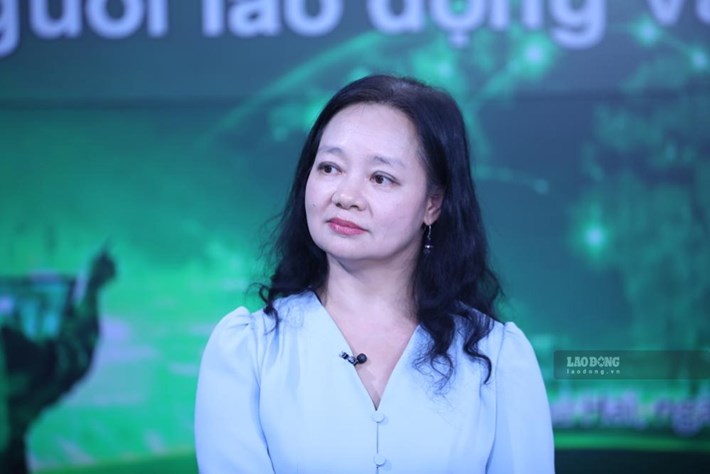
Talking to Lao Dong Newspaper, Ms. Nguyen Thi Lam Giang - Director of the Department of Science, Technology and Digital Transformation (Ministry of Industry and Trade) - said that Vietnam has a lot of potential for innovation, in which workers at production facilities are a force that needs to be promoted more strongly in the new period.
Assessing the innovation capacity of Vietnamese people, Ms. Nguyen Thi Lam Giang said that this is a strength that has been shown through many fields, from education, research to production. Vietnamese people have the ability to absorb quickly, have flexible thinking and adapt well to changes in science and technology. This capacity is not only demonstrated in the learning environment but also demonstrated in production practice when many workers have had innovative initiatives and solutions that have been effectively applied.
According to the Global Innovation Index, Vietnam currently ranks 44th out of 139 countries in innovation. This shows the great potential of Vietnam's human resources if a favorable environment is created for development.
However, according to Ms. Giang, the room to promote the creative capacity of workers is still very large. Initiative movements in enterprises need to be promoted in the direction of not only stopping at ideas but also transforming into specific results, creating value for production.
This is also the spirit set out in Resolution 57 of the Politburo on the development of science, technology, innovation and national digital transformation, in which businesses and workers are identified as important subjects of the transformation process.
One of the factors determining the ability to participate in the innovation process of workers is the quality of training. According to Ms. Nguyen Thi Lam Giang, workers who are well-trained at vocational schools often have an advantage when accessing new technologies, because they not only have operating skills but also the ability to analyze and improve production processes.
In the future, people working at production facilities need to be trained to suit their job positions and the requirements of the new era" - Ms. Giang assessed.
Accordingly, vocational training today not only focuses on traditional vocational skills but also needs to supplement knowledge about information technology, artificial intelligence (AI), data and technologies serving smart manufacturing.
Ms. Giang believes that Japan's Kosen training model (training high-quality practical engineers right from the junior high school level - PV) is a valuable experience to refer to. This is a model that combines theoretical and practical knowledge, helping learners to be able to meet the requirements of modern production lines.
To promote innovation in businesses, Ms. Giang believes that it is necessary to build an ecosystem with the participation of many stakeholders, in which businesses play a central role. The State does not directly create initiatives in production but plays a supporting role through policies, science and technology programs, connecting businesses with research and training institutions.
One of the directions emphasized is the "3 houses" linkage model including the State, schools and businesses. This is a mechanism to help bring knowledge and technology from research institutes and universities into production practice.
When workers are equipped with new skills, encouraged to be creative and given the opportunity to participate in the production improvement process, they will become an important force to help businesses improve their competitiveness in the smart factory era.
See the original here