
After garbage trucks are health gaps for female workers
After hours of collecting garbage, the female worker returns to taking care of her children and taking care of her family while health issues have not been given due attention.
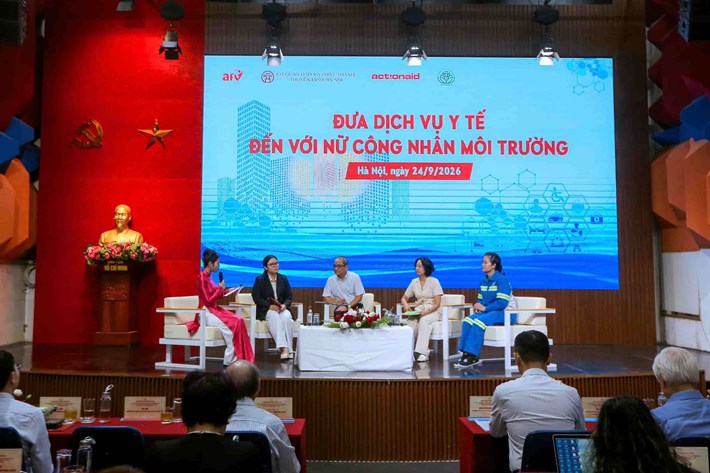
The seminar "Bringing health services to female environmental workers" took place on September 24, co-organized by the Hanoi Newspaper and Radio and Television Authority in coordination with ActionAid International in Vietnam, the Vietnam Fund for Social Security Programs and Projects (AFV) and Hanoi Urban Environment Co., Ltd. (URENCO), experts focused on analyzing barriers in accessing health care services for female workers.
Normalizing occupational risk
Mr. Ta Viet Anh - Chairman of the AFV Management Board - said that after nearly 3 months of research, from December 2025 to February 2026, the implementation team has developed a report on the current situation of access to health care services for female workers collecting domestic waste at URENCO.
One of the notable results is that most female workers believe that health risks are an inevitable consequence of the nature of the job. According to Mr. Ta Viet Anh, this view shows the trend of normalizing occupational risks, while reflecting the process of workers adapting and enduring adverse impacts in work.
Dr. Tran Thi Thu Thuy - lecturer of the Professional Health and Safety Group, University of Public Health - believes that the pressure of female environmental workers does not only come from work.
After heavy shifts, they continue to take on raising children, caring for the elderly and managing the family. The synergy between labor pressure and family burden can increase prolonged fatigue, affect quality of life and hinder access to medical services.
Bringing healthcare closer to workers
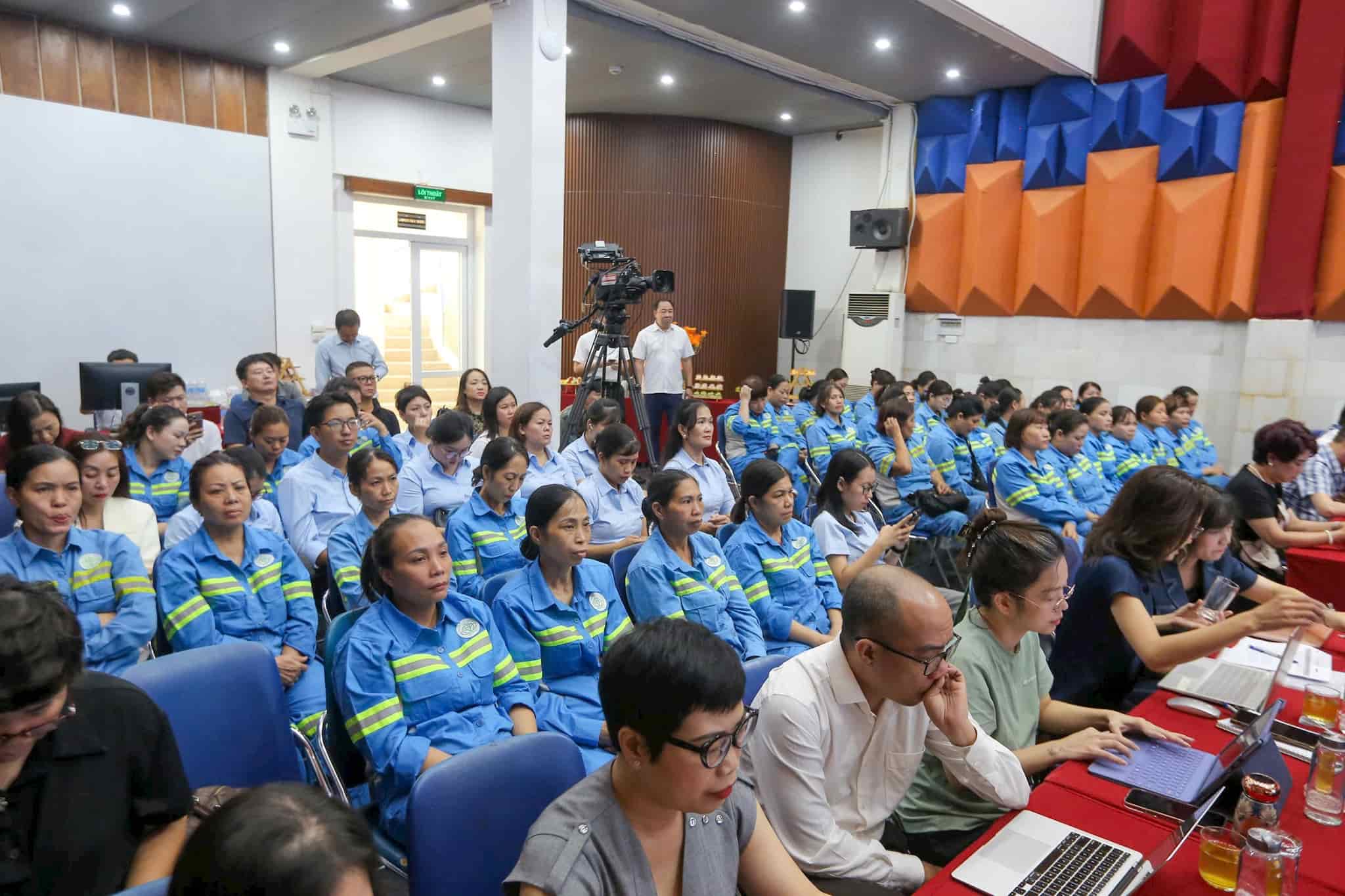
According to Dr. Tran Thi Thu Thuy, urban environmental businesses need to implement health care solutions in an overall direction. In which, occupational safety and hygiene activities need to be expanded, not only focusing on protective equipment, accident prevention but also supplementing content to identify psychological stress, prevent exhaustion and prevent sexual harassment at work.
Periodic health check-ups also need to shift from a simple health check-up approach to early risk detection. Examination needs to be linked to occupational history, actual exposure factors and prolonged symptoms. When abnormalities in musculoskeletal, respiratory or dermatology are detected, workers need to be consulted and transferred to a specialist level in a timely manner.
In addition, it is necessary to build a close coordination mechanism between businesses and the health system, especially grassroots healthcare. The fact that most female workers have used health insurance (HI) and assessed that access to HI-based medical examination and treatment facilities is convenient shows that HI is playing a practical role in taking care of workers' health.
The issue is not just to mobilize workers to come to health stations more often. The important thing is that workers must know what health stations can support, when to come, what services are provided and how to continue to be introduced when in-depth examination is needed," the expert said.
Dr. Tran Trieu Ngoa Huyen - Director of the Center for Research and Community Health Support - said that the group of female workers in the study had an average age of 45.1. In the group from 35 years old and older, especially 45-56 years old, health tended to decline, in which musculoskeletal problems became a significant challenge for those who continued to do heavy work.
According to Dr. Huyen, female workers currently mainly access basic health support services, while needs have gone beyond regular medical examination and treatment. Workers need to be provided with more health care knowledge, in-depth screening programs, knowledge specifically for women, disease prevention vaccines and forms of spiritual support.
From this reality, health care for female environmental workers does not just stop at a health insurance card, one periodic check-up, or wearing labor protection equipment. The important thing is that workers have conditions to take care of themselves, access appropriate information, detect health risks early, and have addresses to seek support when encountering physical, mental or risk problems in the working environment.
See the original here