
Lack of records, people with work accidents have difficulty claiming their rights
Incomplete work accident (TNLĐ) records make it difficult for workers and their families to prove the incident and protect their legitimate rights.
Declaration and investigation of work accidents cannot only be done to complete procedures
Few businesses report the situation of labor accidents (TNLĐ), the number of investigation files of fatal TNLĐ sent to the Ministry of Home Affairs is still limited, and the quality of reports between localities is uneven. Lack of investigation conclusions causes difficulties for victims and their families when requesting compensation and allowances.
Mr. Do Viet Duc - Labor Relations Department, VGCL said that currently, the awareness of occupational safety and health (OSH) of both workers and employers has changed. Many businesses invest methodically, considering the safety of workers as a condition for stable production.
However, there are still places that consider OSH as a procedure to cope with inspections, not yet a regular responsibility in production organization.
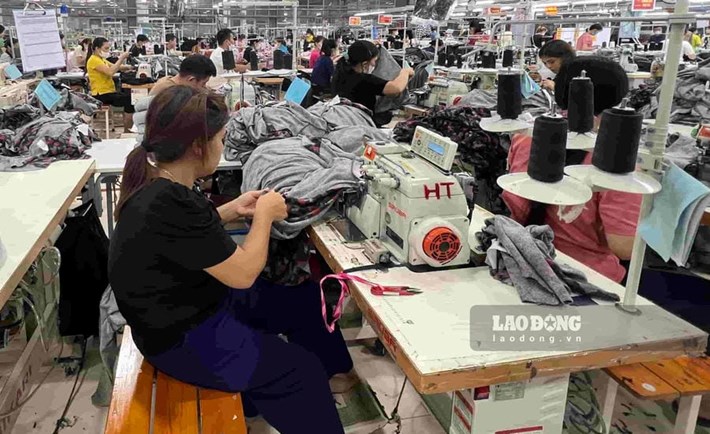
According to him, what is worth concerning is the distance between regulations and reality at the scene. Businesses may have propagated, trained, equipped personal protective equipment, issued procedures, but if workers still have to operate machines and equipment that have not been properly inspected, lack shielding equipment, or have to work quickly to meet the schedule, then the risk of accidents is still present.
Mr. Duc emphasized that a safe working environment is not only measured by the number of accidents, but also by the way businesses handle them when accidents occur.
Whether businesses proactively declare, coordinate investigation, remedy the causes, fully implement regimes and ensure the rights of victims and their families is the criterion reflecting the actual responsibility of employers.
Workers need to proactively keep evidence and records
In the context that the declaration and investigation of work accidents still have many inadequacies, workers not only face health damage but also risk facing difficulties in proving the responsibility of businesses and requiring ensuring their rights.
According to Mr. Do Viet Duc, it is necessary to enhance the responsibility of all parties, and at the same time proactively keep evidence to protect victims when incidents occur.
Mr. Do Viet Duc said that when a labor accident occurs and the business does not declare or is late in reporting, the victim and family must both take care of rescue and collect evidence themselves to clarify in what circumstances the accident occurred, who is responsible and what rights need to be guaranteed.
When work accidents occur, workers are often weaker in terms of information and evidence. Job assignment records, machine operation logs, training documents, cameras, and incident records are all kept by businesses.
If the accident is not declared or the investigation and timely recording are delayed, this information may be lost, not fully recorded, or difficult to recover after a period of time. Therefore, declaration of workplace accidents is not just an administrative procedure. A complete and timely dossier is an important basis for workers not to have to single-handedly prove what happened to them.
On the worker's side, they should proactively keep emergency documents, medical records, scene images, witness information, job assignment messages, time sheets and related documents.
When detecting a risk of unsafety or businesses not cooperating, employees or families can notify the commune-level People's Committee where the accident occurred for timely prevention, or send information to competent authorities to request receipt, verification, and handling according to regulations.
“Self-collection of evidence does not replace the investigation responsibility of functional agencies, but helps protect the legitimate rights and interests of victims in the process of resolving the case,” Mr. Duc said.
On the trade union side, grassroots trade unions need to request businesses to declare and investigate in accordance with regulations and send representatives to participate in the investigation; support victims and their families with dossiers, procedures, and rights; and monitor the remedy of causes so that accidents do not recur.
See the original here