

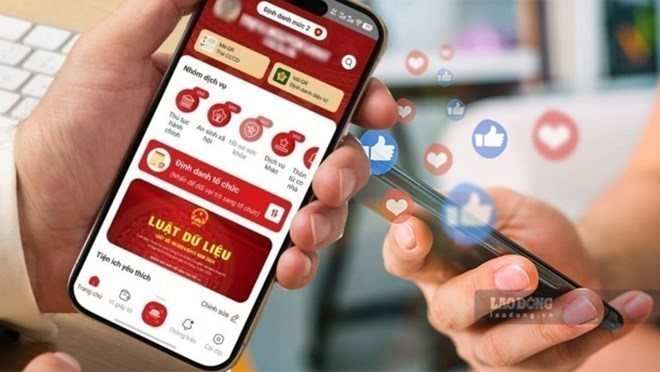
Accounts receiving pensions, social insurance allowances, and unemployment insurance must be owned by the owner
People receiving pensions, social insurance benefits, and unemployment insurance benefits need to ensure that the information of the receiving account matches the electronic identification data for convenience when paying via VNeID.
From 2027, social insurance (BHXH) and unemployment insurance (BHTN) regimes will be paid through an integrated social security benefit account on VNeID. In the last months of 2026, the social insurance system will focus on completing data connection, standardizing beneficiary information, and guiding people to register means of receiving money.
Expanding electronic payment methods from 2027
Vietnam Social Security has issued a Plan to Deploy the use of social security benefit accounts in paying social insurance and unemployment insurance benefits, aiming to expand electronic payment methods from 2027.
Accordingly, in October 2026, the social insurance agency will focus on completing the plan to connect, integrate, and exchange data with the electronic identification system. Instructions related to the identification and use of social security benefit accounts to serve regime payments are also being developed during this period.
The method of receiving money is designed in a flexible direction. Beneficiaries can link payment accounts, e-wallets or mobile money accounts with social security benefit accounts on VNeID. In parallel with the technical preparation process, the information of beneficiaries as well as new participants will be reviewed and standardized.
In November and December 2026, Vietnam Social Security is expected to complete the connection of the software system with the electronic identification system, creating a platform for exploiting and comparing information to serve payment.
Along with completing technical infrastructure, the social insurance sector will strengthen propaganda and guidance for people to register, integrate, and use social security benefit accounts. This is a preparatory step for the new payment method to be widely deployed for social insurance and unemployment insurance regimes from 2027.
Accounts receiving money must be owned by the owner
Notably, the conversion of the method of receiving money is implemented according to a roadmap, ensuring the rights of beneficiaries. In case people do not yet have enough conditions to receive money through social security benefit accounts on VNeID, they will still be paid by appropriate methods, avoiding interruption of pensions, allowances or regimes they are enjoying.
Social security benefit accounts are information integrated on VNeID, allowing people to link payment methods to receive social security policies. From September 28, 2026, people can receive pensions, allowances and social security benefits through this account according to the provisions of Decree No. 320/2026/ND-CP.
An important requirement when implementing is to ensure that social security money is transferred to the right beneficiaries. Accordingly, the integrated payment account, electronic wallet or mobile money account must be genuine, with information matching the data on the electronic identification account.
Each person chooses to integrate one of the three means of receiving money, including a payment account, e-wallet or mobile money account, to serve the receipt of social security benefits.
Making VNeID a connection channel in social insurance and unemployment insurance payment helps link identification information with the means of receiving money of each beneficiary. Thereby, the payment process has more conditions to compare data, limit information distortion, and at the same time help people more conveniently access pensions, allowances and social security regimes.
According to the roadmap, the last months of 2026 are the stage for the social insurance industry to complete infrastructure, data and user instructions. From 2027, the payment method through social security benefit accounts on VNeID will be implemented for social insurance and unemployment insurance regimes.
See the original here