
7 key tasks for the new school year: Reduce pressure on teachers, promote AI application
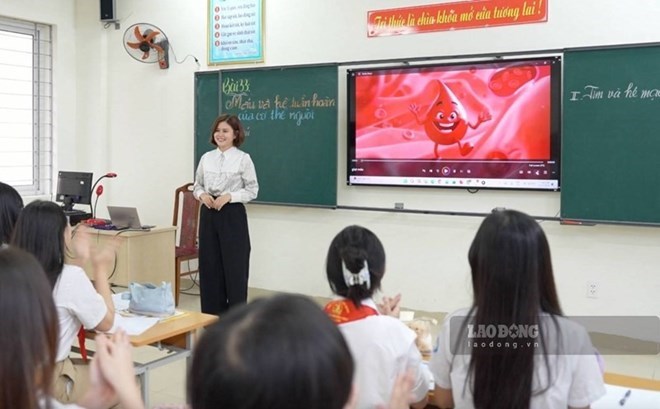
In the new school year 2026 - 2027, the Education sector sets a goal to reduce records, reduce pressure on teachers, promote AI application, improve training quality...
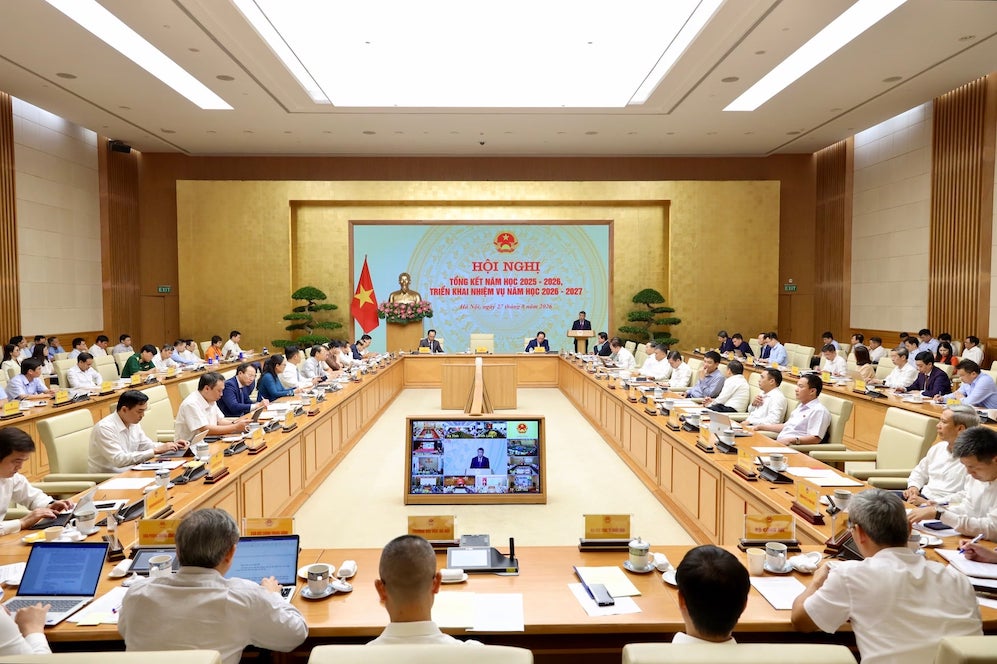
On the morning of August 27, the Ministry of Education and Training (MOET) organized a conference to summarize the 2025-2026 school year and deploy tasks for the 2026-2027 school year.
The Ministry of Education and Training said that in the 2026 - 2027 school year, the entire Education sector identified the theme: "Innovating thinking - Strong changes - Substantive results". The focus is on strongly shifting from perfecting institutions to organizing implementation, focusing on handling bottlenecks and measuring results by the progress of learners, working conditions of teachers, operational efficiency of schools and quality of human resources.
The Ministry set out 7 key task groups for the new school year 2026 - 2027.
First, strongly innovate education governance.
The Ministry of Education and Training sets a goal to complete and implement on a digital platform the sets of indicators for national, local and higher education development; concretize the goal of Resolution 71 into an annual monitoring index, with a baseline, an intermediate milestone to 2030, clear people, clear tasks, clear time, clear products, clear authority, clear responsibility. Increase inspection and supervision of areas and localities that are slow or have many obstacles; evaluate according to output and impact.
Second, handle bottlenecks in personnel and facilities.
Prioritize budget and public investment for teachers, classrooms, equipment, border boarding schools, digital infrastructure, laboratories and strategic human resource training; complete the mechanism for allocating budget for higher education and vocational education according to the mission, quality and output results is the next key task of the Education sector.
Along with that, increase mobilization, contracts, visiting lecturers and policies to attract teachers, subjects, occupations, and difficult-to-recruit areas. Effectively implement the border boarding school model, assess and expand in difficult areas.
Third, improve the quality of preschool and general education, school discipline and safety.
The education sector will continue to streamline content, improve the quality of official school hours, increase practice, experience, STEM, digital capacity, artificial intelligence, foreign languages, arts and physical training; gradually make English a second language in schools. At the same time, reduce unnecessary records and meetings; innovate inspection and evaluation; tighten exam discipline, enrollment, tutoring, extra classes, revenue and expenditure; increase psychological counseling, school health, food safety, violence prevention, abuse prevention and protection of children in the online environment. Complete the model of high school graduation exams and university and college entrance exams to ensure compactness, substance, and prevention of fraud and negativity.
Fourth, promote digital transformation and the application of artificial intelligence.
The Education sector also sets a goal to improve the national digital governance platform of education; standardize, clean up, connect, and exploit data; use digital school records, digital diplomas, VNeID and exam and admission data to reduce paperwork and manual reporting. Develop artificial intelligence applications in management, teaching, assessment and learning personalization associated with privacy, data security and academic integrity.
Fifth, accelerate the development of highly skilled vocational human resources.
Restructure the network and vocational education sectors according to market demand; focus on investing in leading institutions and national and regional vocational skills training centers; bring businesses to participate substantively in programs, practices, evaluations and recruitment. Effectively deploy vocational secondary school models, dual training models, closely linked with businesses. Deploy a national human resource, skills and job management platform, closely linking training with the labor market.
Sixth, modernize higher education, develop high-quality human resources.
Control to increase scale associated with quality assurance conditions; prioritize STEM and strategic technology associated with input quality, team, laboratories and jobs. Develop postgraduate training, strong doctoral teams, research groups; shift research evaluation from the number of publications to inventions, products, transfers and practical impacts.
Along with that, accelerating the restructuring of the public higher education institution system, the education sector sets a target of investing in 3-5 elite universities; researching investment plans to develop a number of ecosystems, higher education - science, technology - innovation urban areas in Hanoi, Ho Chi Minh City and some driving areas, selectively referring to international experience. Gradually shifting from individual investment to ecosystem investment, with mission assignment and infrastructure sharing, forming growth poles based on knowledge.
Seventh, improve the efficiency of cooperation and international integration.
The Ministry said that the Education sector aims to shift from the number of agreements to specific products and results; prioritize cooperation in STEM, semiconductor, artificial intelligence, digital technology, biotechnology, energy and new materials; strengthen attracting prestigious universities, lecturers, experts, and international scientists.
Read the original here