

Underground space complex in Ho Chi Minh City must connect service works
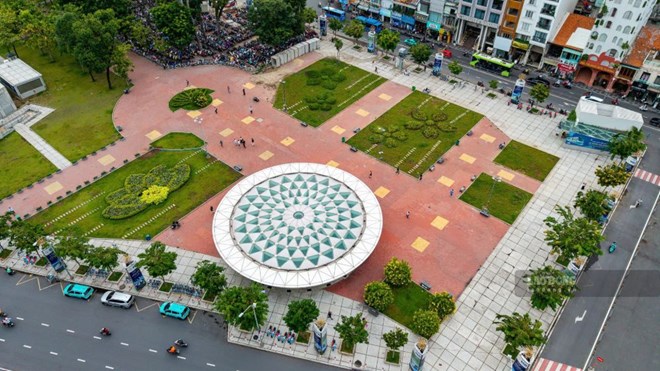
Ho Chi Minh City - Underground parking projects at 23/9 Park and Ton Duc Thang street are expected to soon become a reality, avoiding repeating the "rut" of the previous 4 projects.
Cars park rampant due to lack of parking lots
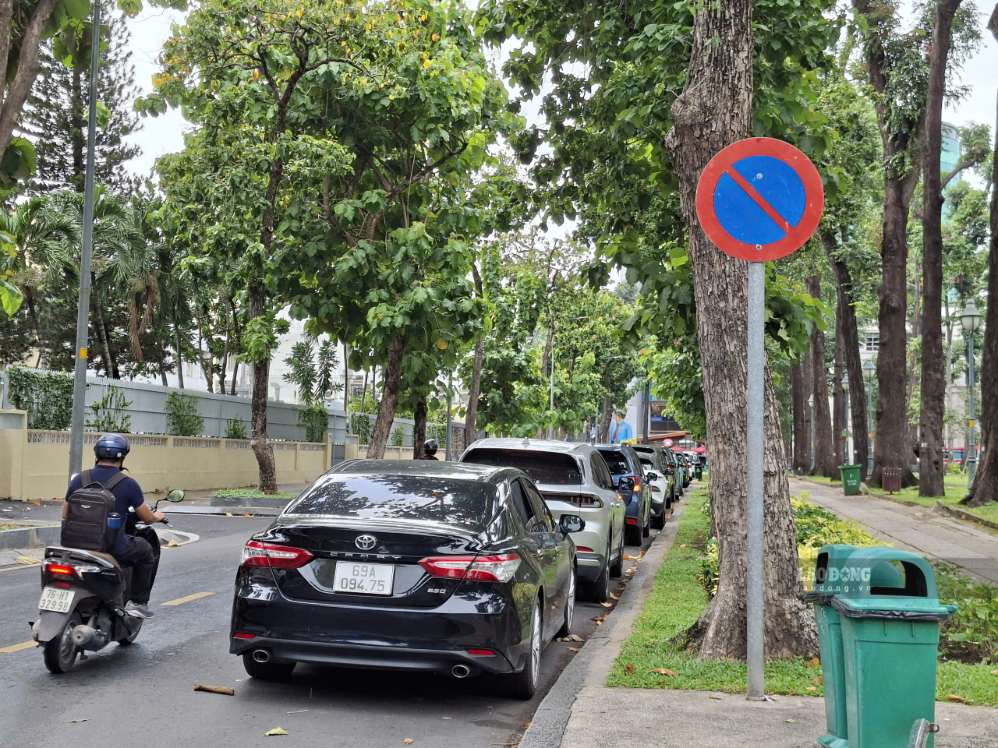
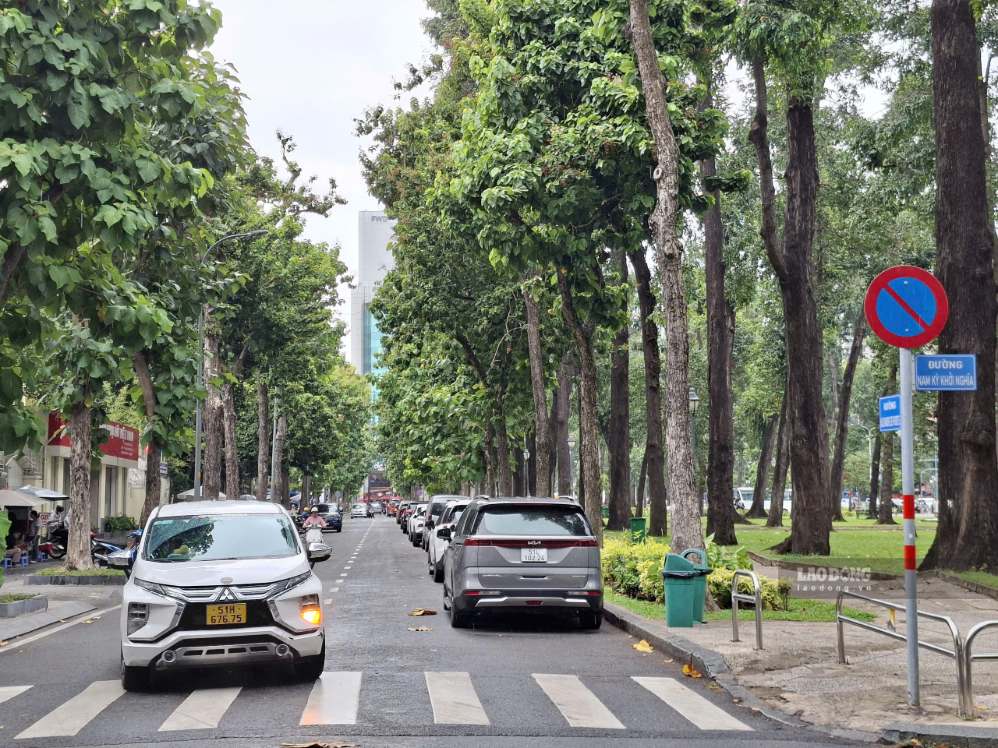
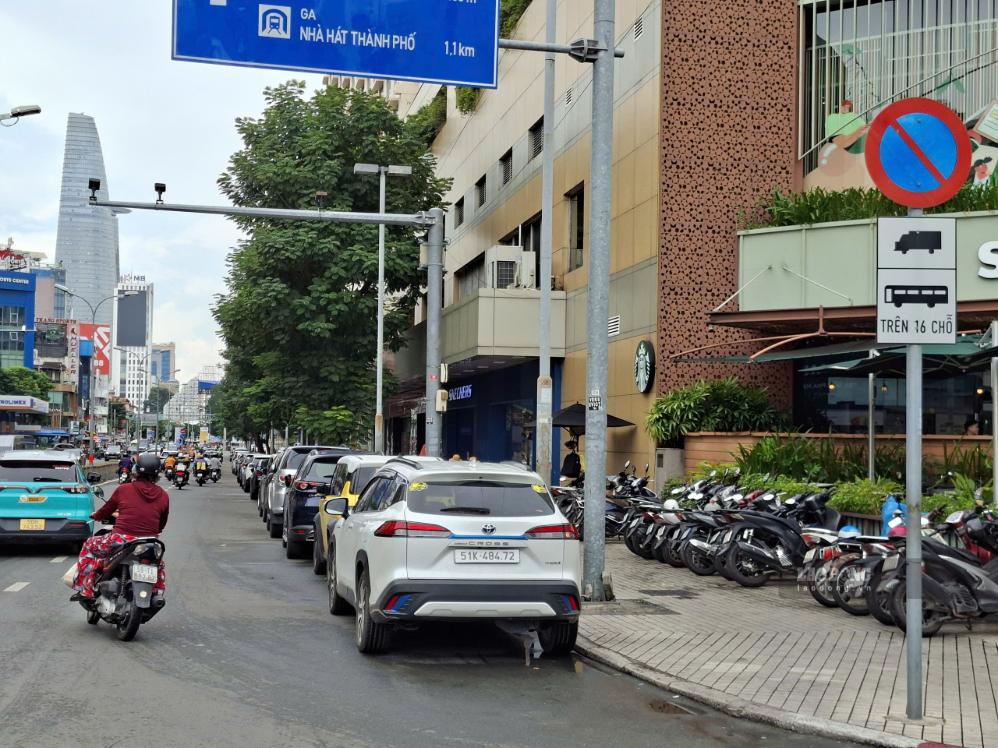
Recorded on central roads such as Alexandre de Rhodes, Han Thuyen, Pham Ngoc Thach, Pham Hong Thai..., many cars lined up to park on the road, occupying a lane even though there are no-parking signs.
Many cars turn on warning lights and leave, causing the already narrow road surface to narrow further, affecting traffic.
According to the Ho Chi Minh City Department of Construction, the central area is densely concentrated with commercial centers, shops, restaurants and services serving people and tourists. Meanwhile, the number of personal vehicles is increasing rapidly, but infrastructure and parking lots do not meet demand.
Ho Chi Minh City currently manages more than 1.2 million cars and more than 11.5 million motorbikes, not including vehicles from other localities.
Meanwhile, the existing parking area is only about 2.69 hectares out of a total of 550 hectares planned, equivalent to 0.5%.
More than 20 years ago, Ho Chi Minh City called for investment in underground parking lots in the central area. Including 4 projects at Le Van Tam Park, Tao Dan Park, Trong Dong stage and Hoa Lu stadium, with a total expected capacity of about 6,300 cars and 4,000 motorbikes.
However, to date, the projects have not yet been able to become actual parking lots due to planning, capital sources and financial plans.
At Le Van Tam Park, the city once signed a BOT contract with an investor, but the enterprise could not arrange capital. After a long period of stagnation, in 2019, the Ho Chi Minh City People's Committee revoked the project for re-evaluation.
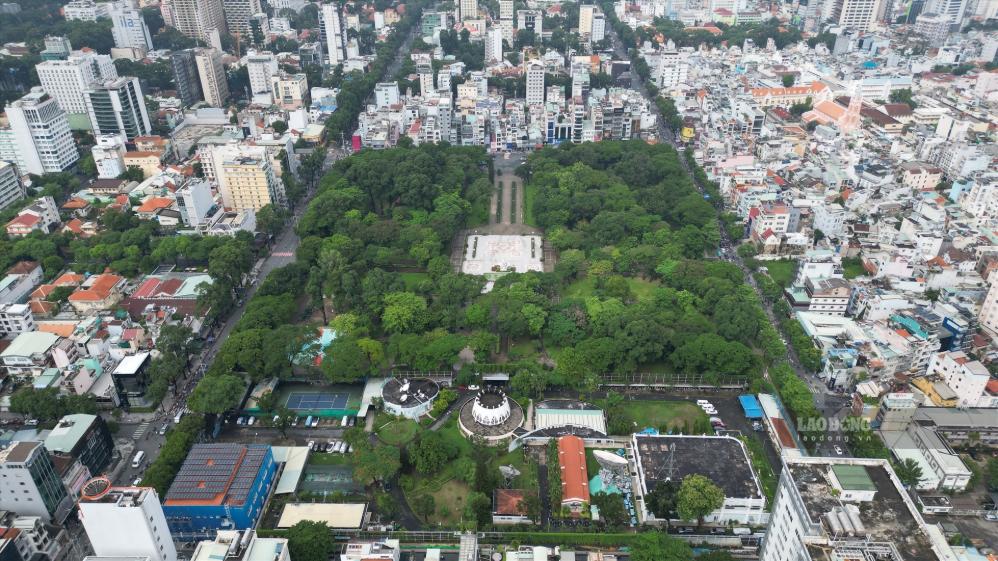
The project at Trong Dong stage was approved in principle in 2009, but then problems arose due to being within the planning scope of Metro Line 2 (Ben Thanh - Tham Luong), forcing the underground space plan to be adjusted.
The remaining two projects are also difficult to attract investment because the underground space planning of the central area is not complete and the investment mechanism is not attractive enough.
In particular, if only relying on revenue from parking fees, businesses find it difficult to recover capital due to the very large cost of underground construction.
The investor once proposed combining parking lots with commerce and services to increase revenue, but the legal mechanism at that time did not allow it.
To prevent the underground parking lot project from repeating the "rut"
Resolution 260/2025/QH15 (amending and supplementing a number of articles of Resolution No. 98/2023/QH15) creates more basis for Ho Chi Minh City to implement urban development models associated with public transport (TOD) and more flexible PPP forms.
Ho Chi Minh City is researching large-scale underground space complexes in the center, notably the cluster of works under 23/9 Park connecting Ben Thanh station and the parking lot project combined with a commercial center under Ton Duc Thang street.
The underground project at September 23rd Park is proposed to have an area of more than 82,000 m2, expected to have a maximum of 4 basements, with a total floor area of about 317,867 m2.
Of which, more than 146,940 m2 is for parking, more than 26,273 m2 for the station space and about 144,653 m2 for commercial and service centers.
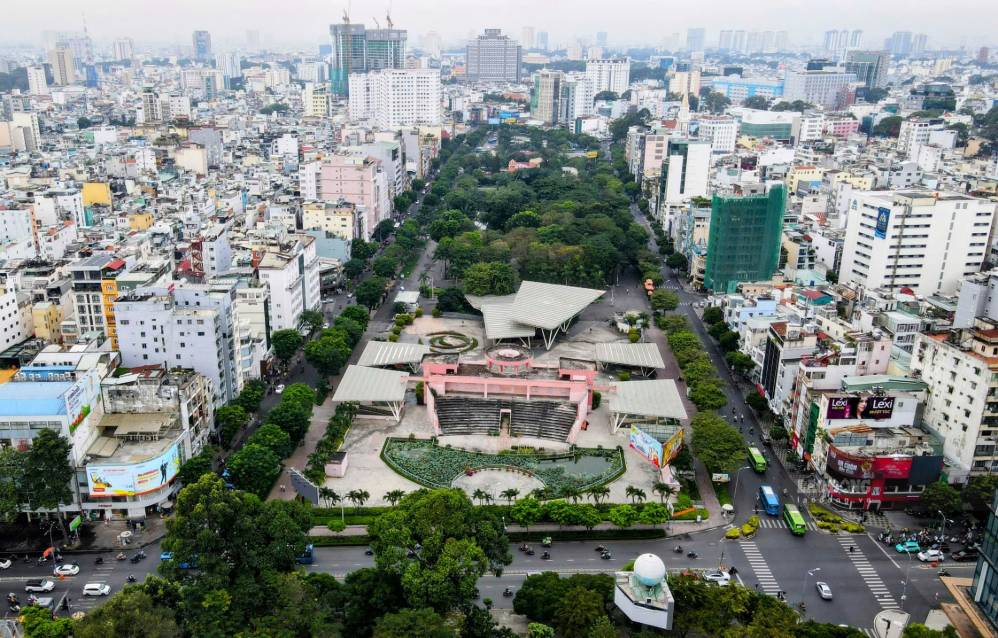
Dr. Vo Kim Cuong - former Deputy Chief Architect of Ho Chi Minh City, said that new projects should not only be considered as additional parking spaces but must become part of the urban underground space system, connected to metro, public transport, roads and service works.
According to him, one reason why previous projects were slow to implement is that the underground space has not been synchronously planned, leading to the risk of conflict with other infrastructure projects.
Underground parking lots cannot be built in the style of excavating wherever there is land. It is necessary to clearly identify where the project is located in the underground space network, how it is connected to public transport and the possibility of expansion in the future" - Mr. Cuong said.

Regarding September 23rd Park, Mr. Cuong assessed that direct connection with Ben Thanh station is a great advantage. People can park their cars and then switch to the metro, thereby limiting personal vehicles from going deep into the central area.
The value of underground parking lots is not only in the number of parking spaces created, but also in the ability to support public transport and reduce vehicle pressure on the ground" - Mr. Cuong said.
Read the original news here.
- Ho Chi Minh City continues to study arranging wards and communes, reporting to the City Party Committee before August 30
- 8 metro lines shape traffic in Ho Chi Minh City and inter-regional urban areas
- 4 communes in Ho Chi Minh City below the area standard, when they become wards, they exceed the standard
- Ho Chi Minh City reviews 52 wards and communes that do not meet area standards