


Harmful short video matrix: Need "digital resistance" for young people
Experts believe that toxic short videos need to be controlled from platforms, creators to families, schools and management agencies.
Need a responsible ecosystem
When a toxic short video appears and is quickly pushed to thousands, even millions of users, the story is no longer just about the creator. Behind that speed of spread is a whole system of distribution, interaction and amplification, in which the technology platform plays a particularly important role.
Along with that is the responsibility of creators, families, schools and management agencies in limiting negative impacts on young people.
Assoc. Prof. Dr. Bui Hoai Son - Specialized Member of the National Assembly's Committee for Culture and Society - said that this must be a "responsibility ecosystem", because it cannot require a single entity to solve the entire problem.
The platform is not simply a'neutral pipeline', because their algorithm decides which content is amplified and which content is almost unseen. Therefore, it is necessary to increase responsibility for transparency, algorithm accountability, handling of violating content, design safety for children and limit the algorithm from continuously amplifying content that is potentially harmful" - Assoc. Prof. Dr. Bui Hoai Son analyzed.
That responsibility does not stop at the platforms. Content creators need to understand that creative rights always go hand in hand with social responsibility. "One content can bring millions of views for individuals but at the same time create long-term consequences for the community," he said.
For families, instead of just controlling phone usage time, it is more important to accompany children, know what they are watching, why they like that content and help them form the ability to self-choose. Schools also need to consider digital capacity, communication capacity and the ability to recognize harmful content as an important part of civic education in the digital age.
We need to create a'digital resistance' for children, so that they not only know how to use technology but also know how to protect themselves from technology," Assoc. Prof. Dr. Bui Hoai Son emphasized.
On the management side, according to him, functional agencies must create rules of the game, protect public interests, inspect the implementation of responsibilities of platforms and strictly handle violations. Digital space management therefore requires a combination of law, technology, education, culture and the responsibility of each citizen.
Content management by risk level
A difficult-to-handle gap lies in content that does not have enough elements to be punished but shows signs of being offensive, deviant, or negatively impacting the awareness of young people. If content is only divided into two groups, "legal" and "illegal", according to Assoc. Prof. Dr. Bui Hoai Son, a very wide area of cultural and social impacts will be missed.
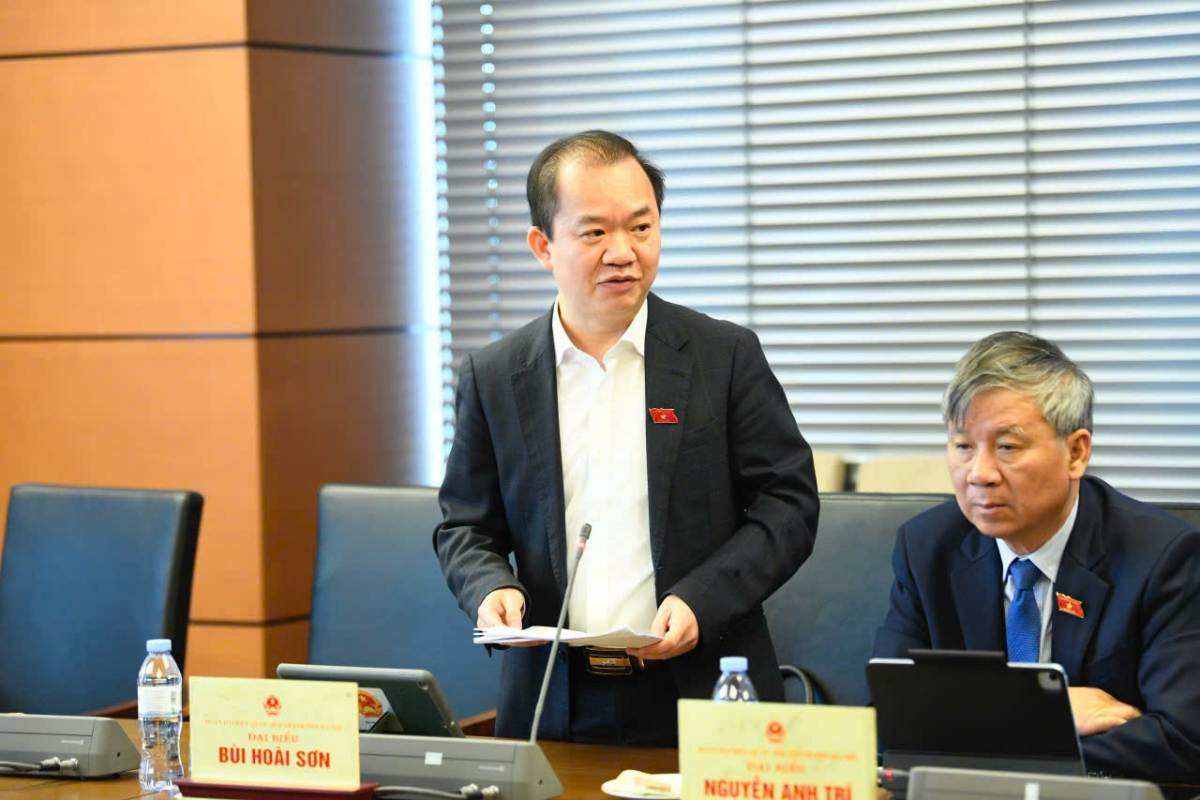
Law always needs relatively clear criteria to determine which acts are prohibited and which acts are handled. But culture is more subtle. There are contents that are not enough elements to be punished but are vulgar, offensive, promote a pragmatic lifestyle or may have a negative impact when algorithmically amplified to millions of young people," he analyzed.
However, he noted that the handling of this group of content should not turn into administrativeizing all cultural norms or give management agencies the right to decide what to watch and what not to watch. A more appropriate approach is to assess based on the level of risk and scope of spread.
A controversial content that appears alone is an issue; but when the proposed system itself continuously pushes that content to teenagers, it is another issue," Assoc. Prof. Dr. Bui Hoai Son said.
From there, he believes that soft mechanisms can be built such as age classification, content warning, reducing proposals for risky content, limiting the commercialization of offensive content and establishing a clearer and more transparent set of community rules. In particular, it is not only necessary to handle each violating video but also to control the content amplification mechanism of the platform.
A bad video with a few hundred views is completely different from a bad video actively brought to millions of people by algorithms," he said.
According to Assoc. Prof. Dr. Bui Hoai Son, policies need to be managed according to the level of risk, while creating space for positive content to develop. Along with that, it is necessary to build a digital competency education program suitable for each age group, helping children understand algorithms, identify fake news, control device usage time, protect personal data and choose useful content.
The goal cannot be to create a young generation that only knows how to avoid the bad, but must be a generation with enough bravery to master the digital environment," he said.
In addition to controlling negative content, cultural policies also need to encourage museums, libraries, schools, press agencies, cultural organizations and young creators to bring knowledge, history, art, and heritage into new ways of storytelling.
Assoc. Prof. Dr. Bui Hoai Son affirmed: "It is not possible to only ask young people to turn their backs on the bad, but to create enough good things for them to want to choose. When kind content is made in modern, attractive language and touches the emotions of young people, short videos can completely from a worry become a very powerful tool for education, spreading culture and nurturing good values.
See the original here