

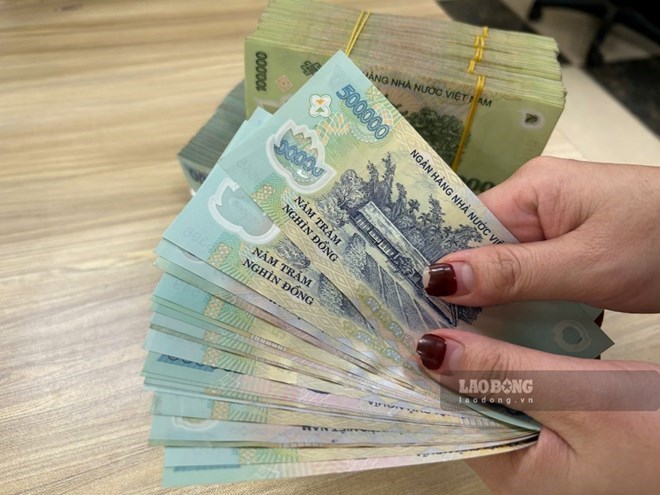
Government increases social assistance standard to 540,000 VND/month for 8 subjects
The Government increased the new social assistance standard applied from July 1, 2026 to 540,000 VND/month for 8 groups of subjects.
The Government has just issued Decree No. 335/2026/ND-CP regulating social assistance (XH) policies.
This Decree stipulates regular social assistance policies in the community; receiving care and nurturing in the community; emergency assistance and care and nurturing at social assistance facilities.
The new social security standard applied from July 1, 2026 is 540,000 VND/month (old regulation was 500,000 VND).
The Decree stipulates that the subjects of regular social assistance in the community include:
1. Children under 16 years old falling into one of the following prescribed cases:
Abandoned and not yet adopted;
Children whose both biological parents have died or one of whom has died and the other has not been identified;
Children whose father or mother is dead or unidentified and the other is declared missing according to the provisions of law;
Children whose father or mother has died or is not identified and the other is receiving care and nurturing benefits at social assistance facilities;
Children whose father or mother has died or is not identified and the other is serving a prison sentence in prison or is serving a decision to handle administrative violations at a reformatory, compulsory education facility, or compulsory drug rehabilitation facility;
Both parents are declared missing according to the provisions of law;
Both parents are enjoying care and nurturing benefits at social assistance facilities;
Both parents are serving prison sentences in prison or are serving decisions on administrative violations at reform schools, compulsory education institutions, and compulsory drug rehabilitation centers;
The father or mother is declared missing according to the provisions of law and the other person is receiving care and nurturing benefits at a social assistance facility;
2. People under the above-mentioned regulations who are receiving monthly social allowances and are 16 years old but are studying general education, continuing education, vocational education, and university education with the first degree, if the continuous learning process is not interrupted, they will continue to enjoy social assistance policies until the end of their studies.
3. Children infected with HIV/AIDS from poor households.
4. People who are classified as poor households, near-poor households who are not married or have no wife; who are married but have died or disappeared according to the provisions of law and are raising children under 16 years old (collectively referred to as poor single mothers raising children).
5. Elderly people falling into one of the following prescribed cases:
Elderly people from poor households, who do not have people with obligations and rights to support or have people with obligations and rights to support but these people are receiving monthly social allowances;
Elderly people from poor households who do not have people with obligations and rights to support them, do not have conditions to live in the community, are eligible to be admitted to social assistance facilities but have people to nurture and care for them in the community.
6. People with severe disabilities, people with particularly severe disabilities according to the provisions of law on people with disabilities.
7. Children under 3 years old who are poor households, near-poor households not subject to the above-mentioned regulations living in communes and villages in ethnic minority and mountainous areas that are particularly difficult.
8. People living with HIV/AIDS who are poor households without monthly salaries, wages, pensions, and social insurance allowances.
Read the original here