
Initiatives from workers contribute to improving productivity
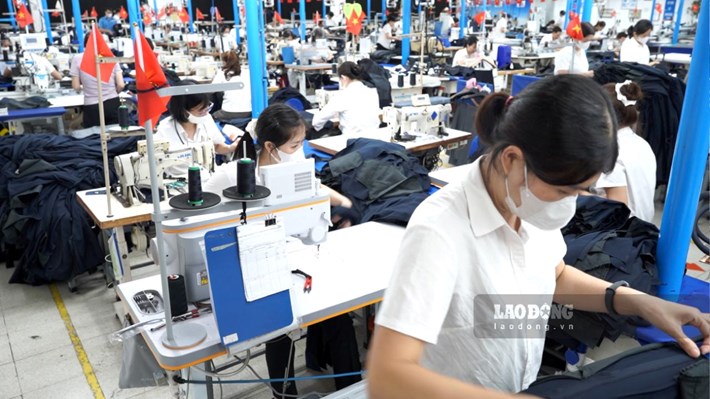
From improvements in daily work to the application of new technologies, workers are contributing to improving productivity and production efficiency at enterprises.
Initiative from the production line, improving labor productivity
Attached to garment work for more than 16 years, Ms. Tran Thi Van, a worker at Hanoi Veston Enterprise, May 10 Corporation - JSC, not only accumulates professional experience but also always observes and explores more effective ways in each production stage.
During the working process, she realized that some sewing stages have complex technical requirements, and workers have to perform many repetitive operations. This not only takes time but also requires concentration and high accuracy. Just one not-standard operation can affect product quality.
From those inadequacies, Ms. Van proactively exchanged with technical staff, proposing to apply programming machines to support the implementation of some stages. According to her, putting machinery into appropriate operations will help reduce labor, limit repetitive manual operations, and ensure the accuracy and uniformity of the product.
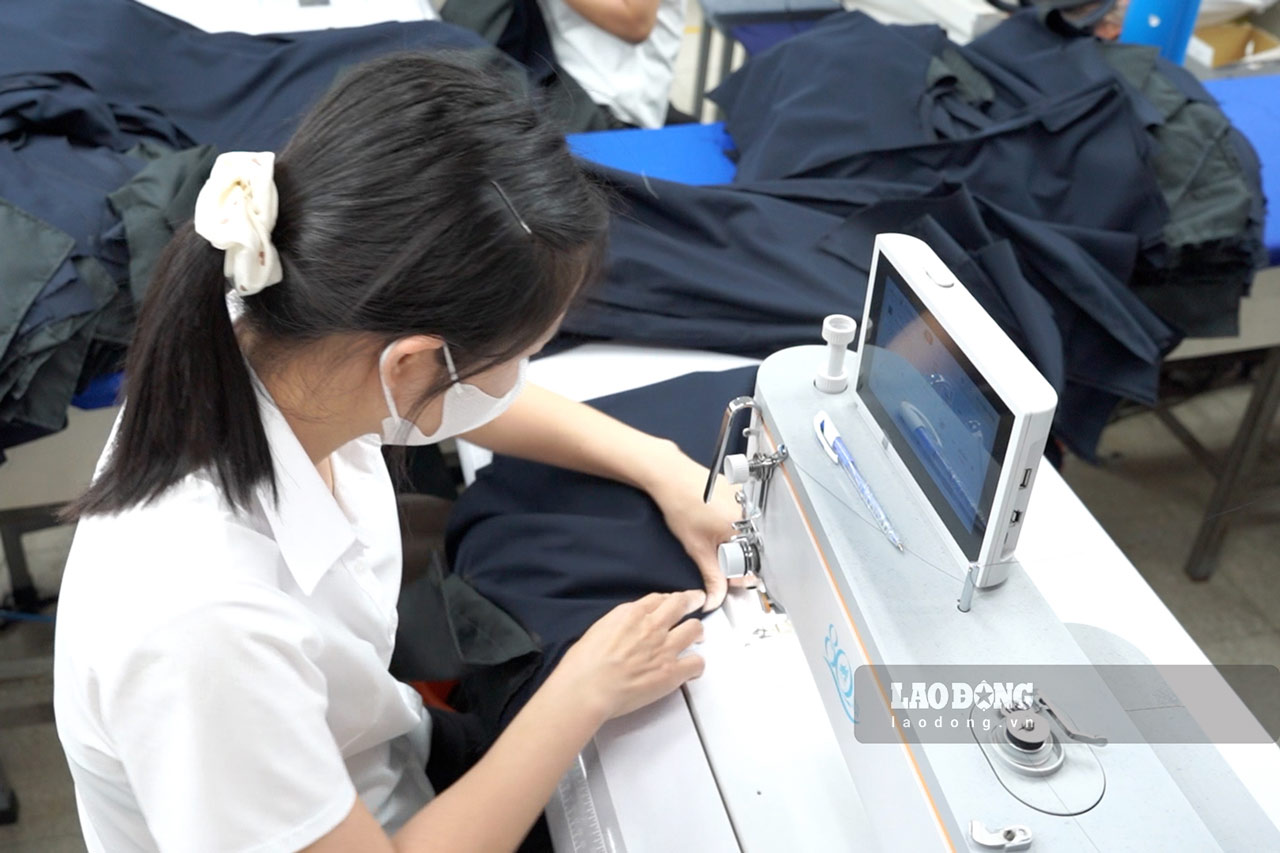
When applying the initiative, the stage of sewing charged wires was reduced by 69 seconds, and the stage of sewing bear wires was reduced by 184 seconds compared to before. These figures show the practical effectiveness of improvements from the daily work at the production line.
AI application, shortening product development time
Not only in direct production, the application of digital technology, especially artificial intelligence (AI), is also opening up new directions in product design activities at May 10.
Ms. Nguyen Thi Thanh Nhung - Technical Department, May 10 Corporation - JSC - said that previously, the process of developing a garment product often went through many stages such as fabric selection, design, drawing and sewing. The entire process can take about 5-7 days. The application of AI has significantly shortened design time, while creating conditions for the technical team to develop more designs, styles and more diverse collections.
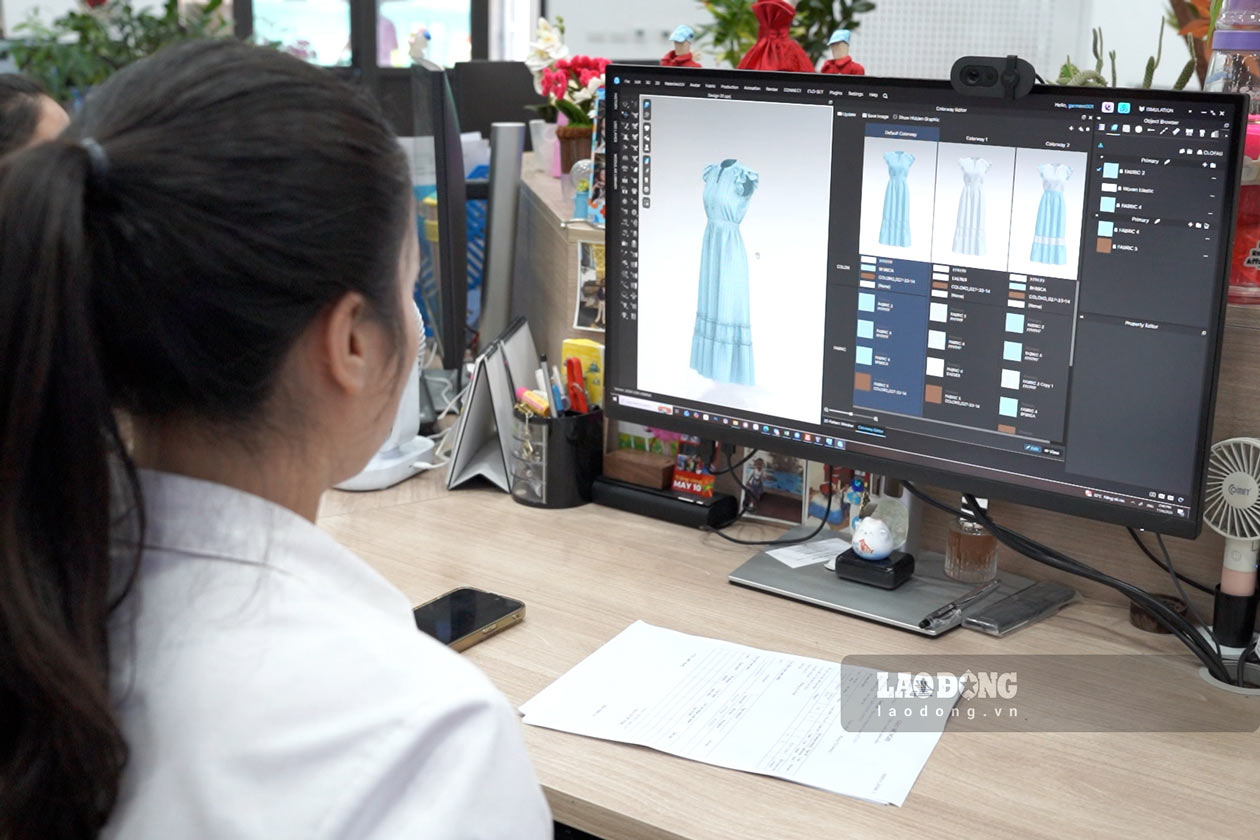
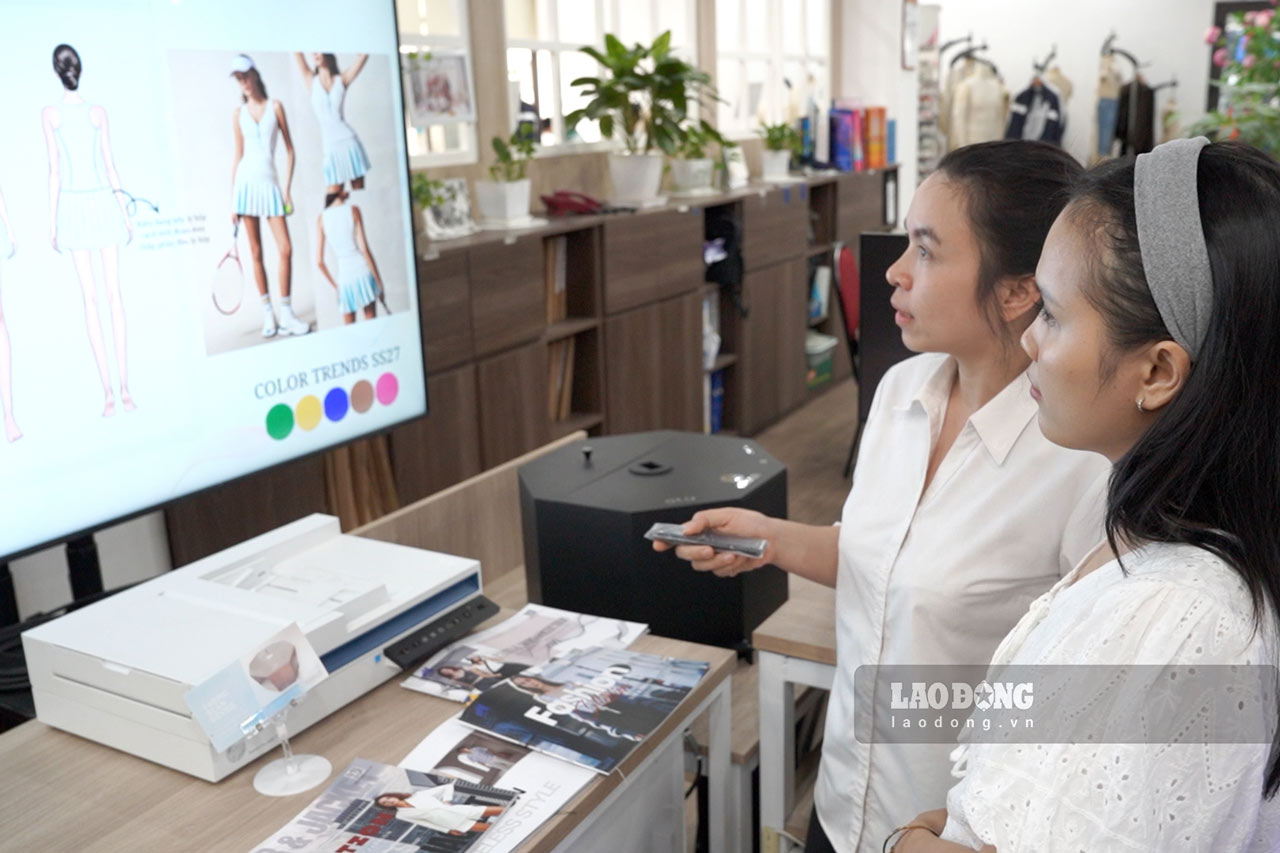
The application of AI combined with 3D technology also helps reduce the number of products that need to be sewn, save raw materials and limit waste in the product development process. The technology also supports the design team to complete ideas, give suggestions on styles and designs suitable to customer requirements. Thanks to that, businesses can shorten the exchange time, improve their ability to meet orders and increase competitiveness in the market.
Assessing the effectiveness of technology application at enterprises, Mr. Bach Thang Long - Deputy General Director of May 10 Corporation - JSC - said that for the garment industry, AI has the most potential for application in the design stage. This technology helps reduce human costs, time and simplify the process of exchanging and approving design templates with customers.
Instead of having to perform many manual steps and transfer samples through traditional methods, businesses can send designs through the network environment for customers to review, contribute ideas and approve. This helps the product development process be more flexible, shortening the processing time.
In the production stage, according to Mr. Long, the innovation initiatives of workers also play an important role. Many solutions focus on improving guards, supporting equipment and operations in each stage.
From improving each operation on the production line to applying AI in design, the changes at May 10 show that technological innovation comes not only from investing in machinery and equipment but also from the proactiveness and creativity of each worker. When practical experience is combined with innovative thinking and digital technology, businesses have more motivation to improve productivity and product quality, gradually meeting the increasing demands of the garment market.
See the original here