
From QR codes to protecting the rights of female workers
Da Nang trade union levels apply digital technology to listen to the thoughts, support tracing regimes and protect the rights of female workers.
Listening to anonymity and "holding hands and teaching" at the garment factory
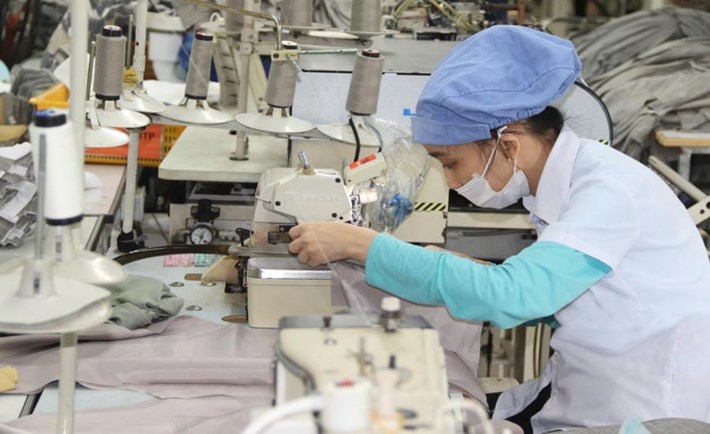
Chain pressure and shifts make female workers in garment and footwear industries have little time to meet and are reluctant to share sensitive issues. To overcome this, grassroots trade unions have applied digital technology and innovated methods of caring for workers.
At Rieker Vietnam Shoe Company (where there are more than 10,400 female workers), the trade union not only maintains 355 Zalo groups in production teams but also applies technology in management, recording more than 14,430 QR code scans for safe vehicle registration. In which, the trade union deploys an anonymous online petition receiving channel via QR code.
Ms. Nguyen Thi Thanh Xuan, Deputy Head of the Women's Union of Rieker Vietnam Footwear Company, said: "Thanks to the secure QR code, union members can send their secret thoughts about maternity, raising young children, salary regimes or even domestic violence to the Women's Union and the Inspection Board without fear of revealing their identities. The content is immediately classified to be transferred to the Human Resources Department for definitive resolution, and at the same time, the union guides women to use AI to look up social insurance regulations and maternity regimes right on their phones.
At Yuri ABC Da Nang Co., Ltd., before putting automatic machinery into production, the trade union established the "Digital Trade Union Group" model to support older workers to adapt to technology.
According to Ms. Tran Thi My Hanh, Member of the Company's Trade Union Executive Committee, many older female workers are hesitant to use computers, management applications and electronic timekeeping. Therefore, young union members directly guide women to install VssID to track the social insurance payment process, use VNeID and security skills such as not using the date of birth as password, not accessing strange links, not providing OTP codes to prevent online fraud.
At Mabuchi Motor Da Nang Co., Ltd., grassroots trade unions use online surveys to grasp the aspirations of female workers, and choose practical activities for March 8th and October 20th. Recommendations on income, working hours, and maternity are automatically classified, as a basis for dialogue with the board of directors.
Using digital data for real dialogue and negotiation
Models at the grassroots level show that digital technology helps trade unions become closer to workers. However, the application of technology must be aimed at protecting the rights and ensuring sustainable employment for female workers.
Mr. Le Van Dai, Standing Vice Chairman of the Da Nang City Labor Federation shared: "Female union members account for more than 60% of the total 243,000 union members in the whole city, present in most industries and fields that make important contributions to the socio-economic development of the city. However, female workers still face many difficulties such as the risk of job loss, job reduction due to structural shifts and automation, disparities in training opportunities, pressure to balance work and family, and needs for housing, kindergartens, health safety and discrimination at work.
Leaders of the City Labor Federation admitted that female labor activities in some places are not uniform, and the ability to grasp needs, dialogue, negotiate and resolve petitions is still limited. If Zalo is only used for one-way notification and surveys without dialogue with businesses, technology will hardly promote the effectiveness of protecting workers.
Therefore, the Da Nang City Labor Federation requests trade union levels to turn data collected from digital platforms into means to advise on policies, periodically dialogue and negotiate collective labor agreements. Digitized reflections on maternity, working conditions, and working hours must be transformed into terms of commitment that are more beneficial for female workers, ensure safety in cyberspace and prevent labor disputes early.
When digital technology is associated with substantive protection responsibilities, the trade union organization is truly a reliable support for female union members in the face of changes in the labor market.
See the original here