
Making culture a foundation for workers' development
Investing in culture not only improves spiritual life but also contributes to building a comprehensively developed worker contingent in the new era.
The "gap" needs to be filled
In the process of industrialization, modernization and digital transformation, workers are not only the direct force creating material wealth but also play a pillar role in ensuring social stability and sustainable development.
Therefore, building a spiritual and cultural life for workers in industrial parks (IPs) and export processing zones (EPZs) is the goal of the Party, the State and the Trade Union system at all levels over the years.
In particular, before the requirement of building and developing people comprehensively, fostering a cultural foundation for workers needs to be placed in the right position. Because, worker culture does not only stop at standards of behavior or working style but also plays a role in shaping the quality of human resources in the new era.
In fact, the spiritual and cultural life for workers still has many "loopholes", requiring many new ways to meet the legitimate needs of workers.
With the specific nature of the job, there is not much time and opportunity for workers to learn and interact with the outside world. Most of their time is spent with the company and a period of rest at the boarding house.
Mr. Vu Duc Vuong, a worker at Noi Bai Industrial Park, is such a case. After more than 20 years of working, the total income of the couple is about 20 million VND per month.
With three young children, rent, living expenses and raising children have almost taken up the entire income. Therefore, the need for entertainment or improving spiritual life has to be put aside.
Also in a similar situation, Ms. Nguyen Thi Hien, from Thanh Hoa, currently working at Thach That Industrial Park, said that because she works in shifts and often works overtime, she almost no longer has time to participate in sports activities she loves. After work, she just wants to rest; if she has time, she watches her phone, listens to music or reads news...
Reality shows that the need to enjoy and participate in cultural and spiritual activities of workers and laborers is not small. They clearly understand that participating in cultural and sports activities helps reduce stress, regenerate labor and expand relationships. However, due to time and income limitations, along with some businesses not paying due attention to organizing these activities, these legitimate needs have not been fully met.
Linking cultural activities with the interests of workers
Resolution No. 80-NQ/TW on Vietnamese cultural development of the Politburo continues to create a new approach when clearly defining that investing in culture is investing in sustainable development, putting people at the center.
Notably, the Resolution focuses on removing "bottlenecks" in institutions, resources and infrastructure. In which, promoting socialization is expected to open up a more flexible mechanism, encouraging businesses to participate in investing in cultural and sports projects for workers instead of just depending on the state budget.
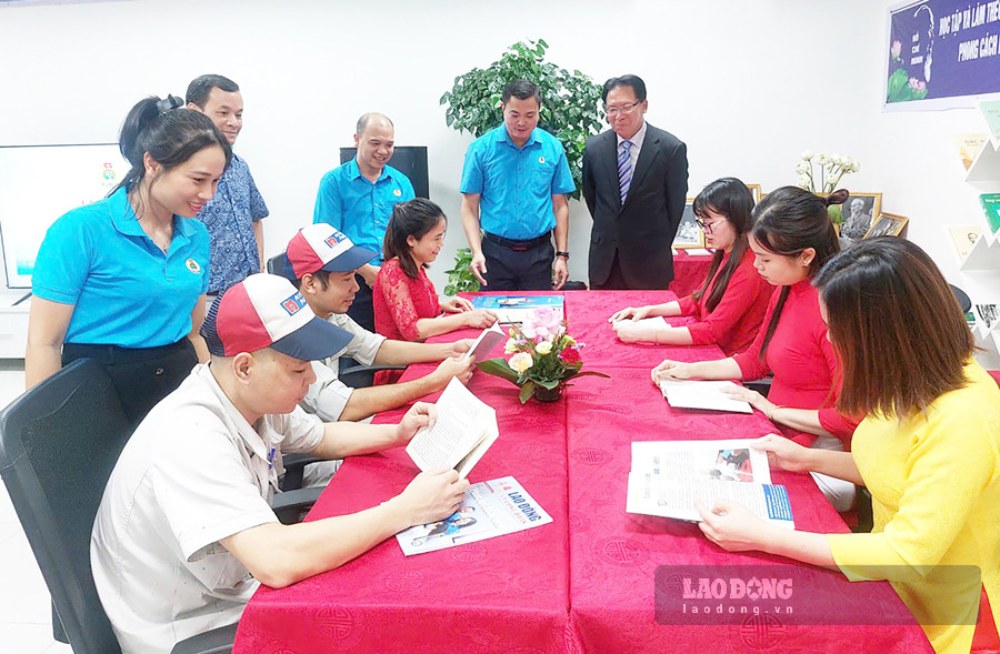
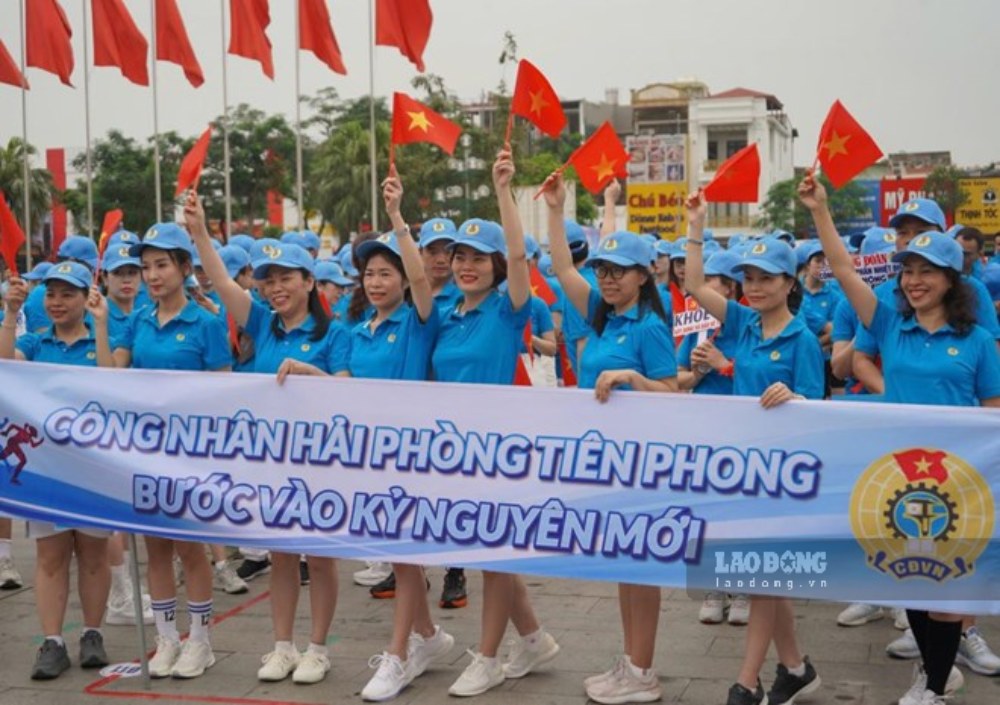
Closely following those policies, over the past time, the Capital Trade Union levels have had many innovations in organizing activities, strongly focusing on grassroots levels. Many cultural, artistic, and sports programs have been implemented from grassroots levels to the city in diverse forms, attracting a large number of workers, civil servants, and laborers to participate.
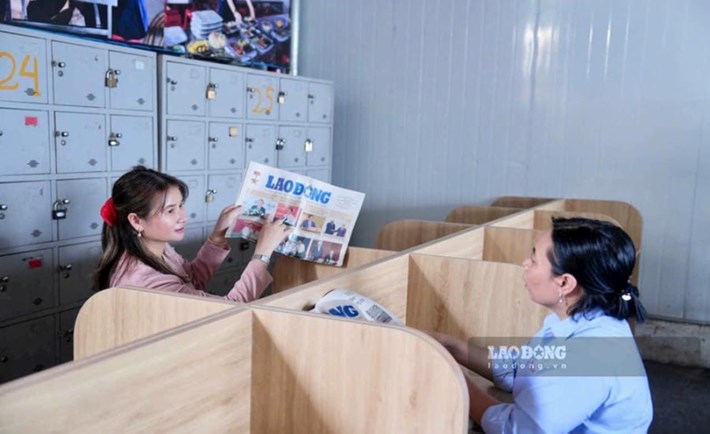
In addition to annual activities such as art competitions, workers' health festivals, and the program "Singing for workers to listen to, listening to workers sing", many practical models have also been implemented such as "Ho Chi Minh Cultural Space", "Trade Union Relaxation Corner", "Trade Union Bookshelf", "Worker Cultural Activity Point"...
According to Assoc. Prof. Dr. Bui Thi An - Director of the Institute of Natural Resources, Environment and Community Development, for high-tech zones and industrial parks in Hanoi, reality shows that in the process of approval, land funds have been allocated for cultural institutions. Therefore, it is necessary to soon inspect and review the entire planned land fund, and at the same time have a mechanism to promote thorough implementation, avoiding prolonged "suspension" or misuse.
Even working in shifts, workers still need certain periods of time to participate in activities to improve their spiritual life if cultural institutions are organized in accordance with their rhythm of life. The important thing is that there needs to be a force to connect, organize and lead. In which, the role of the Trade Union organization is extremely important.
Through this system, cultural activities can be designed to suit needs, deployed flexibly and spread widely, thereby gradually forming a healthy and sustainable cultural environment in workers' lives.
See the original here