

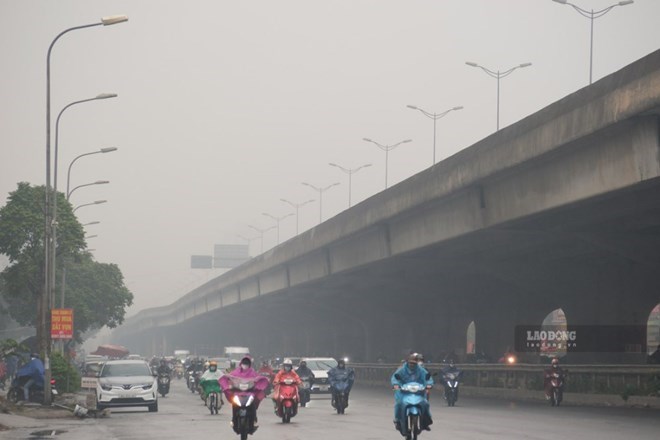
Forecast for the North to welcome early-season cold air causing thunderstorms
It is forecasted that around September 9-10, the North will welcome a wave of weak-intensity early-season cold air, the temperature will not fluctuate much.
According to the National Center for Hydro-Meteorological Forecasting, the weather next week in the North will have notable developments. From September 6th to September 8th, the North will have showers and thunderstorms in some places in the evening and at night, sunny during the day.
Around September 9-10, the Northern region is likely to welcome a weak cold air wave at the beginning of the season.
Due to the weak intensity of cold air, it has not caused cold or cold conditions, but mainly caused a slight decrease in the temperature, and the weather has turned cooler than in previous days. Also due to the impact of the northeast monsoon at the beginning of the season, the North is likely to have scattered showers and thunderstorms.
Rain appears during the transitional season, the conflict between different air masses can in essence cause dangerous weather phenomena. In thunderstorms, there is a possibility of tornadoes, lightning, hail and strong gusts of wind.
Due to the impact of the weak intensity of the early-season cold air mass, it will create insignificant temperature changes in Hanoi in the coming days.
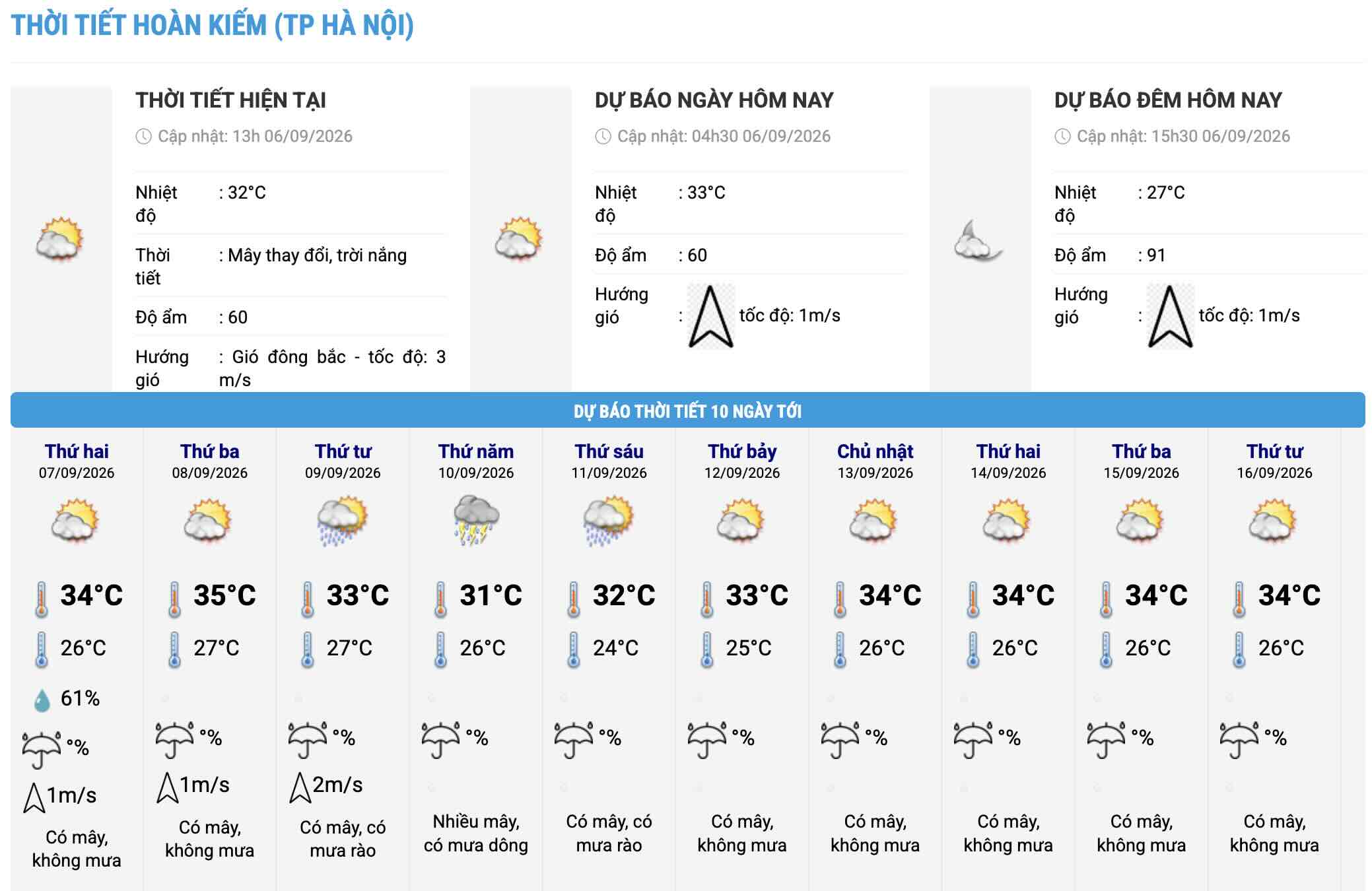
Following the temperature chart in Hanoi capital (updated on the afternoon of September 6), on September 7, the temperature fluctuated from 26 to 34 degrees Celsius, then slightly increased from 27 to 35 degrees Celsius on September 8. On September 9, the base temperature shifted from 27 to 33 degrees Celsius.
By September 10 and September 11, the temperature will decrease slightly, recording from 26 to 31 degrees Celsius and from 24 to 32 degrees Celsius respectively. Next, on September 12, the temperature will fluctuate in the range of 25 to 33 degrees Celsius, before stabilizing again at 26 to 34 degrees Celsius throughout September 13 to 16. This temperature fluctuation is mild, reflecting the true nature of the early-season cold air wave.
Early predictions about this winter, the meteorological agency said that cold air is likely to operate with weaker intensity than the multi-year average.
Severe cold and frost are likely to appear later than the climate law and the number of days of severe cold and frost is lower than the average of many years in the same period.
Read the original here