
Charter of the Vietnam Fatherland Front XI term: Unifying the organization and activities of the Fatherland Front for the new term
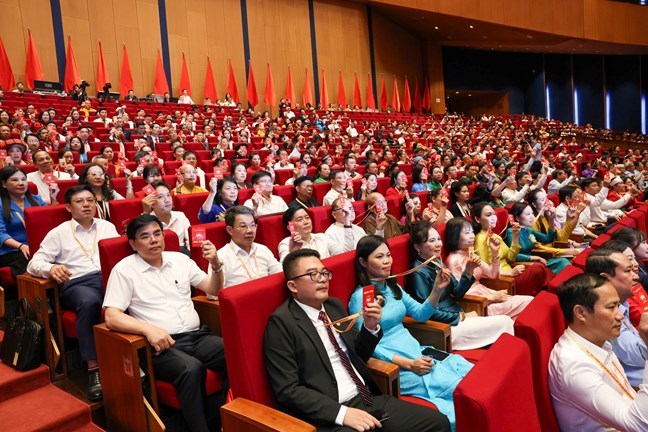
The Charter of the 11th Vietnam Fatherland Front, term 2026–2031, was unanimously approved by the 11th National Congress of the Vietnam Fatherland Front.
With the Preface, 8 chapters and 37 articles, the Charter is an important basis for unifying the organization and operation of the Vietnam Fatherland Front in the new term.
The Charter continues to affirm the position and role of the Vietnam Fatherland Front in the political system and social life; and at the same time specifically stipulates the organization, operation, responsibility to represent and protect the legitimate and lawful rights and interests of the People, implement supervision, social criticism and promote the strength of national unity.
The content of the Charter covers issues from members, rights and responsibilities of members; organizational principles and operations; organizational system; tasks and powers of Front agencies at the Central and local levels; relations between the Front and member organizations, state agencies and the People; to commendation, discipline, funding, assets and implementation organization.
Through clearly defining the position, functions, tasks and methods of operation at each level, the Charter continues to create a basis for the Vietnam Fatherland Front to promote its core political role, widely gather all classes of people, strengthen social consensus and consolidate the great national unity bloc in the new period.
Promoting the core role in gathering and firmly consolidating the strength of the great national unity
Throughout the Charter, it is the inheritance and promotion of the tradition of the Vietnam National United Front, consolidating the great national unity bloc on the basis of promoting patriotism, national pride, self-reliance, self-strengthening and aspiration to build and develop the country.
The Charter defines the Vietnam Fatherland Front as a political alliance, voluntary union of political organizations, socio-political organizations, social organizations and typical individuals in social classes, ethnic groups, religions, and overseas Vietnamese.
The Vietnam Fatherland Front is a part of the political system of the Socialist Republic of Vietnam led by the Communist Party of Vietnam; is the political base of the people's government; a place to express will, aspirations, gather the great national unity bloc, promote the people's right to mastery; and at the same time a place to negotiate, coordinate and unify actions among members.
The charter clearly states that November 18 every year is the Traditional Day of the Vietnam Fatherland Front and the Great National Unity Festival.
From that basis, the Charter continues to identify the key tasks of the Front, including gathering, building and promoting the strength of great national unity; implementing democracy, strengthening social consensus, arousing aspirations for development and innovative thinking; representing and protecting the legitimate and lawful rights and interests of the People; implementing social supervision and criticism; participating in building the Party and State; deploying people-to-people diplomacy activities, contributing to building and protecting the Fatherland.
Members of the Front are identified in the spirit of openness and voluntariness. Joining the Vietnam Fatherland Front is carried out on the basis of approving the Charter and specific regulations of the Vietnam Fatherland Front and is considered and recognized by the Vietnam Fatherland Front Committee of the same level. The relationship between members is an equal, solidarity, mutual respect, democratic consultation, coordination and unified action.
Through this, the gathering role of the Front is not only reflected in the scale and widespread participation but also in the ability to connect organizations, individuals, classes, ethnic groups, religions and overseas Vietnamese to aim for common goals, creating a comprehensive strength of the great national unity bloc.
Organize in the direction of clear levels, clear responsibilities
The Charter stipulates that the Vietnam Fatherland Front organizes and operates within the framework of the Constitution, laws and the Charter of the Vietnam Fatherland Front; implementing the principle of voluntariness, democratic consultation, coordination and unified action. In the process of coordination, member organizations comply with the Charter of the Vietnam Fatherland Front, while still maintaining the independence of their organization.
The Vietnam Fatherland Front system is organized according to administrative levels. At the Central level, there is the Central Committee of the Vietnam Fatherland Front, the Presidium and the Standing Committee of the Central Committee of the Vietnam Fatherland Front. At the local level, there is the Committee of the Vietnam Fatherland Front at the provincial and commune levels; below the commune level, there is the Fatherland Front Work Committee in residential areas.
The Charter also stipulates that the Congress of Delegates of the Vietnam Fatherland Front at each level is the highest consultative body of the Vietnam Fatherland Front at that level, held every 5 years. The number and composition of delegates attending the National Congress of Delegates of the Vietnam Fatherland Front are agreed upon by the Conference of the Central Committee of the Vietnam Fatherland Front.
The Congress has the task of discussing and approving the term report, the action program for the new term; implementing democratic consultation to elect the Vietnam Fatherland Front Committee of the same level and approving the Congress Resolution. For the National Congress of Delegates, the task also includes amending and supplementing the Charter of the Vietnam Fatherland Front.
Between the two Congresses, the Vietnam Fatherland Front Committee at each level is the executive body. The Charter specifically stipulates the structure, tasks, powers and working regime of the Central Committee, the Presidium, the Standing Committee of the Central Committee as well as the Committee and Standing Committee of the Vietnam Fatherland Front at the provincial and commune levels.
Clearly defining the functions of each agency and each level contributes to ensuring that the operation of the Front system is carried out uniformly and smoothly, while enhancing the responsibility of each agency in organizing the implementation of the coordination program and unified action, implementing supervision, social criticism, gathering opinions of the People and coordinating with relevant agencies and organizations.
The Charter also focuses on organizational and personnel work, fostering and improving the capacity, qualities, and professional skills of the Front's staff; promoting the role of Advisory Councils, Advisory Boards, Advisory Groups, experts and collaborators to support the Vietnam Fatherland Front in increasingly effectively performing its assigned tasks.
Bringing the activities of the Front closer to the People
A prominent content in the Charter is the specific identification of the tasks of the Front at the grassroots level, from the commune level to residential areas, places directly associated with the daily life of the People.
According to the Charter, the Standing Committee of the Vietnam Fatherland Front Committee at the commune level is responsible for organizing the implementation of resolutions, coordination programs and unified actions; protecting the legitimate and lawful rights and interests of the people; regularly collecting opinions and recommendations from voters and people to reflect and propose to Party committees, authorities at the same level and the Front at higher levels.
Along with that, the Commune-level Front participates in building the Party and government; implementing social supervision and criticism; organizing campaigns and patriotic emulation movements among the people; implementing the law on democracy at the grassroots level; participating in resolving complaints and denunciations in localities; directing and guiding the activities of the Front Work Committee, the People's Inspection Committee and the Community Investment Supervision Committee.
In residential areas, the Fatherland Front Working Committee is established in villages, hamlets, villages, hamlets, villages, hamlets, residential groups, neighborhood groups, neighborhood blocks and equivalent units. The composition of the Fatherland Front Working Committee includes representatives of Party committees, representatives of branches of mass organizations, some members of the Vietnam Fatherland Front Committee at the commune level residing in residential areas and typical people from all walks of life, ethnic groups, and religions.
The Fatherland Front Working Committee directly propagates and mobilizes the people to implement the Party's guidelines, policies, laws of the State and the Fatherland Front's action program; collects and reflects opinions and recommendations of voters and people; encourages people to supervise the activities of state agencies, elected representatives, cadres, civil servants, and public employees; coordinates the implementation of laws on democracy at the grassroots level and self-management activities in residential communities.
These regulations continue to affirm the important position of the Front at the grassroots level, especially the Front Work Committee in residential areas, in bringing guidelines and policies to the people; and at the same time listening to, gathering and conveying thoughts, aspirations, and recommendations from the grassroots level to responsible agencies.
Through this, the activities of the Front are closely linked to the residential community, promoting the role of the People in participating in social management, building community life, supervising the implementation of guidelines and policies and promoting democracy at the grassroots level.
Representing and protecting the legitimate rights and interests of the People
One of the important functions emphasized by the Charter is the role of representing and protecting the legitimate and lawful rights and interests of the People.
The Charter stipulates that the Vietnam Fatherland Front represents and protects the legitimate and lawful rights and interests of the People; expands and diversifies forms of gathering and uniting the people; encourages the People to implement democracy, human rights, basic rights and obligations of citizens, and implement the Party's guidelines and policies, and the State's laws.
People participate in the organization and activities of the Front through member organizations, typical individuals who are members of the Vietnam Fatherland Front Committees at all levels and through activities launched and organized by the Front.
Notably, the Charter affirms that the People can participate in giving opinions, reflecting, and proposing to the Front on issues of concern to the People for the Front to summarize, reflect, and propose to the Party and State; and participate in supervision and social criticism according to regulations.
The responsibility of collecting and reflecting opinions and recommendations of voters and people is regulated throughout at many levels. The Standing Committee of the Central Committee of the Vietnam Fatherland Front has the task of regularly collecting opinions and recommendations of voters and people to reflect and recommend to the Party and State; the Provincial and Commune-level Fronts perform similar tasks for Party committees, authorities and the upper-level Front.
That mechanism contributes to strengthening the connection between the Front and the People, creating conditions for voices from the grassroots level to be gathered and conveyed to competent agencies, thereby promoting the role of the Front in building social consensus and participating in building the Party and State.
Improving the operational efficiency of the Front system in the new term
In addition to specifying the organizational structure and tasks of each level, the Charter of the XI term clearly defines the relationship between the Vietnam Fatherland Front Committees at all levels, the relationship with member organizations, state agencies and the People.
The relationship between the upper-level Front and the lower-level Front is a guiding and inspection relationship; Front levels are responsible for exchanging experiences, coordinating and helping each other in activities. The relationship between the Vietnam Fatherland Front Committee and state agencies is a coordination relationship to perform tasks and powers according to the provisions of the Constitution and law.
The Charter also stipulates commendation and discipline; clearly defining the source of operating funds and assets of the Vietnam Fatherland Front Committees at all levels. The management and use of funds must ensure publicity, transparency, proper purpose, thrift, efficiency and in accordance with the law.
With specific regulations on organization, operating methods, rights and responsibilities of members, tasks of each level as well as the relationship between the Front and the People and agencies in the political system, the Charter of the 11th Vietnam Fatherland Front is the basis for continuing to improve the quality and efficiency of the Front system's operations in the 2026–2031 term.
On that basis, the effective organization of the Charter will contribute to better promoting the core political role of the Vietnam Fatherland Front in gathering and building the great national unity bloc; strengthening social consensus; promoting the people's right to mastery; well performing the function of representing and protecting the legitimate and lawful rights and interests of the people; promoting supervision, social criticism and participating in building the Party and State, contributing to the successful implementation of the tasks of building and protecting the Fatherland in the new period.
See the original here