

Clarify the expansion of subjects participating in compulsory social insurance
Today (November 9), continuing the 2nd Session, the National Assembly will discuss the draft Law amending and supplementing a number of articles of the Law on Social Insurance (BHXH).
Need to clarify subjects and responsibilities for social insurance contributions
An issue that people and National Assembly deputies (NA deputies) are concerned about is the expansion of the subjects participating in compulsory social insurance for people working on digital platforms and people working without labor relations.
At the previous group discussion session, Politburo Member, National Assembly Chairman Tran Thanh Man said that expanding coverage and protecting workers on a digital platform is in line with the spirit of Resolution No. 28.
However, regulations on people working without labor relations, people working on digital platforms are still too broad, and the core issues have not been clarified. Specifically, who is a social insurance contributor, on what income basis is it contributed, or to what extent digital platforms are responsible.
If the subjects have not been clearly identified but mandatory participation has been stipulated, it will be very difficult to implement, and disputes will easily arise" - the National Assembly Chairwoman emphasized and proposed to clearly stipulate the subjects and the time of application.
Also related to this issue, delegate Nguyen Ngoc Son (Delegation of National Assembly Deputies of Hai Phong City) agreed with the policy of gradually expanding coverage, towards universal social insurance according to Resolution No. 28-NQ/TW. According to the delegate, the workforce on digital platforms such as technology drivers and delivery staff is increasing rapidly but still lacks protection from the social security system. When sick, in accidents or in old age, these people may have no support, so it is necessary to gradually fill the policy gap.
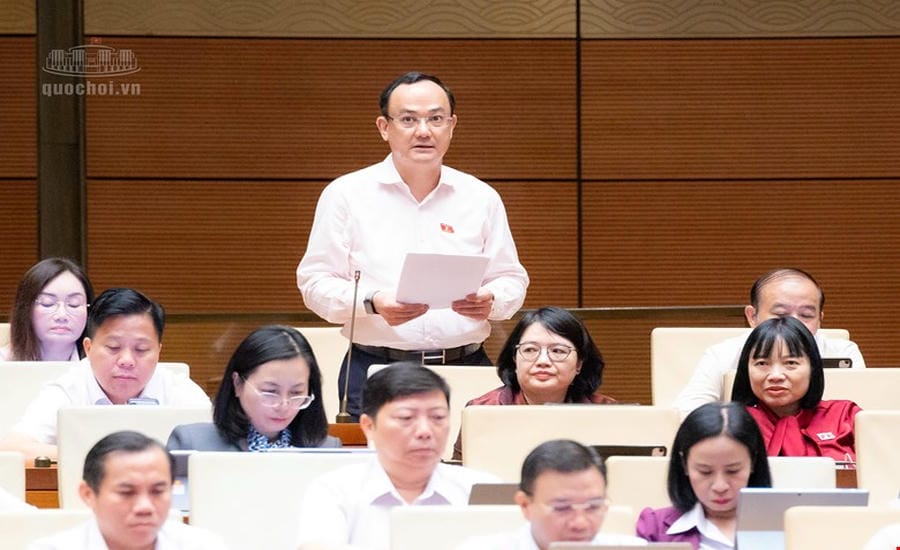
The delegate said that compulsory social insurance is linked to the contribution obligations of employees and businesses. Therefore, core issues such as the subjects of application, the basis for determining social insurance contribution income, the responsibility and contribution level of the foundation enterprise need to be regulated at the legal level or established by the principles and framework criteria in the Law.
In addition, freelancers and basic workers with unstable incomes may worry when they have to deduct additional compulsory contributions, while currently they are participating in voluntary social insurance and enjoying state support policies according to Decree No. 159/2025/ND-CP. Unclear regulations may lead to difficulties in implementation and legal disputes.
Therefore, delegate Nguyen Ngoc Son proposed that if this regulation is maintained, it is necessary to supplement criteria on subjects, contribution bases, responsibilities of foundation enterprises and request to collect opinions from affected groups.
Expanding the substance of the rights and obligations of the parties
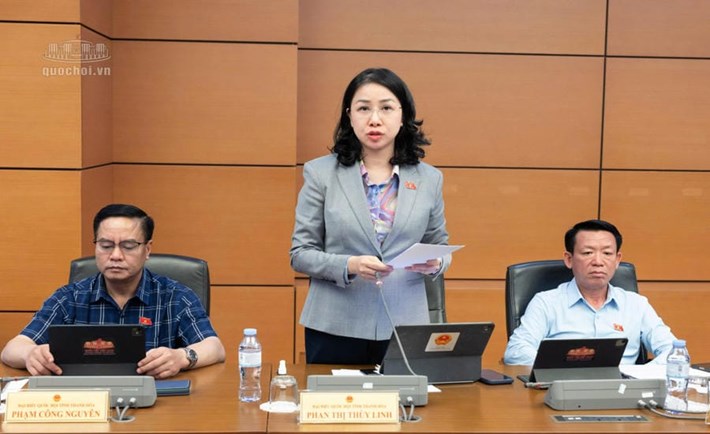
Delegate Phan Thi Thuy Linh (Thanh Hoa National Assembly Delegation) also affirmed that this is a correct and necessary policy, contributing to ensuring fairness and expanding social security rights. Because there are currently millions of people driving technology vehicles, delivering goods, and selling goods through applications.
For the majority of them, this is their main job, a source of income to support their families. However, this group of workers regularly faces the risk of accidents, while the rate of social insurance participation is still low, only about 20%. Ho Chi Minh City alone has about 400,000 technology drivers, but only about 700 people participate in voluntary social insurance.
Although agreeing with adding this group of workers to the compulsory social insurance participation category, the delegate said that the draft law only stops at expanding the subjects, while not clarifying three core issues. Specifically, who is subject to contribution, on what basis is the contribution level determined, and who is responsible for paying the employer's share.
Regarding the identification of participants, the draft uses the criteria of having jobs, having stable and regular income. However, according to the delegate, this criterion is difficult to apply in practice, especially in cases where workers only drive technology cars for a few sessions a week or both work as a salaried employee and work part-time on digital platforms. If there are no specific regulations, it may lead to different understandings and applications.
Regarding the basis for contribution, the delegate analyzed that the income of technology drivers and delivery staff changes every day, depending on the number of orders, weather and work assignment algorithms of the platform. Therefore, calculating contribution levels based on the percentage of actual income will cause difficulties for both participants and management agencies. Expanding the coverage of social insurance must be associated with practical expansion of the rights and obligations of the parties, instead of just adding subjects in the provisions of the law.
See the original here