
Effectively exploiting the new development space after mergers and administrative unit arrangements
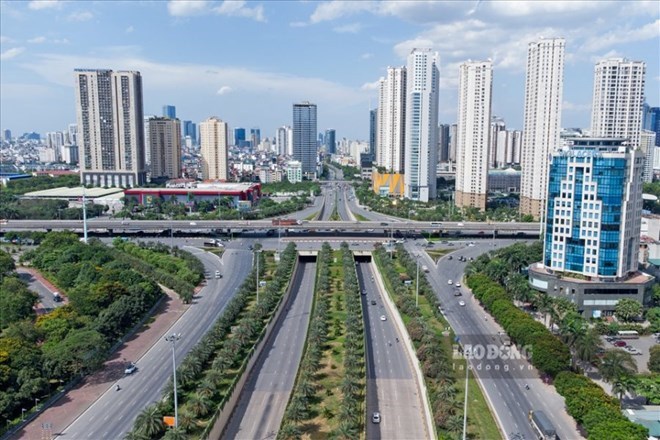
The program requires promoting and improving the efficiency of regional linkages, effectively exploiting new development spaces after mergers and arrangements of administrative units at all levels.
This content is requested by the Government in Resolution No. 402/NQ-CP dated November 21, 26 promulgating the Government's action program to implement Resolution No. 81/2023/QH15 of the National Assembly on the overall national plan for the period 2021-2030, vision to 2050 and Resolution No. 252/2025/QH15 dated December 10, 2025 of the National Assembly amending and supplementing a number of articles of Resolution No. 81/2023/QH15 of the National Assembly.
In which, in terms of economy, strive for the average growth rate of gross domestic product (GDP) to reach over 8.0%/year in the period 2021-2030; of which the period 2026-2030 reaches 10%/year or more. By 2030, the average GDP per capita at current prices will reach about 8,500 USD.
Promoting the advantages of each socio-economic region; focusing on developing 2 dynamic regions in the North and South associated with 2 growth poles: Hanoi and Ho Chi Minh City, North-South economic corridor, Lao Cai - Hanoi - Hai Phong - Quang Ninh economic corridor, Moc Bai - Ho Chi Minh City - Bien Hoa - Vung Tau economic corridor with synchronous and modern infrastructure, with high growth rates, making great contributions to the overall development of the country.
Develop a national healthcare facility network to meet the requirements of care, protection, and improvement of people's health, towards the goal of fairness, quality, efficiency and international integration. By 2030, reach 35 hospital beds and 19 doctors per 10,000 people; the rate of private hospital beds reaches 15%.
Strive for 100% of provincial-level administrative units to have enough 3 types of cultural institutions, including: cultural centers or cultural - artistic centers, museums and libraries.
The program sets out the following key tasks:
Establishing a new growth model, taking science, technology, innovation and digital transformation as the main driving forces. Prioritizing the development of a number of industries and fields with potential, advantages and great room, in line with the general trend of the world and associated with a new development space.
Developing dynamic regions, important national growth poles to form leading locomotives leading national development. Selecting a number of areas, urban areas, and regions with special advantages to build economic, financial, and special administrative - economic units with specific and superior institutions, mechanisms, and policies that are breakthrough and highly internationally competitive.
Forming and developing economic corridors along the North-South axis, East-West economic corridors, coastal economic belts; effectively connecting seaports, airports, international border gates, major trading hubs, urban areas, economic centers, growth poles; effectively connecting with regional and world economic corridors.
Developing industrial - urban - service belts in dynamic areas, large urban areas. Forming traffic axes and economic corridors connecting important urban areas in provinces and cities after mergers.
Promote and improve the efficiency of regional linkages, effectively exploit new development spaces after mergers and arrangements of administrative units at all levels.
Exploiting the advantages of regional development space, especially the central regional role of Hanoi, Ho Chi Minh City, Da Nang, Hai Phong, Can Tho, Hue cities.
Building, consolidating, and upgrading infrastructure to prevent and combat natural disasters, floods, and landslides; handling flooding, especially in large cities.
Read the original here