

Typical core commune-level administrative units are not new commune models
The Deputy Prime Minister emphasized that the model of commune-level administrative units with typical core characteristics must be placed in the overall structure, not a new commune model.
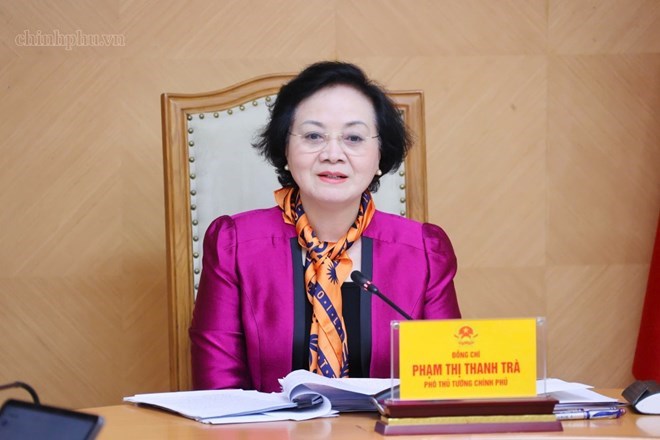
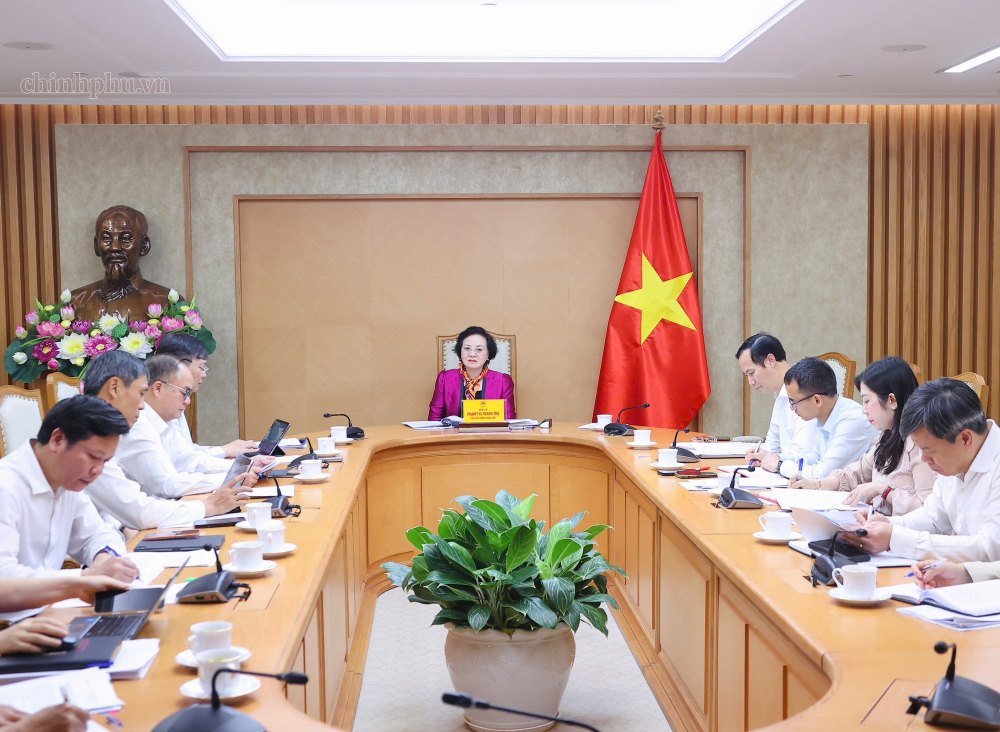
On September 15, at the Government Headquarters, Secretary of the Party Central Committee, Deputy Prime Minister Pham Thi Thanh Tra worked with the Ministry of Home Affairs on 3 important contents.
First, with the project on the model of commune-level administrative units (ĐVHC) with typical core characteristics, the Deputy Prime Minister emphasized that this model must first be placed in the overall structure of current commune-level administrative units, not new commune-level administrative units or new commune models.
Accordingly, it is necessary to clearly define what typical core commune-level administrative units are. These are units with available space and socio-economic development platform, infrastructure and public services, and at the same time have superior management capacity; are decentralized, empowered and have the ability to allocate resources commensurate to become the management, development and service provision center for the surrounding area and the province.
Not only having internal capacity, this unit must have the ability to link and support commune-level administrative units in the area, creating motivation and spillover effect for overall development.
Model building must be based on the foundation, scale and inherent conditions of existing units. Successiveness must be clearly shown; in the future, other units, if they meet the corresponding criteria, may also become units with nuclear nature. Therefore, first of all, it is necessary to clarify the concept and properly position the model.
Regarding criteria, the Deputy Prime Minister requested to focus on location, function and development potential; population size, natural area; socio-economic development level and urban and rural infrastructure.
In which, location, function and development potential are important factors. Population size and natural area are still fundamental factors but need to be considered in accordance with management capacity and characteristics of each region.
The general objective is to select a number of commune-level administrative units with superior management and development capacity, capable of becoming a linkage center, creating motivation for development for the region.
Second, regarding the project to build self-management models in residential communities in villages and residential groups, the Deputy Prime Minister said that villages and residential groups are self-management organizations of residential communities, not administrative levels but have a particularly important position in organizing social life at the grassroots level.
The core point, according to the Deputy Prime Minister, is to clearly identify people and residential communities as the subjects of self-management.
People know, people discuss, people do, people check, people supervise and people benefit" is both a motto and a philosophy of grassroots democracy and needs to be expressed throughout the self-management model.
Third, regarding the organizational framework of agencies and units in the state administrative system from central to local levels, the Deputy Prime Minister requested that the determination of the organizational framework must ensure a streamlined apparatus, efficient, effective, efficient, and smooth operation; improve the quality of national governance, local governance and serving the people.
Inherit, stabilize, limit disruption, ensure continuity and smoothness; link organization building with effective decentralization, delegation of power, digital transformation and review and eliminate intermediate stages.
Read the original here
- Arranging commune-level administrative units that do not meet standards associated with arranging cadres and civil servants
- Ca Mau affirms that there is no policy to continue arranging commune-level administrative units
- Reviewing and developing plans for arranging commune-level administrative units in many localities