
Preserving cultural identity, opening up livelihoods to escape poverty for Gia Lai people
Gia Lai - The government emphasizes the role of production linkages according to the value chain, preserving national culture, creating a foundation for people to rise out of poverty.
Supporting capital and vocational training to help people escape poverty
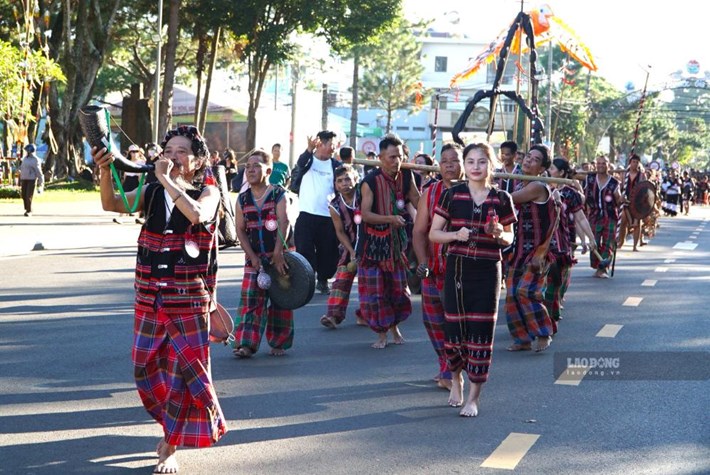
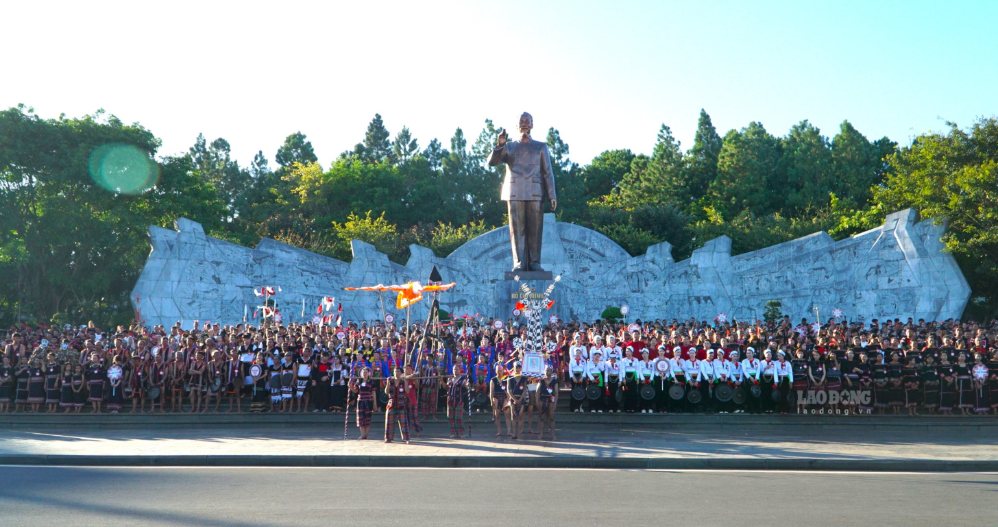
These days, Gia Lai is bustling with the atmosphere of the Great National Unity Festival, while promoting tourism images through gong culture and the diverse identity of ethnic minorities in the area.
On each street corner, the sound of gongs, drums, and traditional xoang dances harmonize with the colors of brocade, creating a unique cultural feature, attracting people and tourists from many provinces and cities.
Not only the cultural and material life of the people, especially the ethnic minorities Jrai, Ba Na, Xo Dang... in recent years has also been gradually improved. Children are going to school, traffic infrastructure is invested in spaciously, many roads to villages and hamlets are concreted and asphalted.
The face of new rural areas is increasingly flourishing, trade is favorable, and people are promoting the advantages of fertile basalt soil to develop agricultural production.
Teng village, Bien Ho commune is one of the areas with many positive changes in life and culture. Currently, the village has 360 households with 1,576 people. Over 90% of village and hamlet main roads have been concreted and asphalted. Environmental sanitation and residential area renovation activities are maintained regularly. In 2026, the village has 92.77% of households achieving the title "Cultural Family".
Mr. Nay Kien - Secretary of the Party Committee of Bien Ho commune said that in recent years, the government and mass organizations have actively propagated and mobilized people to implement the emulation movement "All people unite to build new rural areas and civilized cities" and the Campaign "Changing the way of thinking and working among ethnic minorities to gradually rise out of poverty".
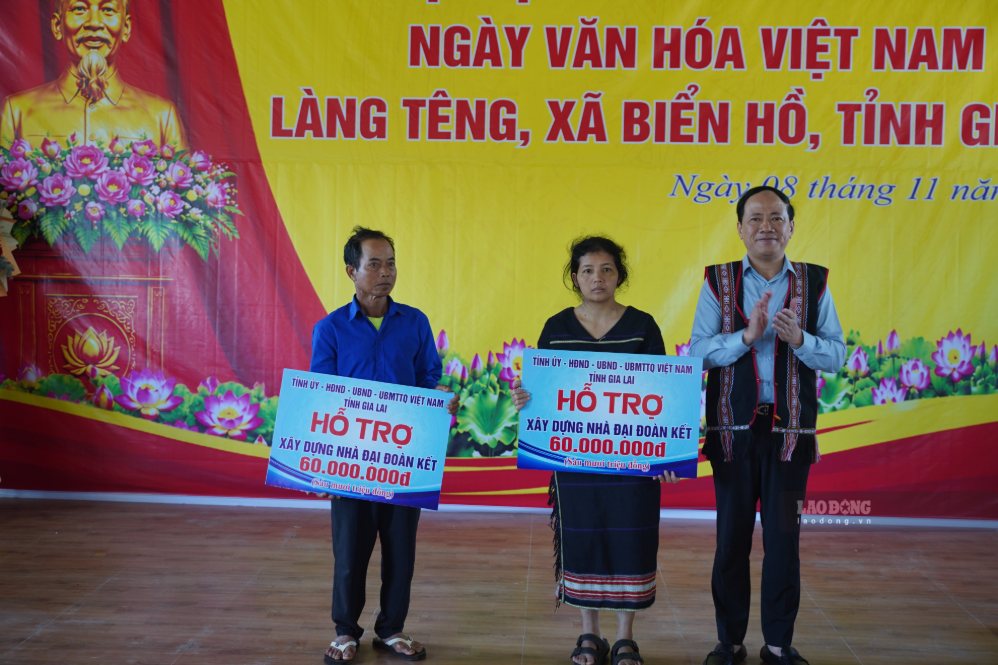
The spacious and beautiful rural transport projects have the contribution of people's efforts and labor. People and authorities build infrastructure, protect the environment, maintain security and order, and build a cultural life in residential areas.
In particular, village elders, reputable people and people actively preserve the cultural soul of Jrai and Ba Na through gong sets, stone instruments, bamboo and rattan musical instruments... These values are passed down to the younger generation through activities at communal houses and community houses.
For the people, besides agricultural production and making a living in the fields, the sound of gongs and chiengs in the great forest, the clear sound of musical instruments also contributes to tightening solidarity and enriching community spiritual life.
From children to the elderly, everyone is excited to participate in performances in cultural festivals on the streets, by the roof of the communal house, in front of the witness of a large number of people and tourists.
In November 2026, during a working trip to Bien Ho commune, Chairman of Gia Lai Provincial People's Committee Pham Anh Tuan requested the locality to continue to review and resolve existing problems, obstacles and recommendations of the people of Teng village; towards building residential areas to become typical models for research and replication.
Grassroots authorities need to regularly stick to the area, be close to and listen to the thoughts and aspirations of the people, promptly remove difficulties; pay attention to ensuring security and order, proactively prevent crime and social evils, and prevent hot spots and complicated cases from arising.
The Chairman of the Provincial People's Committee also requested Bien Ho commune, a locality with Chu Dang Ya volcanic scenic spot and Bien Ho Forestry Park, to study organizing cultural activities associated with economic, commercial, and service development, stimulating consumer demand. Thereby, creating more space for exchange and community connection, contributing to improving the material and spiritual life of the people.
Like many other villages in the Central Highlands, Teng village has favorable natural conditions, land and water sources for production development. People need to boldly change their thinking and farming methods, shifting from spontaneous production to commodity production, associated with value chain linkage models, cooperatives and businesses to ensure output and improve the value of agricultural products.
Local authorities, the Vietnam Bank for Social Policies and the Fatherland Front need to strengthen guidance and support for people to access science and technology, capital sources; organize production according to processes, build brands and connect product consumption.
Each resident of Teng village needs to continue to promote the spirit of solidarity, trust in the leadership of the Party and State; proactively exchange and reflect to the government when encountering difficulties and obstacles to be considered and resolved promptly.
Every year, vocational training classes under the national target program have contributed to equipping thousands of rural and mountainous workers with knowledge and skills, helping workers improve their industrial style and discipline.
For ethnic minority youth, vocational training plays an important role in improving their qualifications and skills, creating conditions for them to participate in the labor market, work at factories, businesses, industrial parks or serve production and business activities in the locality.
Therefore, the provincial government reminds communes and wards to promote propaganda and mobilize youth to participate in vocational training, professional practice, improve productivity and labor value. This is a solution to create more jobs, stable income, contributing to improving material and spiritual life and building an increasingly rich and civilized homeland.
Have policies for cultural artisans
Another village in Gia Lai is also rich in revolutionary struggle traditions, with many positive changes in building new rural areas and improving people's lives. That is Mơhra village, Tơ Tung commune, the hometown of Hero Nup.
According to the People's Committee of To Tung commune, Mơhra village has 270 households with more than 1,000 people, including ethnic groups Bahnar, Tay, Nung, Kinh... living together in solidarity and closeness through many generations.
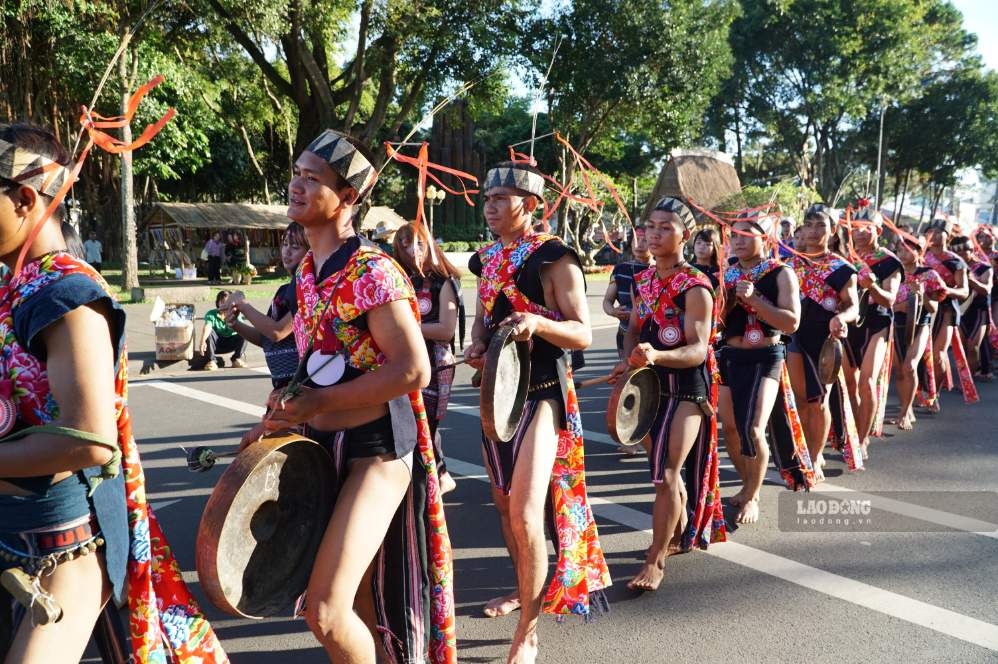
The people of Mơhra village always believe in the leadership of the Party, the management and administration of the State; promote the tradition of solidarity, the spirit of mutual affection, and actively participate in emulation movements and campaigns in residential areas.
People in the village mainly live by agricultural production and animal husbandry. Currently, the village maintains 5 gong teams, including 3 men's and women's gong teams, 1 children's gong team and 1 women's gong team; there are 2 outstanding artisans.
The commune government identifies this as the core force in preserving, teaching and promoting the cultural values of gongs; and at the same time serving cultural activities, festivals, preserving national identity and developing community tourism.
The people of Mơhra village still preserve the communal house, community living space, organize many festivals and traditional religious rituals. Cultural values such as gongs, xoang dance, traditional handicrafts, weaving, brocade weaving... continue to be passed down through many generations.
Ms. Mai Thi Lan, a tourist from Quang Ngai province, shared: "The village on the highlands is very peaceful, surrounded by vast sugarcane fields. Handicrafts such as brocade weaving and weaving are preserved almost as original, with rustic and highly aesthetic products.
In particular, the village of the indigenous people is very clean, still retaining traditional features. People are united, friendly, and hospitable. The elderly are talented and can play many musical instruments such as goong, ting ning, kni...".
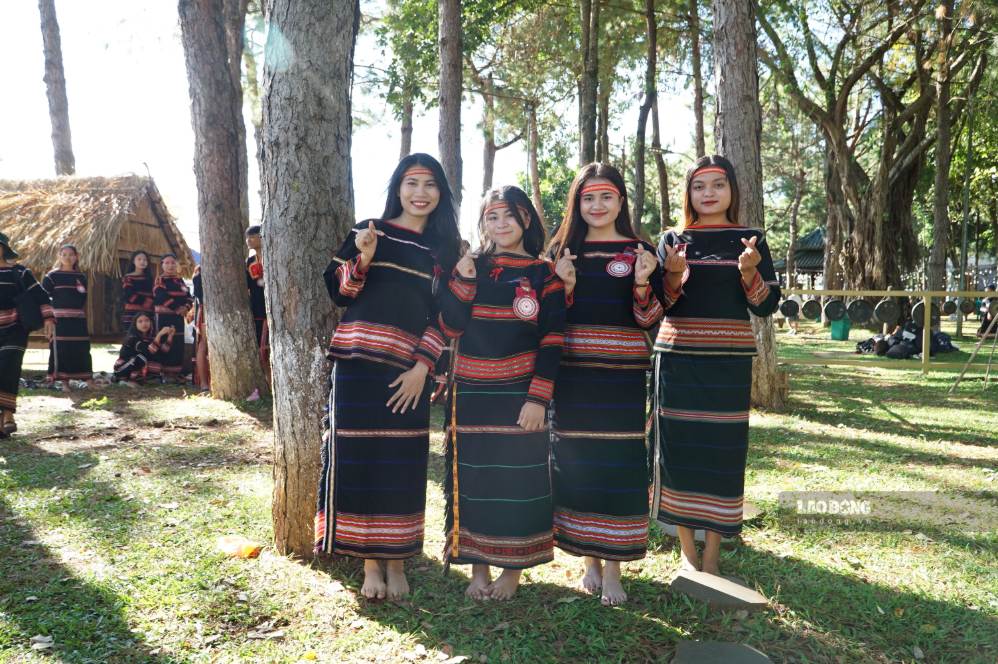
At the 2026 Great National Unity Festival, Standing Vice Chairman of Gia Lai Provincial People's Committee Nguyen Tuan Thanh requested Party committees, authorities, the Fatherland Front and local mass organizations to continue to effectively implement poverty reduction and improve people's lives.
In which, it is necessary to build models of crop and livestock structure conversion suitable to actual conditions; promote production linkages to improve efficiency and value of agricultural production.
Along with economic development, localities need to maintain and develop community tourism, research support policies and incentives for artisans; pay attention to preserving and promoting traditional cultural values.
Each citizen needs to continue to promote the spirit of solidarity and love, joining hands to build Mơhra village to be increasingly green, clean, beautiful, civilized, and rich in identity; gradually improving material and spiritual life.
On this occasion, provincial leaders presented gifts from the Provincial Party Committee, People's Council, People's Committee, and Vietnam Fatherland Front Committee of the province to Mơhra and Têng villages. In which, the province supported the construction of Great Solidarity houses, each worth 60 million VND; and presented dozens of gifts to poor and near-poor households and households in difficult circumstances.
See the original here