
Vietnam - Japan further strengthen the journey of attachment between the two countries
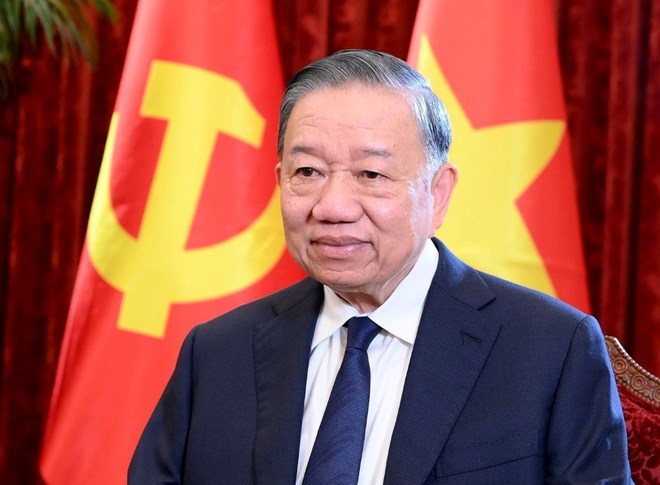
General Secretary and President To Lam believes that this visit to Japan will further consolidate the journey of attachment between the two countries.
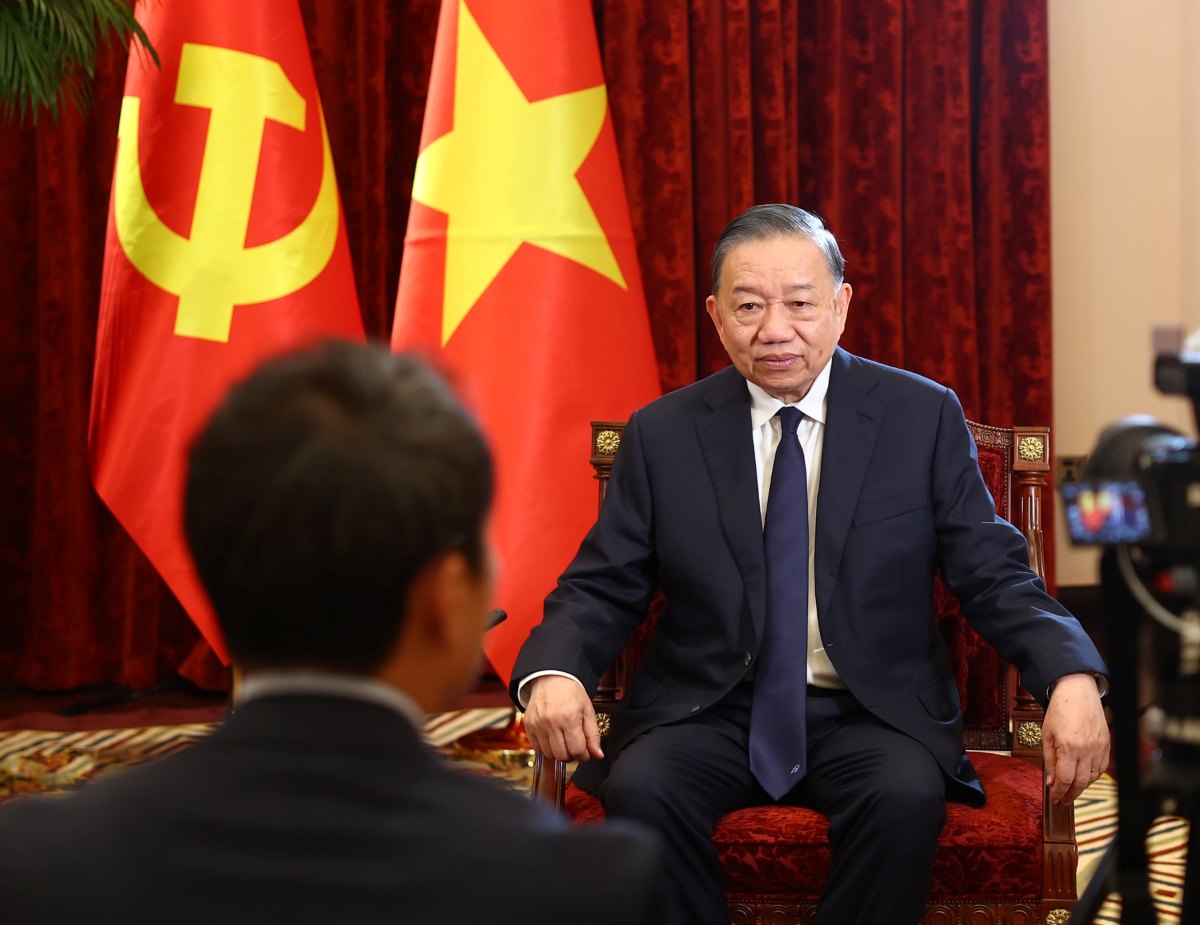
Before the official visit to Japan (from November 8-11), General Secretary and President To Lam answered an interview with NHK television (Japan).
- Sir, please tell us the main objectives of this official visit to Japan? What are your expectations for the future development of Vietnam - Japan relations, especially in the fields of economy, investment and human resource development?
General Secretary, President To Lam: I believe that this visit to Japan will further concretize the potential and results of cooperation, further consolidate the journey of attachment between the two countries, so that the friendship nurtured through many generations will continue to bring good things to the people of the two countries.
Vietnam and Japan have a long-standing people-to-people exchange relationship since more than 400 years ago. Vietnam always considers Japan as one of the most important and long-term comprehensive strategic partners; appreciates Japan's companionship in implementing Vietnam's two 100-year strategic goals.
On that basis, I hope to work with Japanese leaders to deepen trust, unify long-term cooperation priorities and create new momentum for the Comprehensive Strategic Partnership for peace and prosperity in Asia and the world.
We are pleased to witness two-way trade turnover in the first 10 months of 2026 reaching nearly 50 billion USD and aiming to soon realize the figure of 80 billion USD ( striving for 100 billion USD) by 2030. Japan currently has about 5,800 investment projects in Vietnam with a valid capital of 80.4 billion USD.
I hope that these achievements will continue to be nurtured by the maturity of Vietnamese businesses, the long-term attachment of Japanese businesses and higher value products created by both sides.
To do that, we hope Japanese businesses will expand investment, research and product development in Vietnam, and join Vietnamese businesses to participate more deeply in value chains. Cooperation in advanced industry, semiconductor, artificial intelligence and clean energy needs to be linked to human resource training, improving technological capacity and management.
For its part, Vietnam attaches importance to building a transparent and stable business environment, capable of forecasting and promptly resolving legitimate problems of businesses. Reliability needs to be nurtured by specific actions and the success of each cooperation project.
Regarding human resources, what I hope is that every Vietnamese person studying and working in Japan has the opportunity to accumulate knowledge, improve their skills, develop their careers and be guaranteed legitimate rights and interests.
We also hope that more and more Japanese experts, scientists and young people will come to Vietnam to work, research, and start businesses. It is the people who understand, trust, and are attached to both countries who will continue our friendship.
I expect the visit to create new momentum for the Vietnam-Japan Comprehensive Strategic Partnership, for the benefit of the people of the two countries, contributing to peace, stability, cooperation and prosperity in the Asia-Pacific region and in the world.
The new vision will be a companion partner, creating together, strategic autonomy, effective cooperation, mutual benefit, for the lives of people and workers.
- In the context of increasing uncertainty in the international environment, how will Vietnam apply diplomatic approaches to solve challenges, towards the goal of rapid and sustainable development in the new period?
General Secretary, President To Lam: Vietnam chooses a principled approach, proactive in action and sincere in cooperation. National history helps us understand the value of peace and the aspiration to rise up.
We understand that we cannot wait for the world to stop being uncertain to develop; we need to proactively create conditions for the country to continue to move forward in a difficult and volatile environment.
First of all, Vietnam is steadfast in its foreign policy of independence, self-reliance, self-strengthening, peace, friendship, cooperation and development; multilateralization and diversification of foreign relations; ensuring the highest national and ethnic interests based on the basic principles of international law and the United Nations Charter.
Strategic autonomy is the ability to self-determine the path of development and have enough capacity to implement those decisions. That capacity is cultivated by strong internal strength, the consensus of the people and deep and stable international relations. The more the world is changing, the more Vietnam values the consistency of principles, sincerity in cooperation and responsibility for its commitments.
We will deepen relations with partners, seek common interests to strengthen cohesion, persistently handle differences through dialogue and peaceful measures.
Diplomacy needs to take the lead in identifying and preventing risks, maintaining exchange channels and preparing response plans early.
Vietnam values the role of the United Nations, solidarity and the central role of ASEAN; is ready to contribute to maintaining peace and solving common challenges.
We believe that the position of a nation is enhanced by trust and the contributions that that nation brings to the international community.
For development, what we expect is that every opportunity opened through foreign affairs helps the country, people, and businesses improve their own capacity.
Therefore, cooperation in technology, human resources, green finance, energy and infrastructure must be linked to institutional reform, improving the ability to receive and master knowledge and technology.
We will support businesses to expand markets, participate more deeply in the value chain; diversify supply sources and partners to reduce vulnerable dependence.
The effectiveness of integration needs to be reflected in higher productivity, stronger businesses and better jobs for people.
With Japan, I believe that the foundation of a comprehensive strategic partnership and high political trust will help the two countries continue to accompany, create together, share opportunities and responsibilities.
What we aim for is a country with sufficient autonomy and self-reliance, with trusted friends like Japan and making increasingly practical contributions to the international community.
All those efforts stem from the desire for people in each country to be happier, to have conditions to develop their talents and for future generations to be confident in the future.
Read the original here