

First Lady of the General Secretary and President experiences Japanese traditional culture
At the Akasaka Guesthouse in Tokyo, the First Lady of the General Secretary and President experienced tea ceremony, enjoyed tea and connected Vietnamese and Japanese cultural features.
According to VNA, within the framework of the official visit to Japan with General Secretary and President To Lam, on the evening of November 9 (local time), Ms. Ngo Phuong Ly, wife of General Secretary and President, experienced Japanese traditional culture at the Akasaka National Guesthouse (Tokyo).
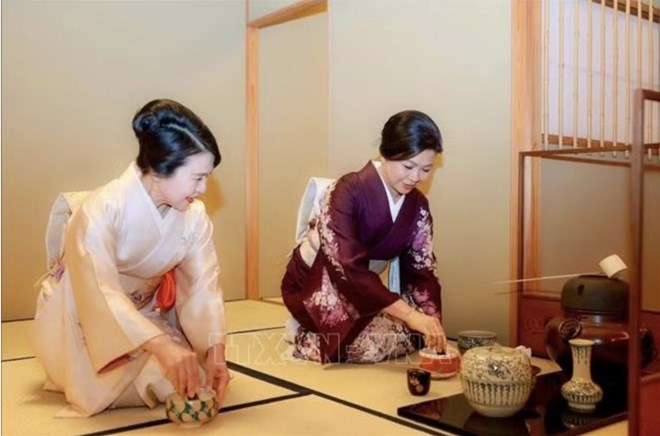
In traditional Japanese kimono costumes, Mrs. Ngo Phuong Ly listened to artisans introduce tea ceremony - an art that has been preserved for 450 years since the time of tea master Sen no Rikyū.
The host chose a tea set with the beauty of famous Vietnamese ceramics from the 16th century as a reminder of the history of exchange between the two nations without needing to say a word.
After listening to the introduction about the history of the tea ceremony, Mrs. Ngo Phuong Ly was invited to enjoy sweet cakes and tea. The artisan also invited the Mrs. to the tea brewing area, experiencing tea making with her own hands.
For the first cup of tea, Mrs. Ngo Phuong Ly respectfully invited Ms. Akiko Santo, former Chairwoman of the Japanese Senate and the oldest person present.
Expressing her impression of the demeanor of the First Lady of the General Secretary and President in kimono, Ms. Akiko Santo respectfully thanked the First Lady for inviting her to the first cup of tea. That gesture was both in line with the spirit of "respect" in the tea ceremony, and close to the "respectful longevity" custom of Vietnamese people, making the atmosphere of the experience even warmer and closer.
Japanese people raise a cup of tea into "dao", with strict rituals and a spirit of stillness. For Vietnamese people, a cup of tea is a daily routine and the first greeting when guests come to the house. One side is solemn, the other is approachable, but both value sincerity, hospitality and respect for the person opposite.
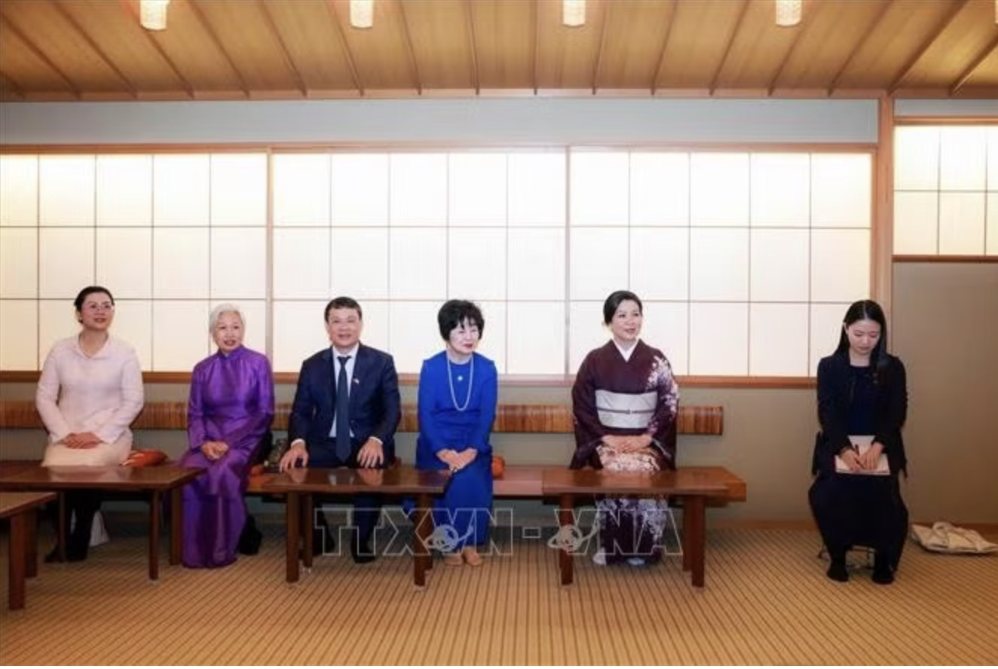
The experience activity on the evening of November 9 not only showed the respect of the guest from Vietnam for the indigenous traditional values but also showed the hospitality and respectful reception of the Japanese side, and at the same time affirmed the vitality of traditional values in modern times.
Vietnam is currently one of the 5 largest tea producers in the world, with many famous tea lands and types of tea that have made its name and gone into the hearts of tea lovers around the world. Matcha, the soul of the tea ceremony, is now also made from Vietnamese tea leaves. Japanese businesses, such as Morinaga, are also coming to cooperate to make the standard Japanese matcha line at a price suitable for the Vietnamese market.
The cup of tea in Akasaka is small, but the four words "Thien ly dong phong" on the calligraphy hanging in the room seem to send a message: Vietnam and Japan, although thousands of miles apart, still share the same wind.
That wind once brought Vietnamese ceramics to Japan many centuries ago. Today, that wind continues to spread through cooperation projects, joint products in many fields and meetings between people of the two countries.
Read the original here